Porsche 911 Carrera S: Bridging the Gap Between Daily Utility and Supercar Performance
The 992.2 Carrera S balances 473 horsepower with daily driveability.
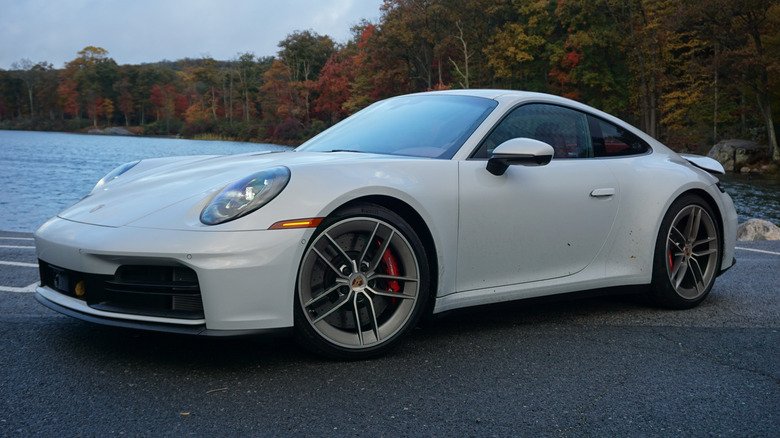
The 992.2 Porsche 911 Carrera S occupies a rare position in the automotive landscape, functioning as a high-performance bridge between entry-level accessibility and the extreme capabilities of the Turbo flagship. By integrating hardware previously reserved for higher-tier variants, Porsche has effectively narrowed the performance gap within its own lineup.
At the core of this evolution is a twin-turbocharged 3.0-liter flat-6 engine that now produces 473 horsepower and 390 pound-feet of torque. According to technical specifications provided by the manufacturer, this output is achieved by utilizing the larger turbochargers and intercoolers from the outgoing 992.1 Carrera GTS. This mechanical inheritance allows the rear-wheel-drive 911 Carrera S to reach a claimed top speed of 191 mph.
While Porsche officially cites a 0-to-60-mph time of 3.3 seconds when equipped with the 8-speed dual-clutch PDK transmission and the Sport Chrono package, independent testing by Car and Driver recorded a significantly faster 2.7-second sprint. This level of acceleration places the Carrera S in direct competition with dedicated supercars, yet the vehicle maintains a level of mechanical composure that Porsche claims can withstand repeated high-stress launches without degradation.
Dynamic handling is managed through the PASM sport suspension, which reduces the ride height by 0.4 inches. Despite the aggressive stance, the system is designed to remain compliant over varied road surfaces. This versatility is a hallmark of the 911’s engineering philosophy, balancing track-ready grip from Pirelli P-Zero tires with the damping required for long-distance travel.
Inside the cabin, the transition to a fully digital interface is marked by a 12.65-inch curved gauge cluster and a 10.9-inch center screen. While the digital shift reflects broader industry trends toward screen-heavy cockpits, Porsche has retained physical buttons for primary climate and drive functions. The interior utility is further enhanced by 18-way adjustable Adaptive Sports Seats Plus and an optional extended range fuel tank capable of holding 22.1 gallons.
Efficiency remains a secondary but relevant factor for a vehicle positioned as a daily driver. The United States Environmental Protection Agency provides standardized fuel economy ratings that highlight the balance between high-output turbocharged engines and modern transmission efficiency in the sports car segment. Porsche noted that the PDK system is tuned to optimize these returns during highway cruising.
Practicality is supported by a front-axle lift system to protect the front fascia and a 4.8-cubic-foot frunk, though the rear seats remain better suited for supplemental luggage than passengers.
The cost of this dual-purpose capability continues to rise. For the 2025 model, the starting price is set at $153,695 including destination charges. However, Porsche has already signaled a shift in the market with 2027 pricing, which sees the base MSRP for the Carrera S climb to $158,500. Highly optioned units, featuring Ice Grey Metallic paint and specialized chassis upgrades like rear-axle steering, can easily exceed the $184,000 mark.