AI Data Center Clash Takes Center Stage in Key Pennsylvania Congressional Race
Scranton Mayor Paige Cognetti challenges Republican Rep. Rob Bresnahan as energy demands and corporate secrecy spark political fallout in swing district.
Grassroots friction over the rapid proliferation of artificial intelligence data centers has surfaced as a focal point in the fight for control of the United States House of Representatives, as local environmental and economic anxiety shifts into high-stakes federal elections.
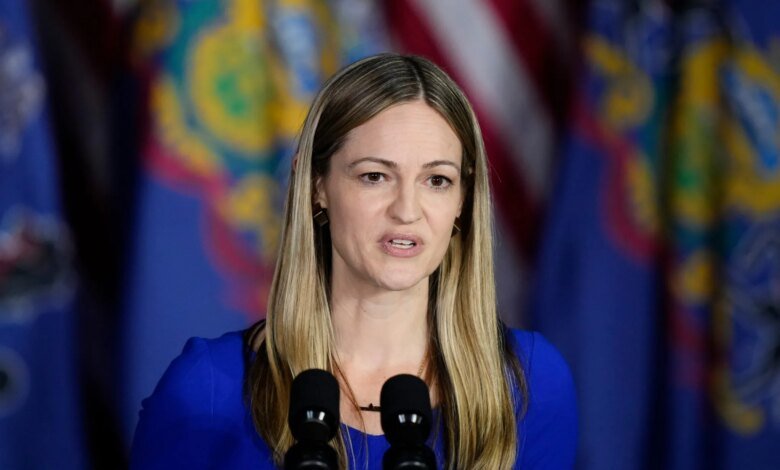
In northeastern Pennsylvania’s highly competitive congressional district, Scranton Mayor Paige Cognetti, a Democrat, launched a $200,000 ad campaign targeting tech corporations acquiring land and energy capacity across the region. The 30-second spot, scheduled for a two-week run across broadcast, cable, and digital channels, takes direct aim at the secret deals, tax exemptions, and rising utility expenses linked to hyper-scale compute facilities.
Drawing parallels to the rust-belt region’s long history with extractive resource economies, Cognetti directly tied the current tech expansion to past booms in coal mining and natural gas hydraulic fracturing. She warned that outside firms risk leaving local communities with long-term ecological and financial burdens.
“Big companies have come before, taken what they wanted and left us with their mess to clean up. Now it’s data centers,” Cognetti stated in the commercial, demanding an end to municipal non-disclosure agreements, tax abatements, and utility rate hikes, while calling for local union labor guarantees and water protection measures.
The pushback comes as energy markets in the Mid-Atlantic region contend with unprecedented power demand from facilities housing specialized AI processing hardware. High compute requirements have forced regional transmission grids, including the PJM Interconnection grid, to project surging capacity costs, which are increasingly reflected in consumer electricity bills. Beyond energy consumption, data centers require extensive water supplies for cooling systems, prompting heightened scrutiny from local planning boards.
The political friction reflects a wider conflict between national policy goals and municipal autonomy. Former President Donald Trump and federal policymakers have framed aggressive data center expansion as an urgent national security priority to maintain technological dominance over China in artificial intelligence development. However, municipal pushback against zoning approvals, high-voltage transmission lines, and quiet land acquisitions has repeatedly spilled into state courts across Pennsylvania and the broader country.
First-term Republican Representative Rob Bresnahan, who is defending the seat, has attempted to address local resistance through legislative channels. In June, Bresnahan introduced the Local Control Protection Act, intended to restrict the ability of multi-billion-dollar tech conglomerates to overturn municipal zoning denials in court.
“We should never let billion-dollar corporations supersede the voices of those who live in the community,” Bresnahan said upon introducing the measure, though the bill has not attracted co-sponsors or advanced out of committee.
The battle for the district is widely viewed as a pivotal target for Democrats seeking to overturn the narrow Republican majority in the House. Recognizing the vulnerability of the seat, national Republicans have heavily prioritized defending Bresnahan, drawing high-profile campaign stops from both Donald Trump and Vice President JD Vance during the previous election cycle.