Tehran Weaponizes Moscow and Beijing Allies to Evade Trump’s ‘Crushing’ Sanctions
Tehran expands Eastern alliances to weather U.S. economic pressure and supply regional proxies
NEWYou can now listen to Fox News articles!
Washington’s push to launch an unprecedented economic offensive against Tehran is accelerating Iran’s integration into Russian- and Chinese-backed security and financial networks, Middle Eastern security experts warned Wednesday.
With the U.S. escalating its “Operation Economic Fury,” analysts note that Iran is aggressively embedding itself within non-Western coalitions, cementing its strategic alignment with Russia and China to serve as a pivotal node against American global authority.
The intelligence warnings follow an announcement Wednesday by President Donald Trump detailing what he characterized as the “most crushing economic operation ever taken against any country,” promising severe penalties for international firms or foreign governments aiding Tehran’s financial survival.
“This will be Economic Warfare and Isolation on an unprecedented scale,” Trump stated in a post published on Truth Social.
IRAN DEAL CLOCK HITS ZERO AS TRUMP DEMANDS ‘WHITE FLAG’ WITH NEW PRESSURE CAMPAIGN LOOMING
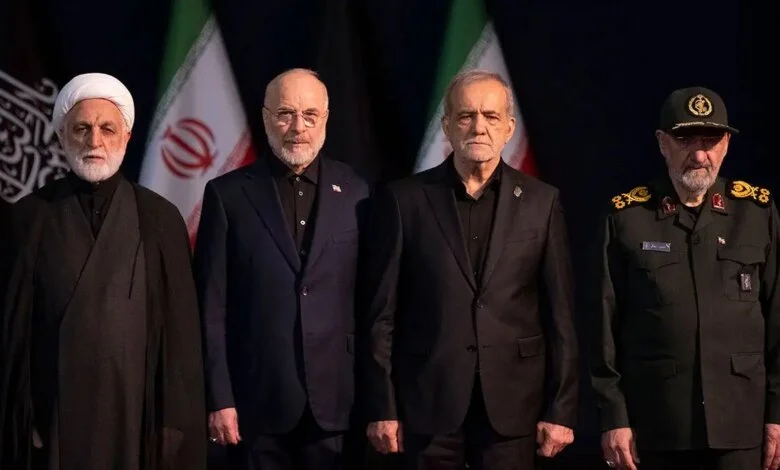
Iranian Parliament Speaker Mohammad Bagher Ghalibaf, Chief Justice of Iran Gholam-Hossein Mohseni-Eje’i, Iranian President Masoud Pezeshkian, and an IRGC commander general Mohsen Rezaee attend a ceremony in Tehran, Iran, on July 3, 2026. (Morteza Nikoubazl/NurPhoto via Getty Images)
“The Islamic Republic is looking to survive, but in order to survive, it needs to adapt,” Behnam Ben Taleblu, who serves as senior director of the Iran Program at the Foundation for Defense of Democracies (FDD), told Fox News Digital.
“It needs to adapt not just to U.S. and Israeli military pressure, but this U.S. political and economic pressure.”
“There’s no doubt the Islamic Republic is looking to maximize its enmeshment with countries like Russia and China that have been subject to U.S. political and economic pressure in the past.”
Iranian foreign policy has increasingly focused on utilizing BRICS—an economic coalition comprising Brazil, Russia, India, China, South Africa, and several newly added members—alongside the Shanghai Cooperation Organization (SCO), a Beijing- and Moscow-directed Eurasian political and security alliance.
Trump had previously characterized BRICS economic initiatives as “anti-American,” according to a CNBC report.
CHINA ORDERS FIRMS TO IGNORE US IRAN SANCTIONS, DARING US TO ENFORCE CRACKDOWN
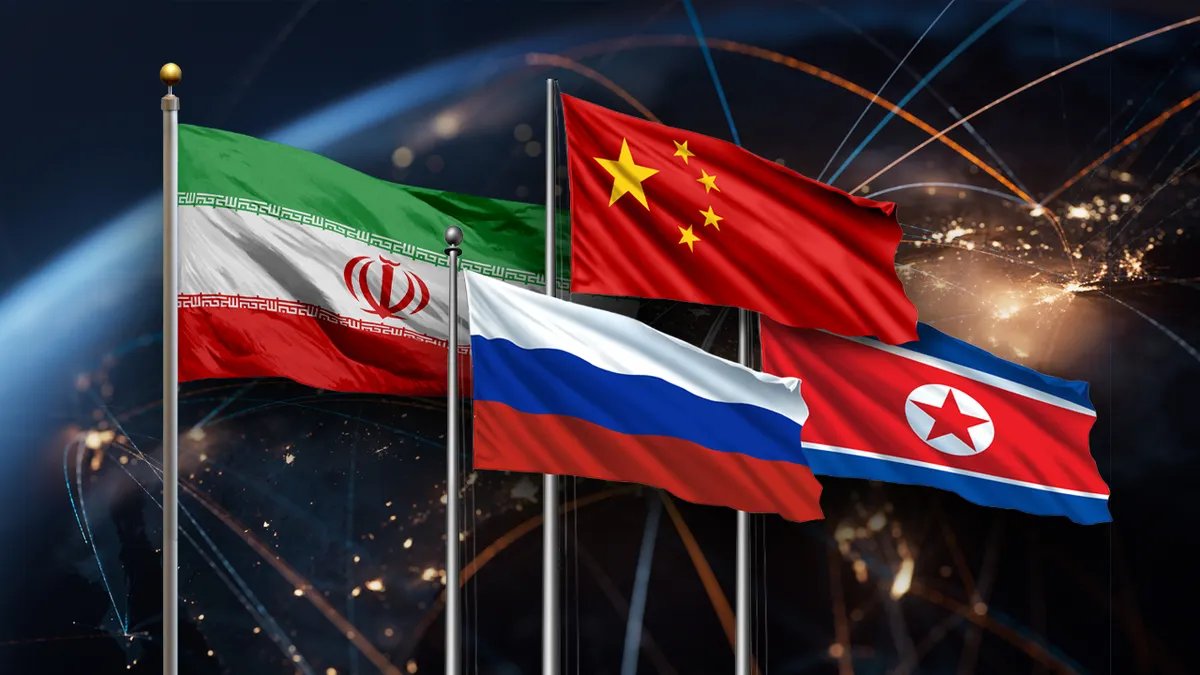
Iran and its allies North Korea, Russia and China are using cyber crimes to push a financial war against the US. (Fox News)
Central Bank of Iran Governor Abdolnasser Hemmati indicated that Tehran is on the verge of joining the BRICS-sponsored New Development Bank, though representative officials from the institution told Reuters they were unable to confirm Iran’s accession.
“The most important result of cooperation among BRICS member countries is the establishment of the New Development Bank, and our country will soon become a member of this bank,” Hemmati declared, according to state-run media outlets.
Joining non-Western financial structures like the New Development Bank allows heavily sanctioned states to utilize alternative interbank messaging systems, effectively bypassing the U.S. dollar-denominated SWIFT network. By settling bilateral trade in national currencies like the yuan and ruble, Tehran aims to insulate its foreign transactions from American banking oversight.
“You can see Iran trying to benefit from its role in BRICS, as well as a constellation of other organizations, that really would allow itself to be shielded—or try to make itself more shielded—from U.S. political and economic pressure,” Taleblu explained.
“The Islamic Republic is looking to be more formally integrated into economic orders brought about by Russia and China, which are looking to contest the U.S. dollar as much as they’re looking to contest U.S. power and influence.”
“It is quite key and important for policymakers in Washington to wake up and see how interconnected these state threats are becoming,” Taleblu warned.
“These are independent relationships that have been coming together. They have differences, but as an authoritarian axis, these are countries that are better able to manage their differences at present than it seems like America and the liberal western order are able to handle their differences.”
IRAN TURNS TO PUTIN AS US TALKS COLLAPSE, HORMUZ STANDOFF THREATENS GLOBAL OIL FLOW

Russian President Vladimir Putin arrives for Russian-Iranian talks in Moscow, Russia December 7, 2023. Sputnik/Sergei Bobylev/Pool via REUTERS ATTENTION EDITORS – THIS IMAGE WAS PROVIDED BY A THIRD PARTY.
A European government intelligence document verified by a Western official revealed that Moscow has been shipping ammunition, TNT, and unmanned aerial vehicle parts directly to Iran across the Caspian Sea, NBC News reported Aug. 17.
The Caspian Sea maritime corridor provides a secure, direct trade artery between Russia and Iran beyond the reach of Western naval patrols or international maritime interdictions. This strategic body of water has increasingly functioned as a shielded transit zone for military supplies, heavy machinery, and sanctioned goods between northern Iranian ports and Russian industrial hubs.
These disclosures arrive as evidence builds that Tehran is actively leveraging Russian hardware and defense technology to neutralize American economic enforcement and military posture.
“Even limited technology and military flows from Russia to the Islamic Republic help it fight to survive, adapt, and live another day to combat the U.S. order in the region,” Taleblu stated.
“In the short term, there is less transaction cost on this anti-American authoritarian order that is fast emerging than there is on the pro-American order.”
TRUMP TO CONFRONT XI AT HIGH-STAKES SUMMIT OVER CHINA BACKING FOR IRAN, RUSSIA

Russian President Vladimir Putin and Iranian Foreign Minister Abbas Araqchi attend a meeting at the Boris Yeltsin Presidential Library in Saint Petersburg, Russia April 27, 2026. (Dmitri Lovetsky/Pool via Reuters)
Taleblu pointed to Iran’s unique position bridging two distinct strategic frameworks: the “Axis of Aggressors”—comprising major non-Western powers Russia, China, and North Korea—and Tehran’s regional “Axis of Resistance,” consisting of militant proxy forces including Hamas, Hezbollah, the Houthis, and Iraqi Shiite paramilitary units.
“They all have hostile intentions towards the U.S. and the liberal world order. They are authoritarians at home and creditors abroad.”
He observed that regardless of whether Iran achieves its full commercial goals within the BRICS framework, the defense cooperation and diplomatic backing supplied by Moscow and Beijing deliver substantial protection.
“So even if what the Islamic Republic wants from the BRICS countries, particularly the likes of Russia and China, doesn’t happen, that doesn’t mean that political, economic, and military support to this regime at a critical time is not happening.”
“The linchpin between the state threats that the U.S. faces in the 21st century, from the Axis of Aggressors and the non-state threats in the Middle East, is the Islamic Republic of Iran,” Taleblu emphasized.
CLICK HERE TO DOWNLOAD THE FOX NEWS APP
By serving as the conduit through which Russian and Chinese capital, armaments, and technical expertise reach regional proxies, Tehran effectively transforms Eastern superpower backing into asymmetric operational capabilities on Washington’s doorstep across the Middle East.
Emma Bussey is a breaking news writer for Fox News Digital. Before joining Fox, she worked at The Telegraph with the U.S. overnight team, across desks including foreign, politics, news, sport and culture.