Egg Dinner Recipes From Global Cuisines for Quick Weeknight Meals
How food science and cultural traditions turn a basic protein into complex international entrees
Eggs anchor dinner tables across Asia, Latin America, Europe, and Africa not as a fallback protein but as the deliberate centerpiece of some of the world’s most enduring comfort dishes. While American home cooks frequently relegate eggs to breakfast or emergency scrambles, global culinary traditions treat them as primary dinner ingredients capable of absorbing complex sauces, providing structural contrast, and delivering high-quality nutrition at a fraction of the cost and time required for meat-based entrees.
The economics driving this disparity are stark. According to U.S. Bureau of Labor Statistics data, egg prices have experienced severe volatility over the past three years due to recurring avian influenza outbreaks that decimated commercial flocks. Yet even during peak pricing in 2023 and subsequent market fluctuations through 2026, a dozen large eggs remains significantly cheaper per gram of protein than beef, poultry, or pork. This cost efficiency explains why working-class kitchens from Bangkok to Bogotá historically built their evening meals around the egg, developing techniques that maximize flavor without requiring expensive secondary ingredients.
Asian cuisines demonstrate the widest technical range for egg-centric dinners. Thai kai jiao operates on principles entirely foreign to Western omelet-making. Rather than relying on low heat and butter to achieve a pale, tender roll, kai jiao demands high-smoke-point oil heated until nearly smoking. The egg mixture—typically enriched with fish sauce, a touch of acid, and cornstarch—is poured from roughly a foot above the pan. This specific distance is not theatrical; it stretches the egg into thin streams that instantly puff and crisp upon hitting the hot fat, creating a lacy, multi-layered structure. Cornstarch plays a critical chemical role here, interfering with the tight protein bonds formed by egg whites during coagulation, which prevents the final dish from turning rubbery despite the aggressive heat. Served over rice, it functions strictly as lunch or dinner fare in Thailand.
Japanese oyakodon takes a different approach, utilizing eggs as a binding agent rather than a standalone item. The name translates directly to “parent and child bowl,” referencing the combination of chicken and egg simmered together. A broth built from dashi, sake, soy sauce, and sugar gently poaches the chicken before beaten eggs are poured over the top. The skillet is covered immediately, allowing steam to set the eggs to a custardy consistency that varies by household preference. Because dashi provides an immediate foundation of glutamates and inosinates—the compounds responsible for umami perception—the dish achieves deep savory complexity in under twenty minutes without requiring long-simmered stocks.
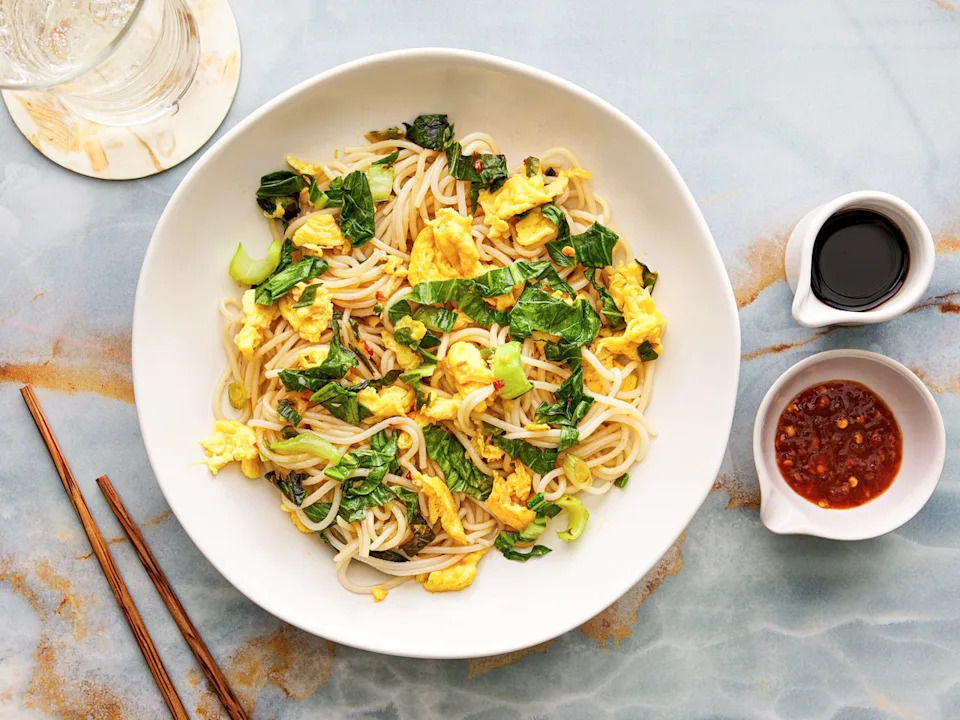
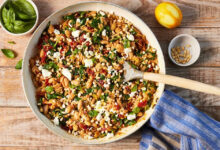
China’s tomato and egg stir-fry, a staple that solidified its place in domestic kitchens during the 1940s when tomatoes became widely cultivated and affordable across the country, relies on ingredient separation. Cooks scramble eggs into large curds first, remove them from the wok, and then break down tomatoes into a concentrated sauce seasoned with Shaoxing wine and soy sauce. Recombining them at the last second preserves the distinct textures of both components. Similarly, noodle-based dishes utilize dried rice noodles tossed with scrambled eggs, sautéed greens, and aromatics, transforming pantry staples into a complete meal.
In Latin America, eggs frequently serve as vehicles for rich, contrasting textures. Colombian arepas de huevo, originating along the Caribbean coast, encase whole eggs inside masarepa dough—a precooked cornmeal that hydrates instantly with water—before deep frying. The exterior shatters while the interior steams the egg, often leaving the yolk liquid enough to act as a built-in sauce. Mexican huevos rancheros applies a similar philosophy of contrast, pairing lightly fried corn tortillas and eggs with intensely reduced, smoky salsas and crumbled cotija cheese. Though categorized as breakfast in the United States, the dish’s reliance on shelf-stable pantry items makes it a practical weeknight dinner throughout Mexico.
Mediterranean and European traditions lean heavily on slow cooking and fat emulsification. The Spanish tortilla differs fundamentally from a French omelet through its use of olive oil as both a cooking medium and a structural ingredient. Potatoes are confited slowly in generous amounts of oil until completely tender, then folded into salted eggs. Salting the eggs well in advance allows sodium ions to partially denature the proteins before heat is even applied, resulting in a thicker, more moisture-retentive matrix that yields a distinctly custardy center rather than a dry sponge. The entire mass is cooked slowly and flipped using a plate to ensure uniform setting.
French oeufs en meurette applies the architecture of Burgundy’s famous boeuf bourguignon to poached eggs. A reduction of red wine, lardons, mushrooms, and aromatics forms a deeply savory base. Because the sauce can be prepared days in advance, the actual dinner assembly requires only poaching eggs and toasting bread, making a historically labor-intensive flavor profile accessible for a standard Tuesday night.
The intersection of eggs and tomato sauce appears repeatedly across unrelated food cultures, suggesting a universal culinary logic. Italy’s eggs in purgatory simmers cracked eggs directly in a garlic-and-onion-heavy marinara. Removing the skillet from direct heat before sliding the eggs in prevents the bottom layer of whites from turning rubbery before the tops set. North African shakshuka utilizes the same basic template but alters the flavor chemistry entirely by blooming cumin and paprika in hot oil before adding the tomatoes, and intentionally charring some onions while leaving others raw-tasting to create multiple layers of sweetness and bite within a single pan. Kerala’s egg curry pushes the tomato-egg pairing further into spice territory, suspending boiled or poached eggs in a gravy driven by ginger, coriander, fennel seed, and red chile.
Thai yam khai dao illustrates how runny egg yolks function as active dressing components rather than passive ingredients. Crispy-edged fried eggs are chopped and tossed with lemongrass, shallots, fresh herbs, and chiles. When mixed, the liquid yolks emulsify with the acidic and spicy elements, coating the aromatics in a rich, self-made vinaigrette that balances the sharp heat of raw garlic and bird’s eye chiles.
For home cooks looking to shift eggs from morning routine to dinner strategy, understanding the underlying food science eliminates guesswork. High-heat applications require added starches or fats to prevent tough protein cross-linking. Gentle poaching demands careful heat management to avoid overcooking the outer whites before the inner yolks warm. Acidic tomato bases cook eggs faster than neutral broths due to pH changes accelerating protein denaturation.
U.S. retail availability of specialty ingredients like masarepa, Kewpie mayonnaise, high-quality fish sauce, and instant dashi has expanded dramatically over the past decade, moving these components from niche international markets into standard supermarket aisles. This distribution shift means the barrier to executing authentic global egg preparations in an American kitchen is now primarily technique rather than sourcing.