Dennis Haskins, ‘Saved by the Bell’ Principal Belding, Dies After Eight-Year Battle With Parkinson’s Disease
Friends and Burbank locals remember the 'Saved by the Bell' actor as a devoted community fixture who spent 14 years singing at a legendary karaoke bar.
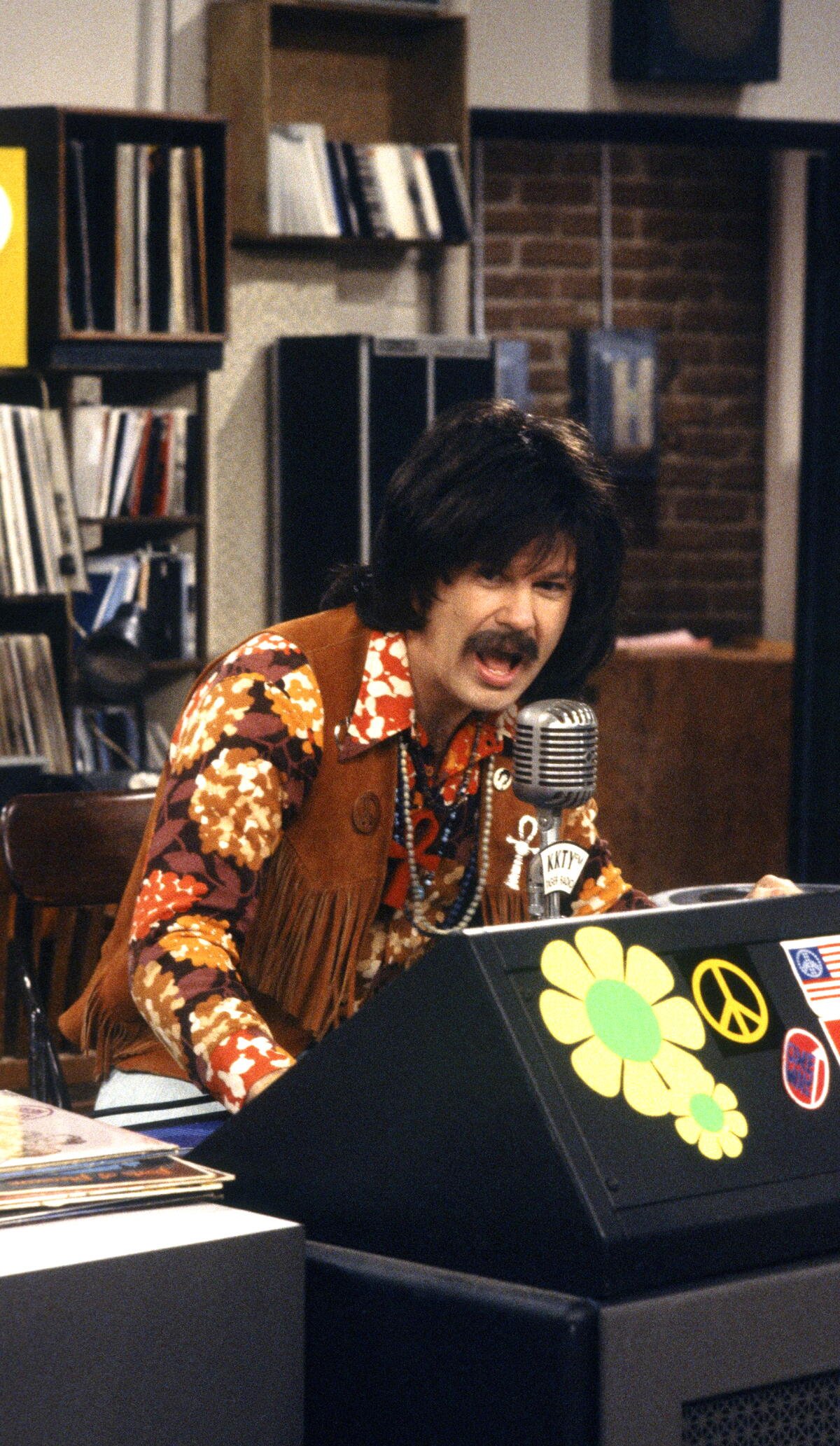
Dennis Haskins, the character actor whose booming voice and exasperated glare as Principal Richard Belding made him one of the most recognizable authority figures in 1990s television, died Sunday night. He had been managing Parkinson’s disease for eight years alongside other health complications.
While his death prompted an immediate wave of online tributes centered on “Saved by the Bell,” the outpouring quickly revealed a second, parallel legacy: Haskins spent more than a decade functioning as an unofficial community anchor at Dimples, a Burbank karaoke venue that billed itself as America’s first dedicated karaoke bar. Regulars who gathered there described a man who deliberately shed Hollywood distance to become a fixture of local nightlife.
Haskins attended Dimples so frequently over 14 years that patrons routinely assumed he held an ownership stake. He compared himself to Norm Peterson, the perpetually seated regular from the sitcom “Cheers.” The venue, which operated for 33 years before closing its doors in 2015, served as a rare equalizer in Los Angeles where working actors, industry veterans, and neighborhood residents shared microphones without hierarchy.


Parkinson’s disease, the progressive neurological disorder that ultimately defined his final years, typically begins with subtle tremors before advancing to severe motor impairment, rigidity, and cognitive challenges. An eight-year progression suggests Haskins was navigating significant physical limitations during a period when many of his peers were still actively booking roles. There is currently no cure for Parkinson’s, and treatments focus primarily on managing symptoms through dopamine-replacing medications like levodopa or, in advanced cases, deep brain stimulation surgery.
Unlike many actors defined by a single iconic role, Haskins refused to treat Bayside High as a closed chapter. Dale Wade Davis, a film producer and former sports anchor who frequented Dimples, noted that Haskins embraced the nickname “America’s principal” while maintaining the ambition of a newcomer chasing his next audition. That forward momentum translated into tangible support for others. When Davis underwent a highly publicized kidney transplant in 2007 — a procedure covered by national broadcasts including “Good Morning America” — Haskins appeared at the hospital and later helped launch a celebrity poker tournament Davis organized to give back, paving the way for higher-profile attendees like Jack Black to eventually join.
His engagement with younger performers extended well beyond charity events. Larry Bagby, an actor and musician who appeared in the third episode of the 1993 spinoff “Saved by the Bell: The New Class,” recalled Haskins driving to Simi Valley solely to record backup vocals on an original track called “Bus Driver.” Haskins also applied his pre-acting experience managing bands to mentor working musicians. After attending a performance by Bagby at the Hotel Café in Los Angeles, Haskins handed him written notes advising him to keep the stage banter brief and ensure the band never stopped playing — standard industry pacing techniques that veteran performers use to maintain audience energy.
The Dimples repertoire Haskins built over more than a decade functioned as a map of American pop music. He favored Frank Sinatra standards but regularly tackled high-energy rock and roll numbers, including Jerry Lee Lewis’ “Great Balls of Fire” and Chuck Berry’s “Johnny B. Goode.” Kevin Centazzo, a former writer and actor who lived near the bar, identified Wild Cherry’s “Play That Funky Music” as Haskins’ undisputed signature track, noting he would visibly bristle if another patron claimed it before his turn. He was equally willing to sing either the male or female vocal parts in Meat Loaf’s theatrical duet “Paradise by the Dashboard Light,” and frequently pulled staff members on stage for renditions of Sonny & Cher’s “I Got You Babe” or Kid Rock and Sheryl Crow’s “Picture.”
“Saved by the Bell” originally aired on NBC from 1989 to 1993, becoming a defining cultural touchstone for Generation X and older millennials. The show’s recent revival on Peacock introduced the Bayside universe to a new generation, though the reboot concluded after two seasons in 2021. Haskins did not reprise his role in the streaming continuation, a period that aligned with the worsening of his Parkinson’s symptoms.
Social media reaction following his death underscored the sheer volume of his interpersonal reach. Davis observed that the number of people claiming personal interactions, photographs, or shared stories with Haskins seemed physically impossible for one person to accumulate. Yet those accounts consistently mirrored the recollections of the Burbank regulars: an actor who bought drinks for strangers, showed up when needed, and treated a neighborhood bar stage with the same enthusiasm as a network soundstage.