Crypto Industry Targets Sherrod Brown in $30 Million Ohio Senate Fight
Fairshake revives its Ohio campaign against Sherrod Brown after the Clarity Act stalls
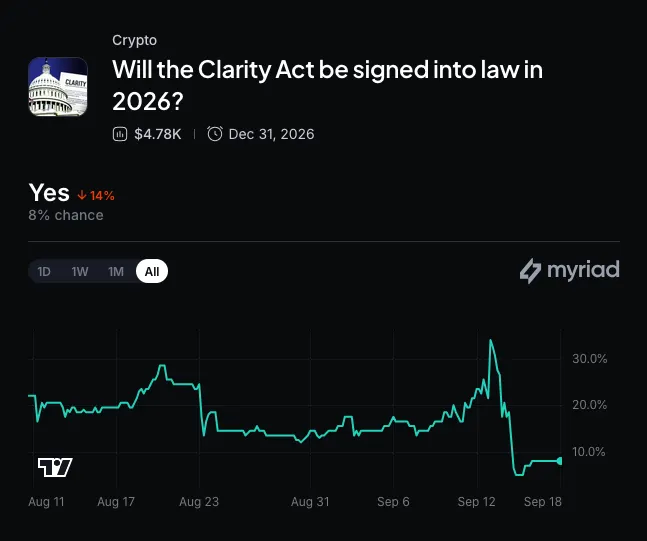
Ohio is emerging as a high-stakes battleground for control of the U.S. Senate, with the cryptocurrency industry committing tens of millions of dollars to stop former Democratic Sen. Sherrod Brown from returning to Capitol Hill. Brown is challenging incumbent Republican Sen. Jon Husted after the Senate failed to advance major digital-asset market regulation legislation.

Fairshake, the sector’s primary independent expenditure committee, has confirmed plans to spend at least $30 million opposing Brown. The commitment is among the largest single-race financial investments of the 2026 midterm cycle and follows the collapse of the Digital Asset Market Clarity Act.


The bill sought to create a comprehensive federal framework for digital assets by setting clear jurisdictional boundaries between the Securities and Exchange Commission and the Commodity Futures Trading Commission. It failed to clear a critical procedural hurdle when a motion to proceed was defeated in a 49-50 vote, short of the 60 votes needed to overcome a filibuster and move to final debate.

The opposition came from a unified Democratic caucus, joined by Republican Sens. Susan Collins of Maine, Josh Hawley of Missouri, and Jerry Moran of Kansas. Republican Sen. Thom Tillis of North Carolina also voted “no” as a procedural maneuver, preserving Senate leadership’s ability to return the legislation to the floor later.
That stalemate has reduced the time available for congressional action before the Nov. 3 midterm elections. Stand With Crypto, a grassroots advocacy arm affiliated with crypto exchange Coinbase, said lawmakers’ votes on the Clarity Act would be included in public scorecards intended to mobilize pro-industry voters in competitive states.
Brown’s return bid revives a rivalry from the 2024 general election. As chairman of the Senate Committee on Banking, Housing, and Urban Affairs, he became one of Capitol Hill’s leading skeptics of digital assets, repeatedly warning about consumer risks, illicit finance vulnerabilities, and systemic instability in unbacked token markets.
Fairshake spent approximately $40 million on advertising during that 2024 campaign. The blitz contributed to Brown’s defeat by Republican challenger Bernie Moreno, flipping a seat Democrats had held for three terms and helping Republicans secure a majority in the chamber.
Brown is now seeking to challenge Husted, who previously served as Ohio lieutenant governor and secretary of state. Gov. Mike DeWine appointed Husted to the Senate seat in January 2025 after JD Vance resigned to become U.S. vice president.
Brown’s campaign described the super PAC’s planned spending as corporate opposition to financial consumer protections. “Of course the special interests are panicking, they know Sherrod will fight the rigged system they’re feasting on to stand up for working Ohioans,” Brown campaign manager Patrick Eisenhauer said in a statement.
Fairshake entered the general election cycle with substantial financial resources. Contributions from digital asset firms Coinbase and Ripple, along with venture capital firm Andreessen Horowitz, helped the super PAC raise $116 million for the 2026 election cycle by January 2025. Federal Election Commission disclosures showed approximately $108 million in cash on hand as of late August.
Fairshake says it aims to support bipartisan candidates who favor clear digital asset regulations. Its broadcast strategy, however, has often used general-appeal political messaging. In the 2024 general election and later 2026 primary contests, the group’s television and digital advertisements largely avoided technical debates over blockchain oversight and instead emphasized mainstream economic, tax, and governance issues tailored to key voting blocs.