Creamed Corn in Alfredo Sauce Adds Texture and Cuts Richness
The starchy liquid inside the can replaces extra heavy cream while balancing the sharp saltiness of Pecorino Romano.
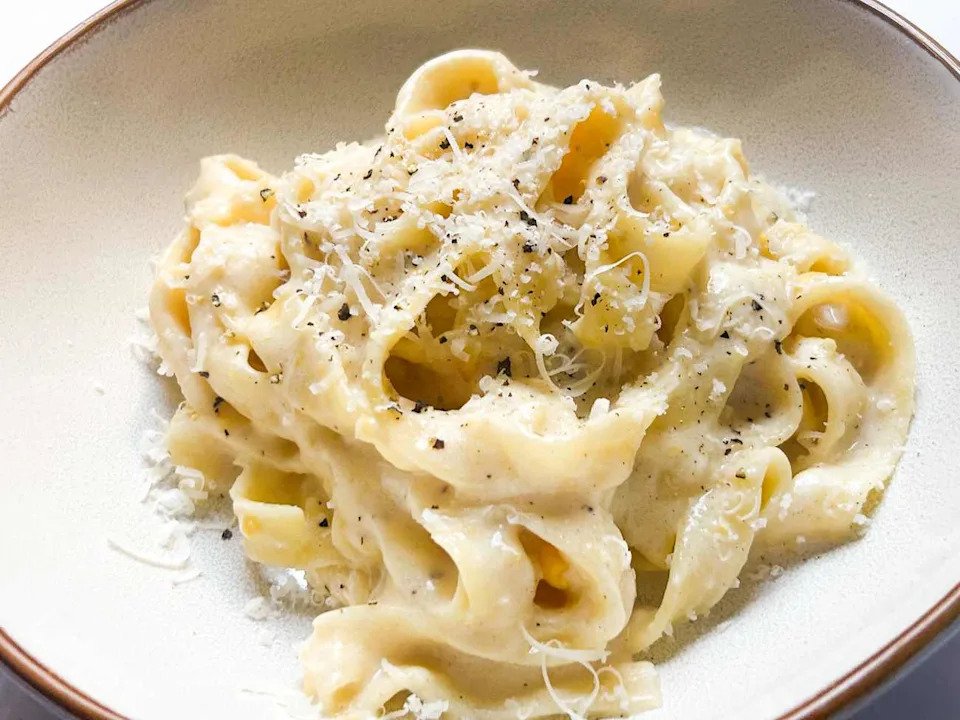
A 15-ounce can of creamed corn is emerging as an unlikely but effective modifier for fettuccine Alfredo, altering the sauce’s density and flavor profile without requiring a recipe overhaul.
Traditional Alfredo relies on emulsifying butter, heavy cream, Parmesan, and Pecorino Romano into a thick coating for pasta. The result is rich to the point of heaviness. Incorporating creamed corn late in the cooking process introduces natural sugars and starches that break up the fat concentration while maintaining a velvety consistency. Unlike whole kernel corn, which creates a jarring textural contrast against smooth noodles, the partially mashed kernels and starchy liquid in canned creamed corn integrate directly into the dairy base.



The technique requires building a standard Alfredo sauce first. Butter is melted in a large skillet before stirring in grated Parmesan, Pecorino Romano, heavy cream, garlic, salt, nutmeg, and black pepper. Once the mixture simmers and thickens, the entire contents of a standard 15-ounce can of creamed corn are poured in and stirred until fully combined. Cooked fettuccine is then tossed directly into the skillet, with reserved starchy pasta water added incrementally to achieve a glossy finish.
Despite its name, commercial creamed corn rarely contains actual cream or dairy. Manufacturers produce the characteristic texture by scraping or pressing corn cobs to extract a starchy liquid historically referred to as “corn milk.” This liquid is blended with whole or partially broken kernels and sugar before canning. The absence of additional dairy prevents the Alfredo from becoming overly saturated with fat, which is precisely why the ingredient functions as a balancing agent rather than just another source of richness.

Adding sweetness to savory Italian-American sauces has precedent. Tomato-based ragùs frequently incorporate carrots or a pinch of sugar to neutralize acidity. In a purely dairy-driven sauce like Alfredo, the corn’s sweetness serves a different structural purpose: it rounds out the sharp salinity of aged Pecorino Romano and the pungency of raw garlic. Nutmeg, a classic component of French béchamel and Italian besciamella, bridges the gap between the sweet corn and the savory cheeses.
Professional recipe developers have been testing creamed corn across multiple applications beyond pasta. It acts as a dairy-free thickener in corn chowder, adds moisture to chicken pot pie fillings, binds enchilada mixtures, and provides body to egg drop soup. Its high starch content makes it a versatile utility ingredient for any dish requiring viscosity without additional roux or heavy cream.

Canned vegetables broadly have seen renewed attention among home cooks looking for pantry-stable shortcuts. Recent adaptations include using canned mushrooms to add umami depth to grilled cheese sandwiches and pouring canned collard greens over white rice for quick side dishes. Creamed corn’s integration into Alfredo represents a continuation of this trend, applying industrial preservation methods to scratch-cooking techniques.
Fettuccine Alfredo itself is largely an Italian-American invention, popularized in the United States during the mid-20th century after originating from a simpler butter-and-cheese preparation served at Alfredo di Lelio’s restaurant in Rome. The American version’s reliance on heavy cream makes it particularly receptive to starch-based modifications that lighten the final dish.
Standard 15-ounce cans of creamed corn remain widely stocked in U.S. grocery stores, typically priced between $1.50 and $3.00 depending on the brand and region.