Corporate America Is Racing Into AI Without the Expertise to Control It
Boards are being forced to govern artificial intelligence before they are ready
WASHINGTON — Corporate boards across the United States are under growing pressure to adopt artificial intelligence, even as many lack the expertise and regulatory guidance needed to manage it. According to disclosure data from major U.S. indices, only 22% of companies in the S&P 500 and 6% of firms in the Russell 3000 have formally disclosed board-level oversight of artificial intelligence.
AI has reached the top of the board agenda for 65% of public company directors, yet only 29% of executives believe their boards have the technical expertise needed to advise on and oversee implementation. With Congress yet to enact comprehensive, binding legislation regulating private-sector AI deployment, corporate boards have assumed much of the responsibility for governing the technology.
The shortage of expertise is especially acute outside the technology sector. The pool of engineers and managers capable of safely deploying generative AI tools remains concentrated in tech hubs, prompting mainstream companies to launch massive internal training campaigns. PwC and Accenture, for example, have committed billions of dollars to train hundreds of thousands of their own employees in AI tools.


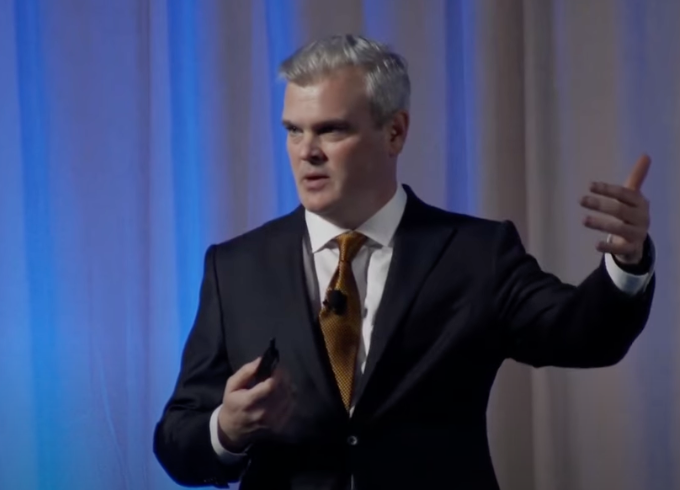
“Every day I see their urgency to understand and get ahead with AI in industries as varied as defense, food distribution, reinsurance, utilities, manufacturing, consumer products, retail, engineering, and international banking,” said Ryan McManus, President of the National Association of Corporate Directors (NACD) New York chapter and CEO of techtonic.io, a consultancy that advises boards and executives on AI strategy.
McManus warned that companies that move too slowly in understanding AI’s operational implications risk falling permanently behind competitors. Rushing into deployment without proper human guardrails, however, can produce costly operational setbacks. Ford Motor Company encountered that risk while trying to modernize manufacturing rapidly and address long-standing vehicle quality problems.
The automaker deployed 900 AI-assisted inspection cameras and automated quality systems in an effort to replace veteran quality-control engineers. The systems allowed defective components to pass through assembly lines undetected, and the false start cost Ford both time and capital. Ford’s vice president of vehicle hardware engineering later acknowledged that the company had mistakenly assumed that introducing AI and feeding it design specifications would automatically produce a high-quality product.
Ford later rehired veteran safety and quality engineers to work alongside the automated systems. Those engineers trained the AI algorithms and mentored younger assembly workers, creating a hybrid oversight model. After human-in-the-loop systems were reintroduced, Ford’s vehicle quality metrics improved, helping the automaker rise in the J.D. Power quality rankings.
Governance experts advise boards to use a phased approach rather than immediately pursue the most advanced applications. In the “Crawl” phase, companies focus on strategic alignment and education, establish baseline policies, upskill directors, and launch low-risk, targeted pilot programs intended to improve human productivity rather than eliminate headcount.
The “Walk” phase involves scaling more complex use cases while closely monitoring return on investment (ROI) and risk metrics. It also requires substantial workforce reskilling because of the persistent shortage of specialized AI talent. Only in the “Run” phase do organizations, after mastering operational and risk guardrails, develop proprietary next-generation AI tools and pursue entirely new product categories to drive raw market value.
The caution surrounding AI is also coming from the industry’s leading researchers and executives. Jacob Coxon, a researcher at Anthropic, publicly resigned after citing concerns that advanced artificial intelligence poses a catastrophic threat to humanity. Anthropic Chief Executive Officer Dario Amodei subsequently published a nearly 4,000-word essay on the industry’s future trajectory, advocating a highly cautious and measured approach to scaling AI models.
OpenAI CEO Sam Altman and Tesla and xAI head Elon Musk quickly signaled support for a controlled approach to development. Musk has repeatedly voiced concerns about existential risk and previously signed a March 2023 open letter with thousands of researchers calling for a six-month pause on training AI systems more advanced than GPT-4.
Despite those warnings from the frontier of computer science, federal action to impose an AI development slowdown remains highly unlikely in the near term. President Joe Biden issued a sweeping executive order on AI safety in October 2023, while Senate Majority Leader Chuck Schumer convened bipartisan “AI Insight Forums” to educate lawmakers. Congress, however, has not passed comprehensive, binding legislation governing the deployment of artificial intelligence in the private sector.
The divide between Silicon Valley’s warnings and corporate America’s urgency continues as mainstream businesses push to adopt AI. Whether directors are technically prepared to manage that transition remains one of the most critical and unresolved questions facing American business.