

Apple’s Siri AI blocked in EU and China as regulatory rift widens
Regulatory and geopolitical hurdles stall Apple's AI rollout in key global markets
Despite expanding language support to Spanish-speaking markets this October, Apple Inc.’s flagship voice-activated artificial intelligence, Siri AI, will remain blocked across the European Union and China due to ongoing compliance disputes. The geographical restriction was disclosed in a footnote during Apple’s recent product presentation, confirming that the upgraded Siri AI capabilities will not be operational within EU member states or China.
In Europe, the primary obstacle is the Digital Markets Act (DMA), a sweeping piece of antitrust legislation implemented by the European Commission that became fully enforceable in March 2024. Apple has repeatedly expressed concerns that complying with the DMA’s interoperability mandates could compromise the security of its operating systems and jeopardize user privacy. The decision draws a stark geographic boundary for Apple’s latest software ecosystem: while Spanish-speaking users in Latin American countries will gain access to the new virtual assistant features in October, users in Spain and the rest of Europe will be excluded.
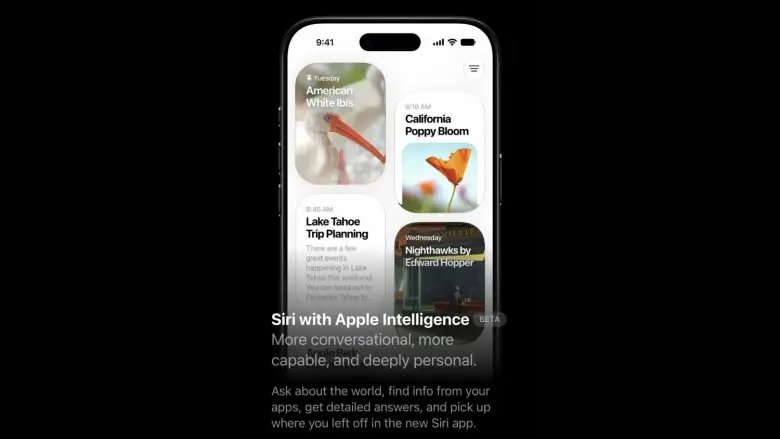


The exclusion impacts not only the iPhone but also the Apple Watch and AirPods lines, which rely on the companion devices to process advanced voice commands. Under the DMA, companies designated as digital “gatekeepers”—a status that includes Apple—must comply with strict rules regarding data sharing, interoperability, and self-preferencing. To comply with the DMA, Apple would theoretically have to allow rival artificial intelligence models and third-party services the same deep, system-level integration that Siri enjoys.
In China, the hurdles are primarily geopolitical and domestic. The Cyberspace Administration of China (CAC) enforces rigorous licensing requirements for generative AI models, demanding that developers receive government approval before releasing public-facing algorithms. Because Apple has built its Apple Intelligence framework on a hybrid model that uses both on-device processing and its proprietary Private Cloud Compute servers, opening these channels to third-party providers presents complex security challenges that have stalled the European rollout.
The regulatory division has forced Apple to split its new software capabilities into distinct technical categories to ensure at least some features can bypass regional bans. The company is distinguishing between “Siri AI”—which controls advanced voice interactions, system-wide app orchestration, onscreen context awareness, and natural dialogue—and “Apple Intelligence,” which governs local, on-device operations. Furthermore, China’s strict data localization laws require that all data generated by domestic users remain within the country’s physical borders.
Because Apple’s global AI strategy relies partly on a partnership with U.S.-based OpenAI to handle specific, complex queries via ChatGPT, the service cannot operate under Chinese regulatory frameworks. While Siri’s advanced voice and conversational features are fully restricted in the EU, several underlying Apple Intelligence tools are expected to function. European users will still have access to on-device utility features that do not trigger the same regulatory concerns under the DMA.
To launch Siri AI in China, Apple must secure a local domestic AI partner, such as Baidu or Alibaba, a process that remains ongoing and unresolved. These on-device utility features include: local text summarization, on-device language models that condense long emails, articles, and message threads without sending data to external servers; photo editing tools like the new “Clean Up” tool, which uses local machine learning to identify and remove unwanted background objects from photographs; and on-device language models that handle basic text generation, predictive text, and smart replies directly on the hardware of compatible iPhones, iPads, and Macs.
The exact division between which features belong exclusively to the restricted Siri AI and which fall under the allowed Apple Intelligence features remains fluid. Currently, Apple’s AI features are in a beta testing phase, restricted to U.S. English. The scheduled October update, which introduces Spanish along with other languages, will serve as the first major test of this fragmented global release. For European consumers, the timeline for a full rollout of Siri AI remains indefinite. While negotiations between Apple’s legal teams in Cupertino and regulators in Brussels continue, the company has not provided a target date for when its advanced voice assistant features might comply with the DMA’s standards. Consequently, European users purchasing Apple’s latest hardware will operate with a restricted version of the operating system compared to consumers in the United States and Latin America.