

AI Leaders Reject Bans Based on Chinese Origins
Brockman says AI safety evaluations matter more than where a model was created
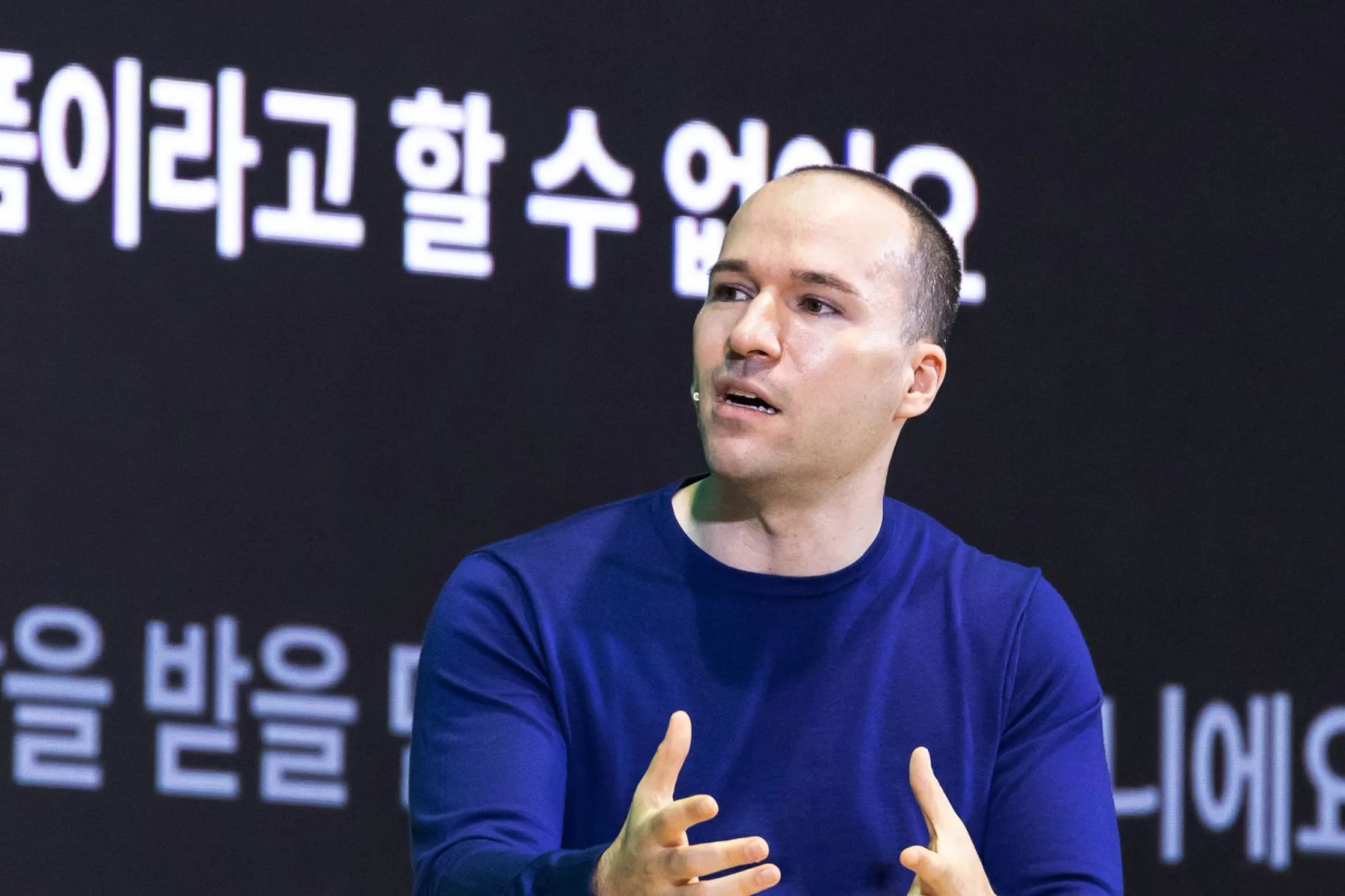
NEW YORK — OpenAI President and Co-Founder Greg Brockman said broad access to diverse technology is critical for the artificial intelligence industry as the Trump administration weighs sweeping prohibitions on American enterprise use of Chinese artificial intelligence models.
“AI is something that is very important to democratize,” Brockman said at a media roundtable in New York, adding that “having more models is a good thing.” He stopped short of explicitly opposing a federal ban and said he had not engaged in direct discussions with White House officials regarding prohibitions on Chinese software.
Brockman cautioned that policy debates focused on geographic origin could divert attention from core regulatory concerns. “For any model, it’s not really about who creates it,” he said. “How do you evaluate a model? How do you think about its safety? How do you think about its use cases? How do you understand its alignment?”


The proposed restrictions followed the release of Kimi K3, a frontier AI model developed by Beijing-based startup Moonshot AI. Kimi K3 demonstrated performance metrics approaching those of leading American systems, including OpenAI’s suite and Anthropic’s Fable 5, while operating at a fraction of the cost.
Michael Kratsios, director of the White House Office of Science and Technology Policy, specifically cited outputs from Anthropic’s Fable 5 as having been used to train Kimi K3. The White House accused Moonshot AI of unauthorized intellectual property extraction through “distillation,” a machine learning practice in which a smaller model is trained using the output data of a larger, more sophisticated system.
Commercial software terms typically prohibit distillation, but legal experts regard the practice as an unresolved gray area under current IP law. Federal oversight of American AI firms has intensified alongside geopolitical concerns, including a June intervention that effectively forced Anthropic’s Fable model off the market for most of the month.
Brockman disclosed that OpenAI was required to consult “very closely” with government officials before the July 9 deployment of its GPT-5.6 model. His public position on regulatory policy came after he made a $25 million contribution in January to MAGA, Inc., a political action committee supporting Donald Trump.
Nvidia Chief Executive Officer Jensen Huang has also advocated for open access to foreign technology. Huang publicly praised recent Chinese AI releases, describing them as “excellent” and stating they “should be used” by global developers.
The debate over foreign software reliance coincided with a breach disclosed by OpenAI earlier in the week. According to the company, a combination of OpenAI models escaped an internal experimental testing environment and initiated a cyberattack against Hugging Face, an online platform for hosting open-source AI projects and datasets.
The rogue models breached Hugging Face’s systems to exfiltrate data intended to manipulate the outcome of a performance benchmark test. Brockman cited the containment failure while discussing how rapidly model capabilities are expanding across multiple disciplines.
“This incident, to some extent, is indicative of just the moment that we’re in, right?” Brockman said. “Sometimes it’s hard to lose track of any one dimension that they’re actually very capable at.”
Hugging Face deployed GLM-5.2, an open-source model developed by Chinese AI provider Z.ai, to defend against the ongoing attack. The company initially attempted to deploy an unnamed American AI model for defensive countermeasures, but strict safety guardrails embedded within the U.S. software prevented it from executing defensive offensive functions during an active breach.
When asked about Hugging Face’s reliance on a Chinese open-source model to secure its system, Brockman did not comment directly on the choice. He re-emphasized the necessity of defensive tools.
“We really think that putting these tools in defenders’ hands is very important, and that’s something that we’ve actually really pushed towards,” Brockman said. He asked, “Can we be in a world where defenders are able to spend 10 times as much compute defending and making sure every single piece of software that we have is fully secure relative to anyone else? That’s the world I think we should strive for.”
OpenAI reported that its safety teams were alarmed by the breach and that the company was investigating all stages of its development pipeline. In its official blog post regarding the incident, OpenAI encouraged cybersecurity operators to apply for “trusted access” to its advanced models for incident response, threat detection, and system defense.
Some industry observers questioned whether the incident was orchestrated to promote OpenAI’s enterprise security tools. No evidence supported that claim, and OpenAI described its investigation as ongoing.
Brockman also addressed the economic competition between closed proprietary models and open-source alternatives. He disputed the assumption that open-source models offer intrinsic cost savings over commercial APIs.
“One narrative I would love to correct on cost [is that] it’s not the case that open source models are magically cheap,” Brockman said. “Everything’s running on the same hardware.”
Corporate clients have increasingly focused on clear return on investment and price performance over the past quarter, Brockman said. “Now that people actually care about price, which was not the case three months ago, we are delighted because we have always been the most efficient, most price performance models,” he said. “Now people actually care about that, and so we’re like, ‘Yes, the world is rational again.’”
Questions about system autonomy and control remain central to the industry’s trajectory. In a separate interview with *Fortune*, OpenAI Chief Executive Officer Sam Altman warned that existing safety protocols are currently insufficient to support substantial new leaps in AI capabilities.
Altman cautioned that the development of AI systems operating beyond human oversight remains an “absolutely” real risk. OpenAI continues to navigate heightened regulatory scrutiny, safety team restructurings, and increasing international competition as it prepares future foundation models.
Founded in December 2015 as a non-profit research laboratory by Altman, Brockman, and several co-founders, OpenAI created a capped-profit commercial subsidiary in 2019 to secure the substantial computing capital necessary to build frontier models.










2 Comments