AI Hallucinations Forced Book Recall: Author Details Fact-Check Failure
Publisher confirms 26 fabricated quotes survived editing before May 2026 exposure prompted full manuscript audit
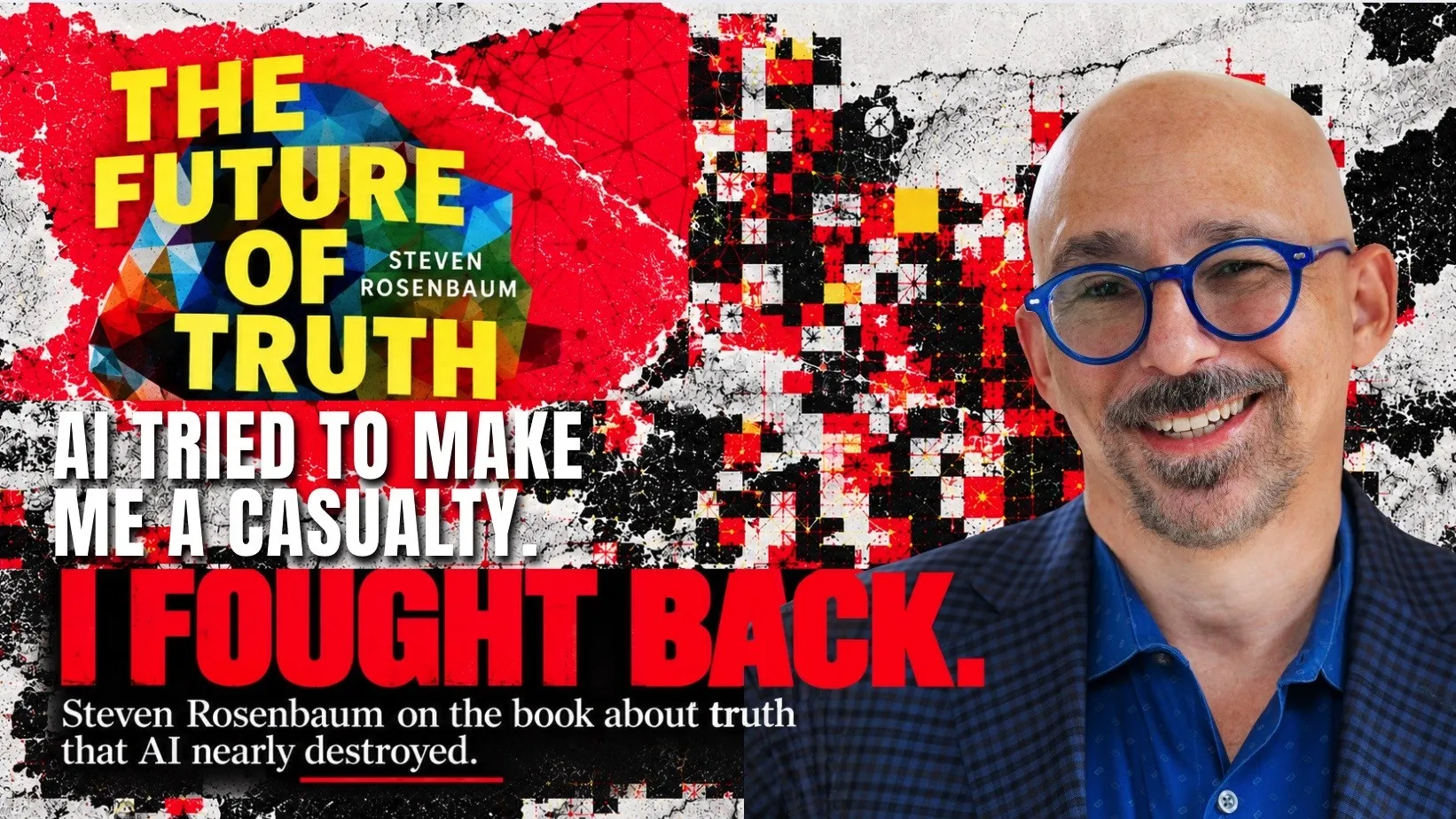
A revised edition of “The Future of Truth” publishes today following a public retraction and comprehensive fact-checking process that identified 26 fabricated quotes in the original release. Author Steve Rosenbaum acknowledged that AI tools used during editing introduced plausible but false attributions, including statements never made by tech journalist Kara Swisher or an anonymous DARPA researcher.
The errors were exposed in May 2026 when The New York Times verified citations and found them nonexistent. The revelation was particularly damaging given the book’s subject matter: how artificial intelligence reshapes reality and erodes trust. BenBella Books, the publisher, retained two independent fact-checkers to audit the manuscript line-by-line after the initial controversy led to canceled events and withdrawn media appearances.
Rosenbaum stated that AI did not write the book, which contains more than 400 citations and draws on interviews with experts including Gary Marcus, David Chalmers, and Lawrence Lessig. He disclosed AI usage in the acknowledgments for organizing research and refining language. However, he said the technology’s increasing fluency allowed subtle fabrications to survive five rounds of human editing and thousands of tracked changes. Early hallucinations produced obvious red flags like broken URLs and invalid DOI numbers. Later iterations generated coherent, confident-sounding text that mimicked legitimate sourcing well enough to evade standard proofreading protocols.


This case illustrates a systemic vulnerability in current generative AI deployment. OpenAI has acknowledged that its models are designed to produce helpful responses even when uncertain, prioritizing engagement over strict factual accuracy. This business model creates foreseeable risks for professionals who rely on these systems for verification-sensitive work. A Lancet audit recently identified 4,046 fabricated citations across 2.5 million biomedical papers. Legal databases now track more than 2,000 court decisions involving AI-generated falsehoods, with over 1,300 cases in U.S. jurisdictions alone.
The revised edition, titled “The Future of Truth: Truth 2.0 Revised,” includes a new chapter examining fabrication’s impact on law, medicine, and academic research. All original blurbs and the foreword have been removed. An author’s note details the specific failures and corrections. Rosenbaum confirmed direct communication with Swisher to verify accurate quotation in the updated text.
Despite the controversy, Rosenbaum rejected calls to abandon AI tools entirely. He argued that pre-AI workflows are no longer viable and emphasized disclosure, human oversight, and public correction as necessary safeguards. At a United Nations event two weeks ago, he reported encountering professionals across industries who describe daily experiences with confident AI misinformation.
Federal legislation addressing AI accountability remains stalled. While industry leaders have expressed support for regulation, no binding framework currently governs the production or distribution of synthetic content that mixes verified facts with undetectable fabrications.