
The Bentley That Put Le Mans Power in a Brooklands Weapon
Inside Smoky, the Bentley Super Sports that carried Le Mans power to Brooklands
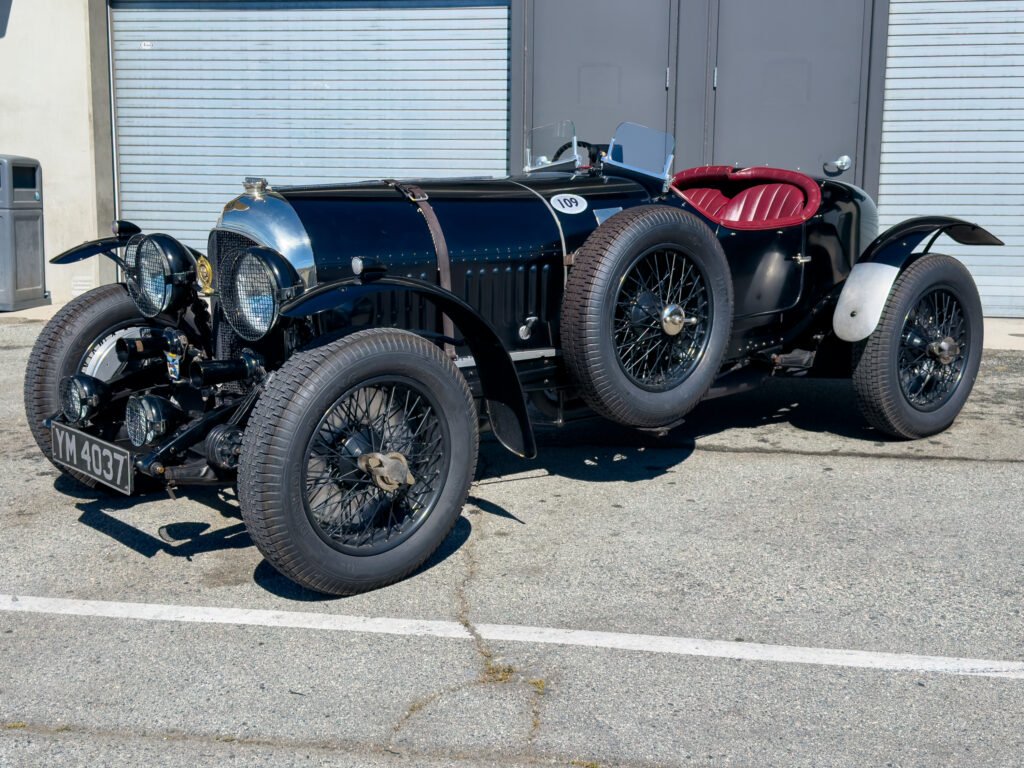
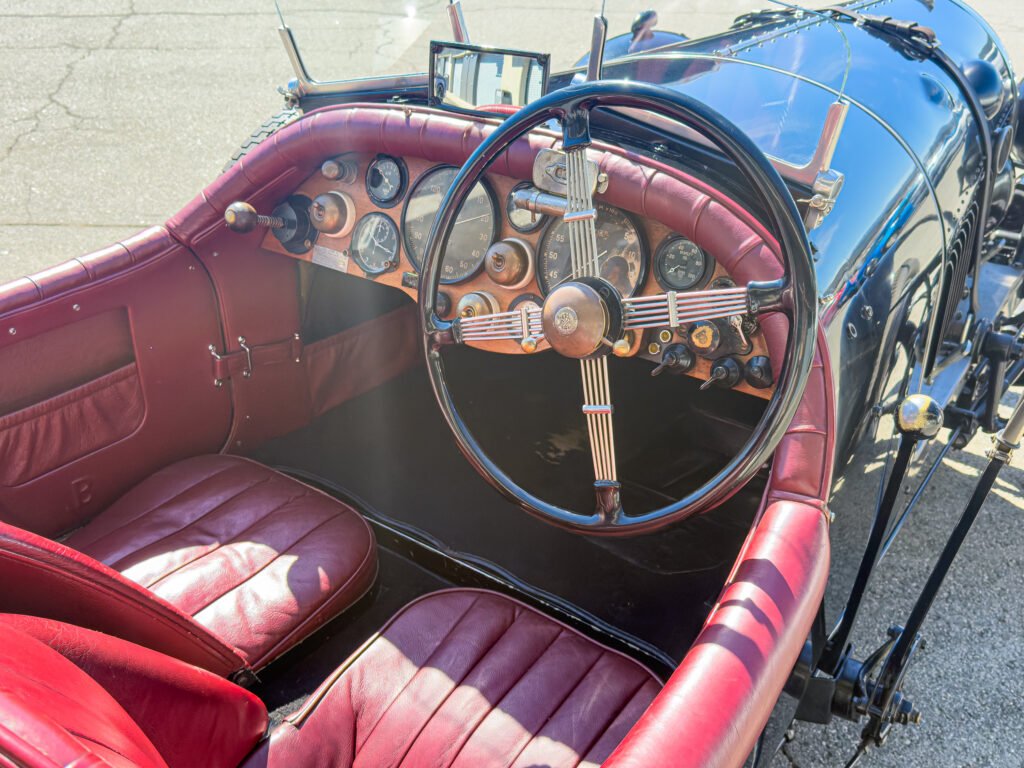
At Laguna Seca, YM 4037 feels less like a historic display car than a compact mechanical device still waiting to be unleashed. Its Jarvis of Wimbledon bodywork leaves little room around the driver, and the three-speed lever sits outside the cockpit fabric. The narrow lightweight body dictated that arrangement, while the non-synchromesh, straight-cut dog-engagement A-type or D-type gearbox required double-declutching. There is no elbow room inside the cabin.
The car is a 1926 Bentley Super Sports, one of only 18 built between 1925 and 1927. Its two-seat bodywork is compact even by the standards of its time. There is little separation between the driver, the exposed controls, and the mechanical work happening beneath the body.


The original Super Sports began with Bentley’s standard 3 Litre, then underwent deliberate architectural surgery. Bentley shortened the wheelbase by 9.5 inches (241 mm), reducing mass and making the car more responsive. The radiator was more tapered, presenting less resistance to the airflow. The bodywork depended on the coachbuilder chosen by each owner.
Its engine was also more specialized than the one in a standard 3 Litre. New pistons, a lighter flywheel, higher compression, different carburetors, and unique gearing helped Bentley guarantee a speed above 100 mph (160 km/h). The 1925 3 Litre Super Sports became the first British production automobile sold with a certified top speed exceeding 100 mph, verified on Brooklands’ concrete banking before customer delivery. In the same years, millions of Ford Model Ts were hard-pushed to exceed 40 mph (64 km/h).
YM 4037 was the 12th of the 18 cars. Better known as Smoky, it was built in 1926 with its Jarvis of Wimbledon two-seater bodywork. The car later lived in New Zealand and South Africa, but its early competition life was in England.
In 1932, its second owner, Bentley racing driver Kit Baker-Carr, replaced the original engine with a 4.5-liter unit from Old Mother Gun, the famous factory team car with chassis number KM3088. Woolf Barnato and Bernard Rubin had driven that car to victory in the 1928 24 Hours of Le Mans.
That transplanted Le Mans powerplant turned Smoky into a privateer Brooklands machine. Baker-Carr used it between 1935 and 1937, winning seven races and setting a fastest lap of almost 117 mph (188 km/h). The engine’s competition history therefore ran from Bentley’s factory victory at Le Mans to a shortened customer chassis attacking Brooklands’ banking.
The Super Sports formula was based on removing what did not help the car go faster. The shortened chassis reduced weight and improved agility. The engine modifications increased output. The body left the driver exposed to the weather and placed the gear lever outside the cockpit.
That approach is distant from the modern Bentley Supersports being tested at Laguna Seca. The new car is stripped of its hybrid system and driven through its rear wheels, making it the most driver-focused Bentley in recent memory and apparently the lightest car the company has made in 85 years. The original Super Sports reached the same idea through a shorter chassis, a competition engine, and fewer barriers between the driver and the machinery.