COROICO, Bolivia — The scientific description of *Leopardus tilcayo* has triggered a major shift in South American mammalian taxonomy while presenting immediate management challenges for wildlife conservators in Bolivia’s Yungas cloud forests.
Published in the journal *Current Biology*, the discovery is the first in more than a century in which scientists have identified a previously unrecognized living wild cat species. The small, tree-dwelling carnivore is native to Bolivia’s high-elevation tropical forests, and a single rescue animal now serves as the primary living representative of the species.


The formal classification followed rigorous morphological and genetic analyses within the genus *Leopardus*, a taxon of small spotted cats endemic to the Americas. It includes the ocelot (*Leopardus pardalis*), the margay (*Leopardus wiedii*), and the oncilla (*Leopardus tigrinus*). Taxonomists had long struggled to map the genetic lineages of Neotropical small cats because of their elusive behavior, nocturnal habits, and overlapping physical traits.
The species’ distinct lineage is specifically adapted to the dense foliage and cloud-shrouded terrain of the eastern Andean slopes. Its recognition comes as the Yungas ecoregion faces severe ecological pressure from agricultural expansion, road construction, deforestation, and the illegal wildlife trade.
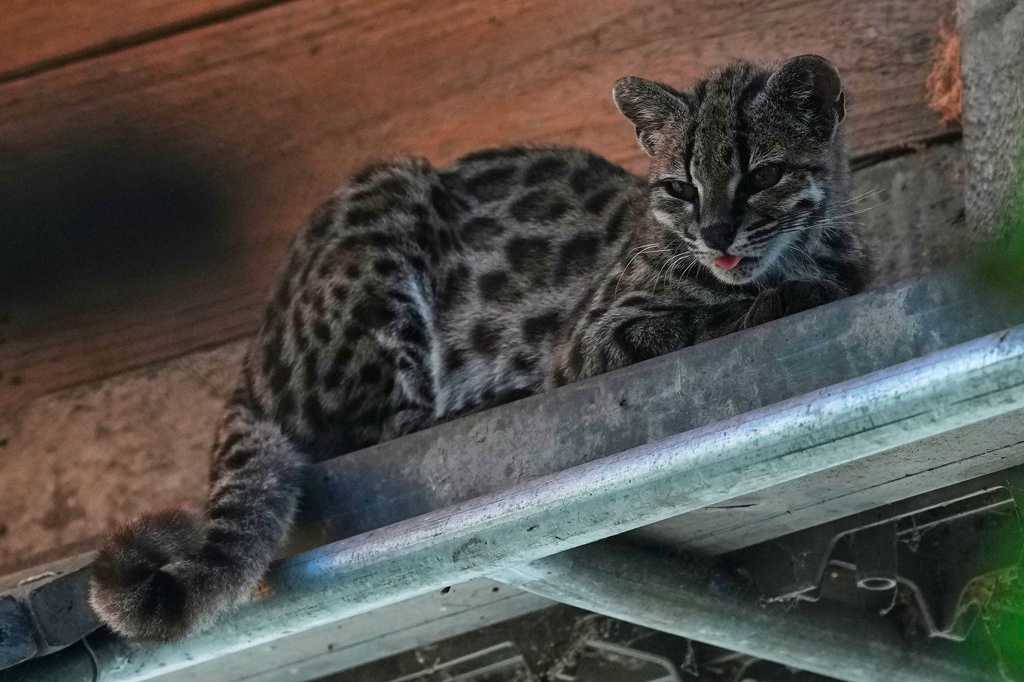
Tigrino, the male at the center of the discovery, resides at the Senda Verde Wildlife Sanctuary near Coroico, approximately 60 miles northeast of La Paz. He arrived at the rescue center in 2017 after being confiscated from a local family that had illegally removed him from the wild in an unsuccessful attempt to domesticate him.
Smaller than a standard domestic cat (*Felis catus*), *Leopardus tilcayo* has distinct, large leopardlike rosettes set against a thick coat that provides insulation and camouflage in montane forest environments. Tigrino measures 18 inches (46 centimeters) from the tip of his snout to the base of his tail and weighs just 3 pounds (1.4 kilograms).
The publication of the scientific study brought visitors from across Bolivia and international locations to the Senda Verde facility in search of a rare view of the animal. Sanctuary caretakers have restricted public access, however, to protect Tigrino’s health and stability.
Small wild felids native to deep cloud forests possess highly sensitive nervous systems and demonstrate acute physiological stress when exposed to human crowds, noise, and unfamiliar scents. Sanctuary staff therefore keep Tigrino in a secluded habitat shielded by natural foliage. During brief periods outside his shelter, he sniffs ambient air currents and conducts brief perimeter walks before returning to dense cover.
Senda Verde’s management policy balances the animal’s welfare against the demand for public education. Co-founder Marcelo Levy said the newfound species designation has transformed the rescue specimen into a critical focus point for regional environmental policy.
“Tigrino has become, in just a few days, an ambassador for conservation,” Levy said. “He’s such a tiny animal, and he has become something so important.”
The steep montane forest belt of the Yungas acts as a transition zone between the high Andean Altiplano and the lowland Amazon basin. The region is recognized as a global biodiversity hotspot, and conservationists hope the formal scientific recognition of *Leopardus tilcayo* will strengthen legal protections for wild felid habitat and drive expanded biological research throughout Bolivia’s cloud forest ecosystems.