New Jersey Diesel Spill Exposes Data Centers’ Fossil-Fuel Weakness
A Secaucus leak puts data center backup power under scrutiny
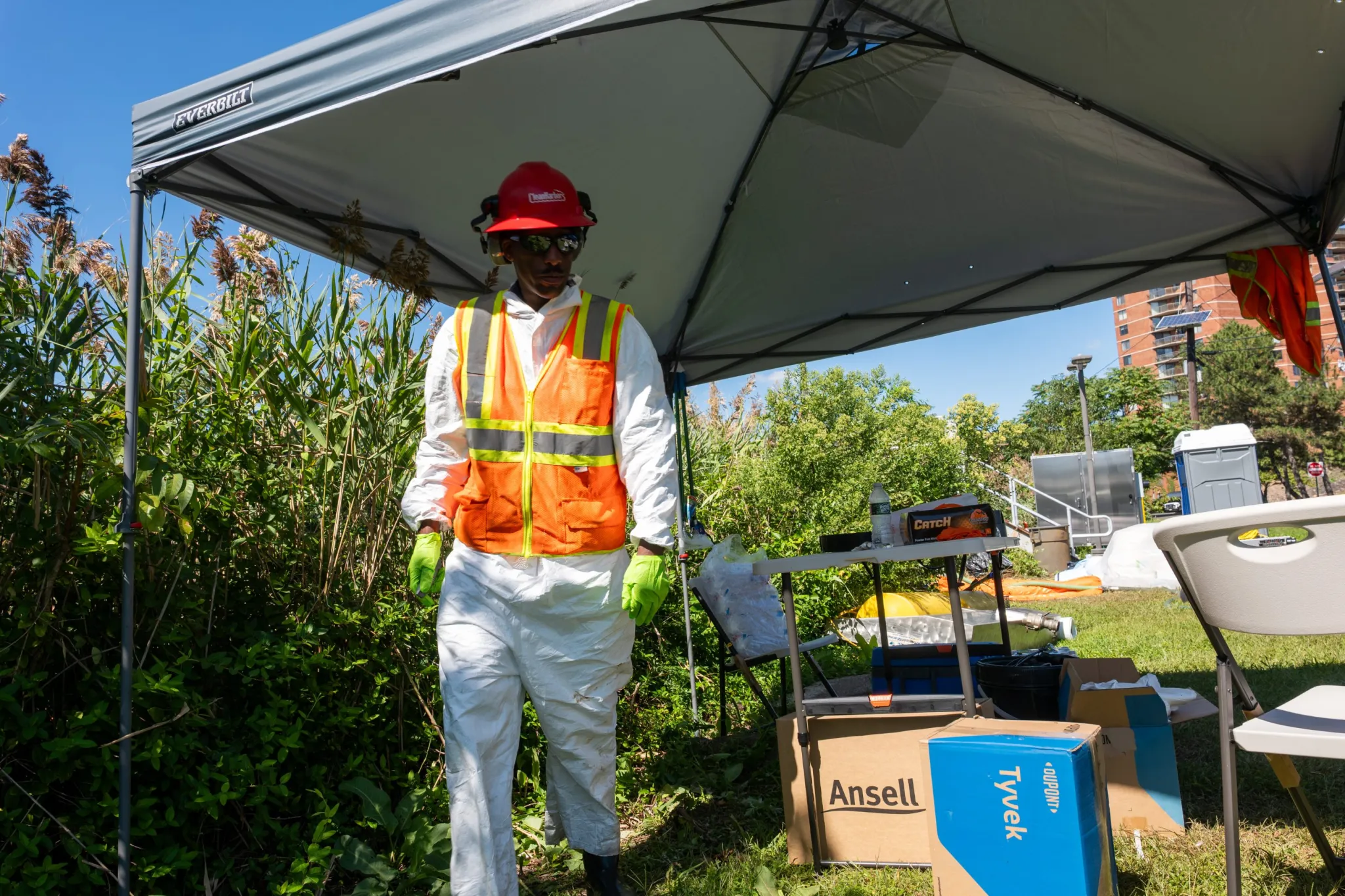
SECAUCUS, N.J. — A 5,000-gallon diesel fuel spill at an Equinix data center has drawn attention to the physical vulnerability behind the digital economy as artificial intelligence and cloud computing drive an unprecedented expansion of data centers across the United States. The facility is in Secaucus, within the ecologically sensitive Hackensack Meadowlands, a vast northern New Jersey wetland complex that has undergone decades of environmental remediation after historic industrial pollution.
The spill began last week and flowed into an unnamed local tributary, but the New Jersey Department of Environmental Protection (NJDEP) said it was contained before reaching the main channel of the Hackensack River. By Monday, environmental cleanup crews had recovered approximately 3,500 gallons of fuel. NJDEP officials reported no observed impacts on local wildlife, and no drinking water intakes are located near the spill zone.
Equinix, headquartered in Redwood City, California, is one of the world’s largest digital infrastructure and colocation providers. The company said two broken valves used during a routine fuel filtration process caused the leak. Equinix expressed regret for the incident and the concern it caused the community, adding that it is finalizing a comprehensive incident response report intended to prevent future occurrences.


Secaucus Mayor Michael Gonnelli initially told local outlets that a “computer glitch” caused the accident. The facility has operated since 2001 and, according to Gonnelli, had never experienced such an issue before. Most data center diesel leaks are smaller, typically under 200 gallons, while the Secaucus spill is the largest data center-related spill in New Jersey history.
The New Jersey incident is nearly three times larger than a 2022 spill at an Equinix facility in neighboring North Bergen, where 1,800 gallons of diesel leaked. Another New Jersey facility in Clifton released 600 gallons of fuel into municipal storm drains in 2017. Nationally, the largest recorded data center diesel spill occurred in 2008, when 15,000 gallons leaked from an AT&T facility in Bothell, Washington. At least 10 major data center-related diesel spills have been documented across the country over the past two decades.
Data centers maintain massive arrays of industrial diesel generators because corporate clients, financial networks, and cloud services require continuous power. The systems are intended to protect “five nines” of uptime, or 99.999% reliability. Even brief outages can cost operators up to $1 million per hour, disrupt emergency medical dispatch systems, or cause widespread commercial flight cancellations.
The Better Data Center Project reported in March that the cumulative capacity of data center diesel generators in the United States tripled from 20 gigawatts in 2018 to 55 gigawatts in 2024. That 55-gigawatt capacity is roughly equivalent to the output of dozens of commercial nuclear reactors, although the backup generators are designed to operate primarily during emergencies and system testing.
In Northern Virginia’s “Data Center Alley,” the dense digital corridor in Loudoun and Fairfax counties that handles an estimated 70% of global internet traffic, air quality permits have been issued for more than 10,500 individual data center backup generators. Together, those generators have enough capacity to provide the electricity needed by roughly 20 million average American homes, compared with approximately 3.9 million residential households in the entire state of Virginia.
High-density servers used for AI and cloud processing generate immense heat. Data centers are therefore frequently built near major water bodies or municipal water lines for liquid or evaporative cooling systems, increasing the potential ecological impact when on-site fuel storage systems fail. The Better Data Center Project has urged operators to replace diesel generators with large-scale battery storage systems, adopt stricter emissions standards for testing and maintenance, and improve utility grids to reduce the power outages that trigger backup generators.
The broader fossil-fuel infrastructure has produced far more spills. U.S. Department of Transportation data shows that since 2010, the nation has experienced more than 4,900 oil spills involving more than 134 million gallons of petroleum products, an average of approximately 300,000 gallons per major spill. Most involved crude oil from drilling, extraction, and pipeline transport; diesel accounted for approximately 14% of those incidents.
The localized data center spills have nevertheless gained symbolic weight as public anxiety rises over the environmental footprint of the AI boom. Tech giants have set ambitious net-zero carbon goals, while their dependence on heavy backup generators has drawn criticism. A poll by the Associated Press and the NORC Center for Public Affairs Research found that 53% of Americans are concerned about AI’s environmental impacts, compared with 32% for meat production, 28% for aviation, and 28% for cryptocurrency mining. Global aviation and agriculture currently account for significantly larger shares of global greenhouse gas emissions.
Michael Greenstone, director of the Energy Policy Institute at the University of Chicago, which collaborated on the survey, attributed the disproportionate concern to the technology’s novelty. “We’re undertaking a massive experiment in real time, and I don’t think there’ll be any putting the milk back in the bottle,” Greenstone told the Associated Press. “Change is scary, and I think some of that is being reflected here.”
Other operational mishaps have added to public concern. In July, health officials in Cheyenne, Wyoming, detected a rare bacterium in the city’s wastewater treatment facility and traced the source to a nearby Meta Platforms Inc. data center. High retail diesel prices have also kept the fuel’s environmental and economic costs visible to consumers, rising to historic highs that included averages of $6.39 per gallon in some regions amid geopolitical tensions involving Iran.
The Better Data Center Project warned that the massive volume of diesel infrastructure already permitted and installed poses ongoing risks. “The magnitude of diesel generator capacity already permitted and installed means that some communities will experience harm even if generators are used only for testing, maintenance, and rare emergency outages,” the report concluded.