Lucid and Bolt Plan 25,000 Autonomous Vehicles Across Europe
Bolt will operate Lucid-built autonomous vehicles as part of its 100,000-vehicle target by 2035
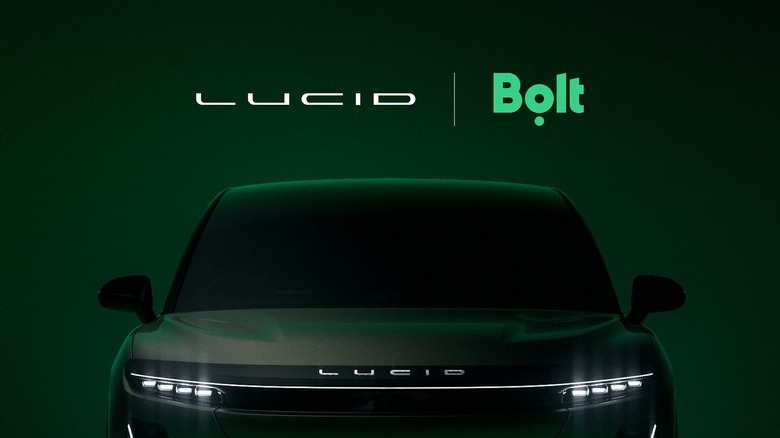
Tallinn, Estonia-based mobility operator Bolt has agreed to deploy at least 25,000 autonomous vehicles built on Lucid’s upcoming midsize vehicle platform across European markets. Bolt operates ride-hailing, micromobility, and delivery services across more than 45 countries in Europe and Africa, and will own and operate the fleet while collaborating directly with Lucid on vehicle design and integration.
The planned vehicles are intended for SAE Level 4 driverless operations. They will be engineered to handle all driving functions within designated geofenced areas without requiring human driver intervention. The fleet’s technical specifications call for NVIDIA’s Hyperion autonomous vehicle architecture, an end-to-end modular computing platform designed to process high-bandwidth sensor inputs including camera, radar, and lidar data.
Bolt is targeting the integration of 100,000 autonomous vehicles onto its platform by 2035. The Lucid agreement serves as a primary pillar in that long-term operational roadmap, although neither company has disclosed a specific timeline for when the first co-developed robotaxis will enter commercial service.


Lucid’s flexible midsize vehicle architecture is at the center of the agreement. The Newark, California-based automaker unveiled a two-seater robotaxi prototype based on the platform earlier this year, highlighting its strategy to supply specialized vehicle form factors to commercial fleet operators alongside mass-market consumer cars.
The European commitment expands Lucid’s existing driverless fleet strategy in North America. In the United States, the company has established a multi-company alliance with ride-hailing network Uber Technologies Inc. and autonomous software developer Nuro Inc. Uber has committed to deploying 35,000 Lucid-built autonomous vehicles across its U.S. markets.
That domestic initiative includes midsize platform vehicles and modified versions of the larger Lucid Gravity SUV. Nuro is already conducting public road tests of Gravity-based driverless prototypes equipped with safety drivers in Houston, Texas, and across the San Francisco Bay Area as validation work continues.
Lucid’s broader rollout of the midsize platform has experienced timeline shifts. The company recently postponed the market launch of its Cosmos SUV, the first consumer EV scheduled to use the platform, to early 2027. The delay followed corporate cost-cutting measures, including an enterprise-wide reduction of approximately 18 percent of its workforce.
Led by former Tesla chief engineer Peter Rawlinson and backed by majority owner Saudi Arabia’s Public Investment Fund (PIF), Lucid currently produces its flagship Lucid Air luxury sedan and its Gravity three-row crossover at its Advanced Manufacturing Plant (AMP-1) in Casa Grande, Arizona. The automaker also has additional assembly capabilities at its AMP-2 facility in Saudi Arabia.
The expanding partnerships reflect an evolving model in the global mobility market, where ride-hailing aggregators are contracting with specialized electric vehicle makers to construct purpose-built robotaxi hardware. The European deployment will also navigate a growing regulatory framework after the European Union adopted EU Regulation 2022/1426, which established uniform rules for the type-approval and commercial deployment of fully automated driving systems across member states.