

Markets Brace for Fed Hike as OpenAI Avoids Wall Street
Rate expectations rise as private capital reshapes corporate finance
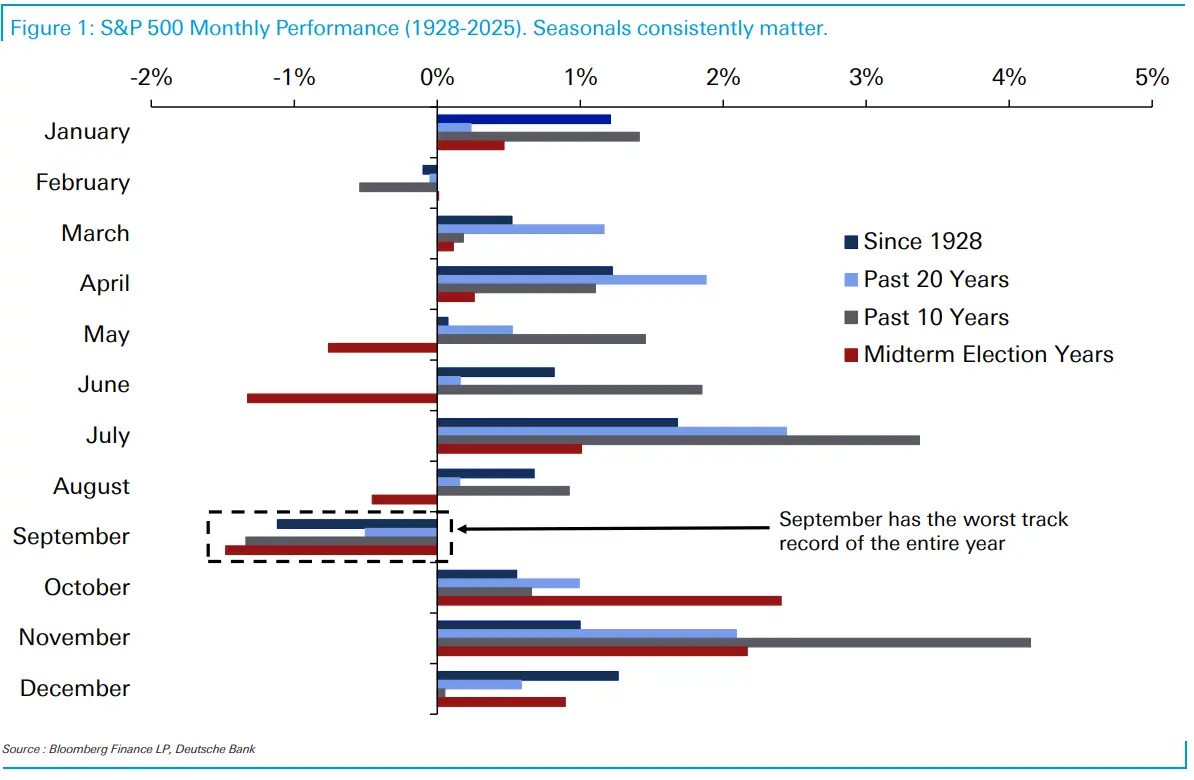
WASHINGTON — The Federal Open Market Committee’s latest interest rate decision is at the center of market attention. According to the CME FedWatch futures index, there is a 92% probability that the U.S. central bank will implement a 25-basis-point interest rate hike. Financial analysts note that the Federal Reserve historically follows through on tightening when market expectations exceed a 69% threshold, making the policy move highly anticipated by institutional traders.
The anticipated rate hike is already factored into asset prices. After a period of prolonged weakness, international equity markets staged a brief relief rally, although the S&P 500 had declined by 2% over the past month, including a 0.45% drop in the previous trading session, driven by worries over national debt and geopolitical conflicts.
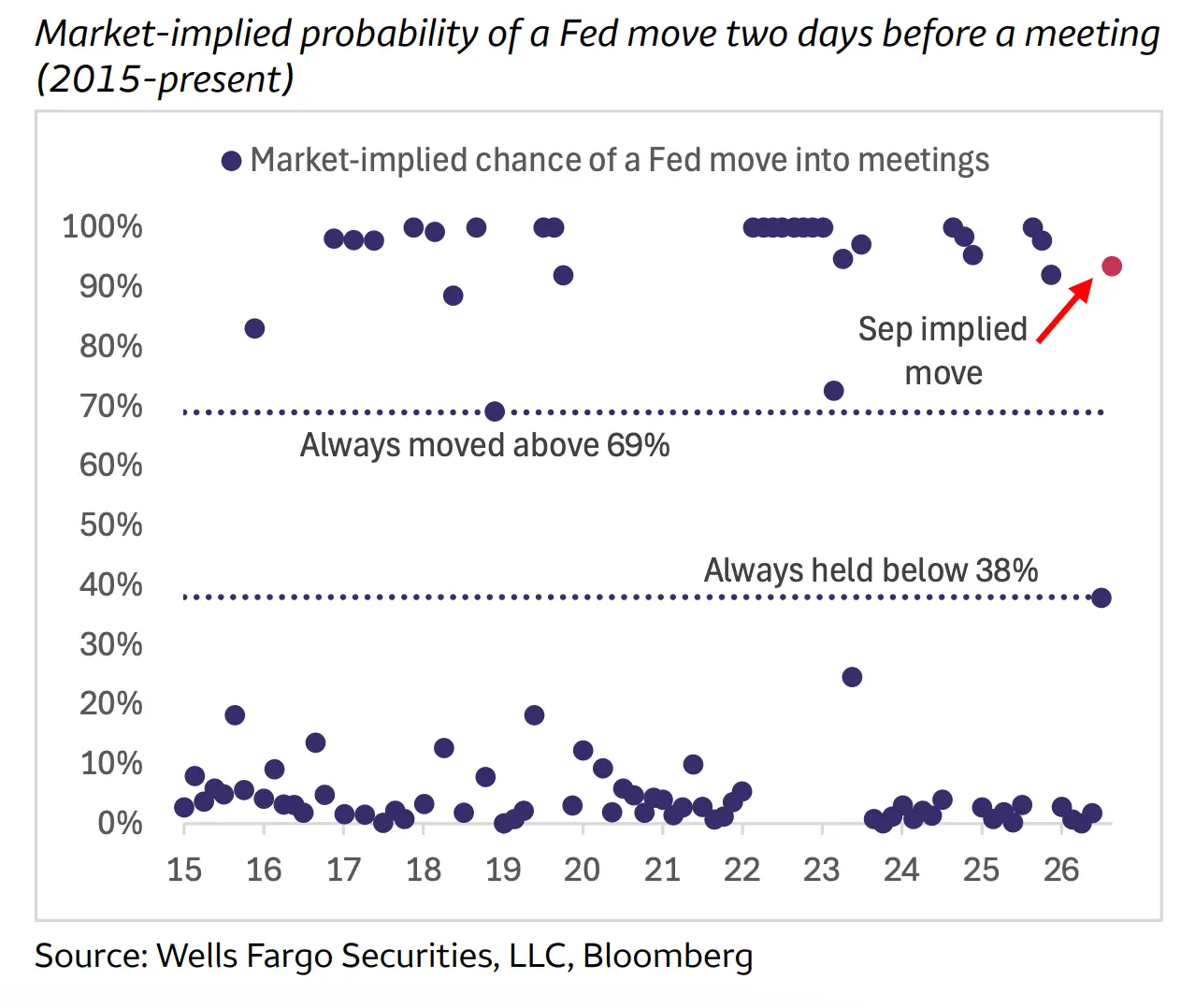


September has also brought a recurring seasonal challenge. Data compiled by Deutsche Bank indicates that September is consistently the weakest month of the year for global equities, regardless of whether analysts look at five-year or 100-year horizons. The historical weakness tends to be even more pronounced during midterm election years.
Stock futures pointed toward a positive opening in New York, with S&P 500 futures rising 0.18%. In Europe, the Stoxx 600 index gained 0.16% in early trading, while the U.K.’s FTSE 100 climbed 0.31%. Asian markets also recorded broad gains: South Korea’s KOSPI rose 1.37%, Japan’s Nikkei 225 increased by 0.69%, India’s Nifty 50 ticked up 0.49%, and China’s CSI 300 closed 0.68% higher. Bitcoin traded at $75,546.
Persistent inflation, geopolitical tension, and shifting corporate funding strategies are reshaping how major corporations manage their balance sheets. Brent crude prices have hovered around $107 per barrel amid ongoing military tensions in Iran, keeping energy costs elevated worldwide.
Proponents of a rate hike argue it is necessary to curb persistent inflationary pressures exacerbated by geopolitical instability. Paul Donovan, chief economist at UBS, questioned the efficacy of using monetary policy to combat supply-driven inflation, suggesting that raising interest rates will do little to lower oil-driven price pressures but will increase borrowing costs for indebted consumers and businesses.
Donovan noted that leaving rates unchanged without prior communication could damage the credibility of Federal Reserve Chair Kevin Warsh and Treasury Secretary Scott Bessent. “On balance, a rate hike is probably the lesser of the two evils, even if unwarranted,” Donovan wrote in an analysis.
High energy costs and tightening credit are also affecting decisions about access to public markets. Some of the world’s most valuable private firms are delaying initial public offerings (IPOs), while high-profile firms like OpenAI are opting to bypass public markets entirely in favor of private capital.
Artificial intelligence pioneer OpenAI is reportedly in discussions with venture capital investors to secure a new funding round that would value the company at $1.2 trillion. The proposed private funding round would allow the San Francisco-based developer of ChatGPT to postpone a public listing.
OpenAI recently completed a massive funding round in March, raising $122 billion at an $852 billion valuation. In a recent interview, OpenAI Chief Executive Sam Altman emphasized that current safety concerns surrounding advanced AI technologies make a near-term public listing premature. “Given everything happening with safety, right now would be an ill-advised moment to go public, and we don’t feel pressure on that,” Altman said.
By remaining private, OpenAI avoids the rigorous public disclosures, quarterly earnings pressure, and regulatory scrutiny that accompany a listing on major U.S. stock exchanges, allowing its leadership to focus on long-term safety research and computational scaling.
Europe’s largest industrial and commercial giants are demonstrating operational resilience despite intense global trade pressures. According to the newly released Fortune 500 Europe ranking, which lists the continent’s largest enterprises by annual revenue, the combined top-line revenues of these firms reached a record $15.5 trillion. This figure is roughly equivalent to half of Europe’s total gross domestic product.
After suffering a 5% drop in overall profitability in 2025, European companies saw net profits rebound by 3% this year, collective earnings climbing to just over $1 trillion. The recovery occurred despite ongoing supply chain bottlenecks, high energy costs, and shifting trade policies.
For the third consecutive year, German automotive giant Volkswagen AG secured the top position on the European list. The carmaker’s revenue grew by 3.4% to exceed $363 billion, even as European automotive manufacturers face stiff competition from state-subsidized electric vehicle manufacturers in China and fluctuating global tariff structures.
The concentration of economic output and corporate talent remains highly concentrated in premier metropolitan hubs. The latest global cities index compiled by Oxford Economics ranks 1,000 of the world’s largest cities across economics, human capital, quality of life, environment, and governance, and named New York City as the world’s premier urban economy.
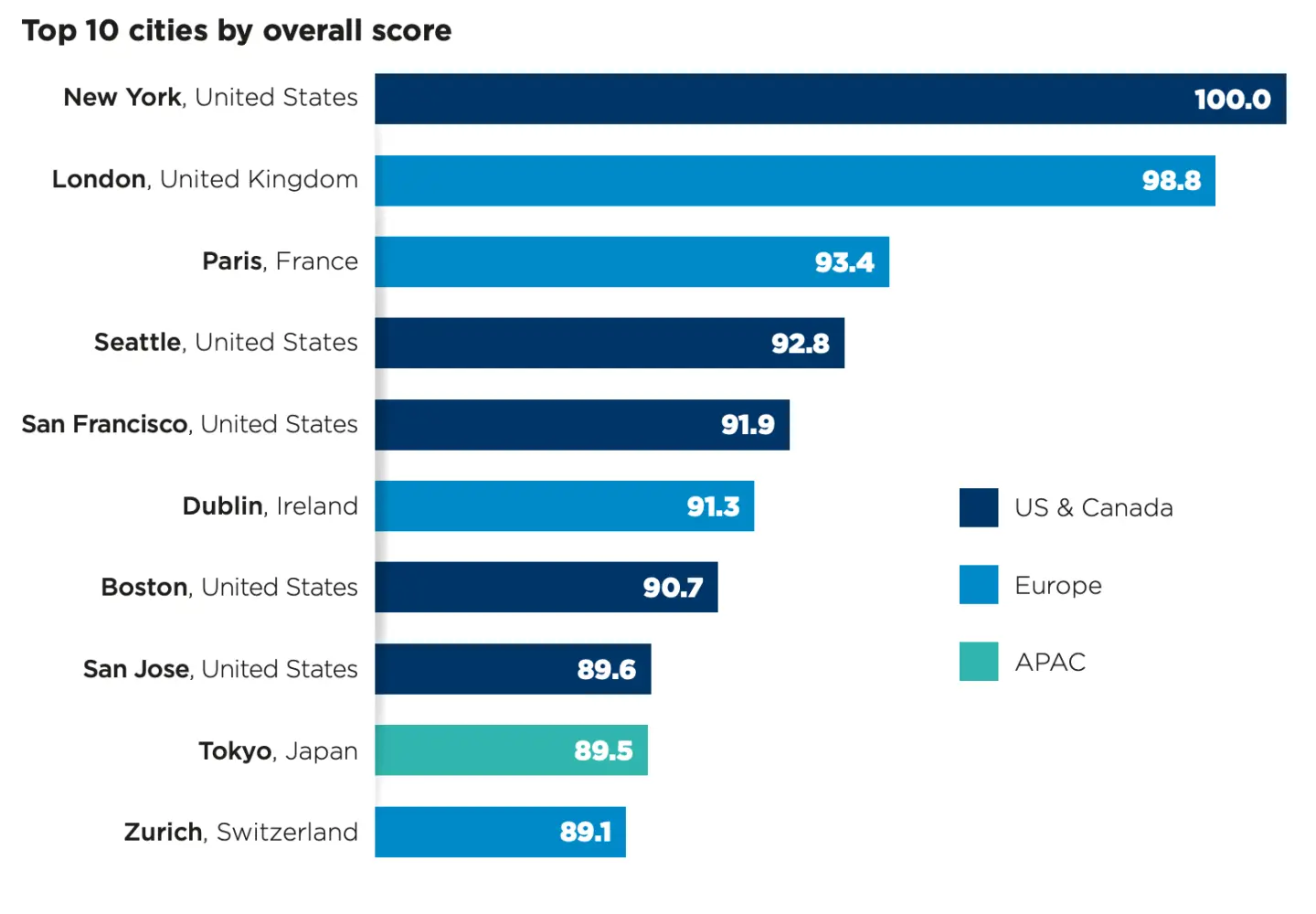
Liam Sides, the lead author of the Oxford Economics report, attributed the city’s top ranking to its unique labor market dynamics. “New York’s dominance is anchored by an unmatched concentration of talent, top-tier universities, and high-paying global industries,” Sides said. “The city’s high wages, diverse job market, and legendary cultural draw continue to attract top global talent and business investment.”
Capital is similarly concentrated in high-end entertainment and sports markets. A report by Sportingpedia on European football transfer markets highlighted massive financial flows among elite clubs. Paris Saint-Germain F.C. generated the highest net profit from player sales this year, bringing in €207 million ($239 million), followed closely by Chelsea F.C. at €192 million ($222 million).
Saudi Arabia’s Al-Hilal registered a net transfer loss of €287 million ($331 million). English Premier League clubs Tottenham Hotspur F.C. and Liverpool F.C. posted losses of €257 million ($297 million) and €254 million ($293 million) respectively. The clubs backed by sovereign wealth and aggressive expansion strategies recorded the largest net transfer deficits.
Institutional investors and corporate leaders are navigating these shifting financial currents while cognitive research examines how human decision-making and historical assessments are often built on flawed foundations.
A longitudinal study conducted by Elizabeth A. Phelps of Harvard University and William Hirst of The New School examined how memories of major historical events change over time. Tracking participants’ recollections of the September 11 terrorist attacks, researchers found that after just one year, 40% of the specific details recalled by individuals did not align with what they had written down immediately following the event.
Participants maintained extremely high levels of confidence in the accuracy of their memories despite those demonstrable errors. Subsequent surveys conducted three, 10, and 25 years later showed that these incorrect memories became permanent over time; whatever errors individuals introduced into their narratives during the first year became their permanent recollection of the event in later decades.
Economists and market psychologists note that a similar phenomenon often occurs in financial markets, where historical narratives and subjective confidence frequently override objective, data-driven analysis during periods of macroeconomic transition.










2 Comments