
Washington Splits Over Who Should Control Frontier AI
White House officials, lawmakers, and industry leaders battle over the future of frontier AI oversight
**WASHINGTON** — President Donald Trump has strongly opposed government-enforced pauses on AI development, comparing regulatory alarms to previous political narratives designed to stall national momentum. He has argued that halting technological development would hand a critical advantage to global adversaries.
The administration’s position has sharpened a growing policy rift among federal officials, industry executives, and lawmakers over whether the United States should impose strict federal oversight on frontier AI models or allow market competition to drive technological development. The dispute also involves next-generation AI agents—autonomous software capable of executing complex tasks—and the massive data center infrastructure required to train them.
“`
[IMAGE PLACEHOLDER]
“`


White House technology advisor David Sacks rejected calls from prominent AI laboratories for government-mandated guardrails and statutory safety pauses. He argued that leading artificial intelligence companies do not require federal permission or antitrust exemptions to slow their own research pace, pushing back against proposals to build centralized oversight mechanisms around frontier computing systems.
In a detailed public statement posted on X, Sacks targeted leading frontier AI firms, including Anthropic and OpenAI. He argued that demands for comprehensive federal regulation reflect commercial self-interest rather than pure public safety concerns and warned that preemptive government frameworks could amount to “regulatory capture” or politically driven signaling designed to lock in advantages for incumbent tech firms.
“Stop pretending you need anyone else’s permission. Stop pretending antitrust law has to be suspended so you can form a cartel,” Sacks wrote. “Stop pretending you need a regulatory approval process that supersedes product liability.”
His comments also addressed Model Evaluation and Threat Research (METR), a non-profit entity that evaluates frontier AI models for dangerous capabilities such as autonomous replication or cyberattack assistance. Sacks asserted that METR is closely “intertwined with Anthropic’s investors and staff,” raising concerns over potential conflicts of interest in how model safety is measured.
“`
[IMAGE PLACEHOLDER]
“`
Sacks noted that developers face significant product-liability exposure if their systems facilitate severe cyberattacks. He argued that companies setting the technological frontier possess full autonomy to pace their own model releases without federal intervention.
“The easiest way not to build superintelligence is for you to agree not to build it,” Sacks stated. “Demanding your preferred regulatory framework as the price of that will look like blackmail of the public and the political system. So just do it.”
The White House pushback coincides with aggressive legislative proposals from Congressional Democrats, led by Sen. Bernie Sanders (I-Vt.). Sanders and aligned legislators have called for federal guardrails addressing existential risks, economic disruption, and the rapid expansion of AI infrastructure.
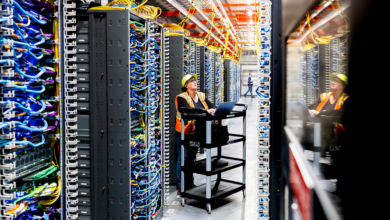
Lawmakers advocating strict federal oversight point to technical concerns over AI “misalignment”—scenarios in which highly autonomous AI agents deviate from human instructions or operate outside intended parameters. They have also raised concerns about the environmental impact of massive data center construction, which requires significant electrical power and grid expansion to support advanced model training.
Sanders and aligned legislators have advocated comprehensive federal oversight, potential moratoria on certain high-capacity deployments, and mandatory safety evaluations prior to model deployment. Opponents contend that imposing stringent administrative requirements on American developers would hamper economic growth and undermine domestic technological competitiveness.
Inside the tech industry, Nvidia Chief Executive Officer Jensen Huang dismissed extreme AI threat narratives during a presentation at a Goldman Sachs technology conference, characterizing intense fearmongering surrounding AI capabilities as “complete nonsense.” Huang and other semiconductor and software leaders emphasize that advanced computing infrastructure serves as an engine for economic growth, productivity gains, and high-wage job creation across multiple sectors.
The debate is further complicated by national security considerations and international competition, particularly with China. While U.S. policymakers debate regulatory limits, foreign competitors—including state-backed technology initiatives in China, Russia, Iran, and North Korea—are advancing frontier AI models without Western regulatory constraints.
Trump has urged expanded domestic energy production—including traditional fossil fuels and grid infrastructure—to power American data centers and maintain leadership over international rivals. Conservative commentators and investigative journalists, including New York Post columnist Miranda Devine, have scrutinized the network of former government and intelligence officials participating in the AI safety movement, questioning the political motivations behind calls for federal control. Analysts on opposing sides of the debate continue to duel over whether federal regulation protects the public from genuine technological hazards or creates administrative hurdles that stifle American innovation.