
Crypto Rules Tighten as BitGo Targets $2 Billion IPO
Stablecoins, retirement accounts and prediction markets face new U.S. pressure

WASHINGTON — U.S. authorities are increasing legislative and regulatory pressure on the digital asset ecosystem as major industry participants pursue traditional capital market listings and key cryptocurrency valuations remain elevated. The focus includes yield-bearing products, retirement fund exposures, and event-based prediction markets.
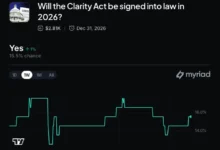
The U.S. Senate has released draft language for the Crypto Market Clarity Act, a comprehensive bill intended to establish clear jurisdictional boundaries for digital assets. Its provisions would impose strict limits on yield and reward structures tied to stablecoins, seeking to prevent issuers from offering bank-like interest payments without federal deposit insurance or banking charters.
Ethereum co-founder Vitalik Buterin has separately warned about systemic risks in current stablecoin models. He emphasized the urgent need for resilient decentralized stablecoins and said many existing architectures remain vulnerable to governance capture, oracle failure, and inflationary pressures when collateral mechanisms are not properly secured against external market shocks.

Sen. Elizabeth Warren, D-Mass., sent an inquiry to the Securities and Exchange Commission asking regulators to evaluate digital asset inclusion in 401(k) retirement plans. She cautioned that exposing retirement savings to volatile asset classes creates significant financial risks for working families, citing previous administrative guidance on fiduciary duties under the Employee Retirement Income Security Act (ERISA).
Tennessee regulators issued administrative orders requiring Polymarket, Kalshi, and Crypto.com to immediately stop sports prediction market operations in the state and provide refunds to affected users. The action concerns tokenized event and sports betting markets and involves three prominent platforms.
Kalshi has maintained that it operates under federal regulatory authority through the Commodity Futures Trading Commission (CFTC), following federal court rulings concerning event-contract oversight. State gaming control boards and other state regulatory agencies argue that sports-focused event contracts are covered directly by state gambling and sports wagering statutes.
Digital asset custody firm BitGo has filed paperwork for an initial public offering in the United States. Founded in 2011 and headquartered in Palo Alto, the company is seeking a public market valuation of approximately $2 billion.
The filing followed a milestone in which BitGo reported that its institutional assets under custody had surpassed $100 billion. Institutional infrastructure in the sector continues to expand into public capital markets despite the legal and legislative hurdles.
World Liberty Financial, a crypto enterprise backed by members of the Trump family, launched a decentralized lending platform built around its USD1 stablecoin ecosystem. The platform drew approximately $20 million in initial deposits shortly after going live and uses automated liquidity pools for asset borrowing and lending.
Gold and silver also reached new all-time high prices in global spot trading after developments involving a federal investigation of Federal Reserve Chair Jerome Powell. Heightening macroeconomic and political developments surrounding the central bank have driven increased trading volumes across precious metals desks worldwide.
In digital asset trading markets, Bitcoin (BTC) rose 1.5% to $92,000, while Ether (ETH) advanced 1% to $3,130. Solana (SOL) gained 2% to $142, and XRP increased 1% to $2.06.
Privacy and intellectual property tokens posted sharper gains. Dash (DASH) rallied 60%, Story Protocol (IP) surged 30%, and Monero (XMR) gained 13%, briefly reaching a record high of $680 before consolidating around $640.
The price movements in privacy coins came as international bodies continued applying regulatory pressure, prompting several global exchanges to restrict or delist privacy-preserving tokens. At the state level, enforcement over event markets is intensifying while federal and state authorities continue to debate the scope of oversight.