Apple’s Foldable Lineup Could Expand Beyond the iPhone Duo
Apple may use the iPhone Duo name for a broader foldable family
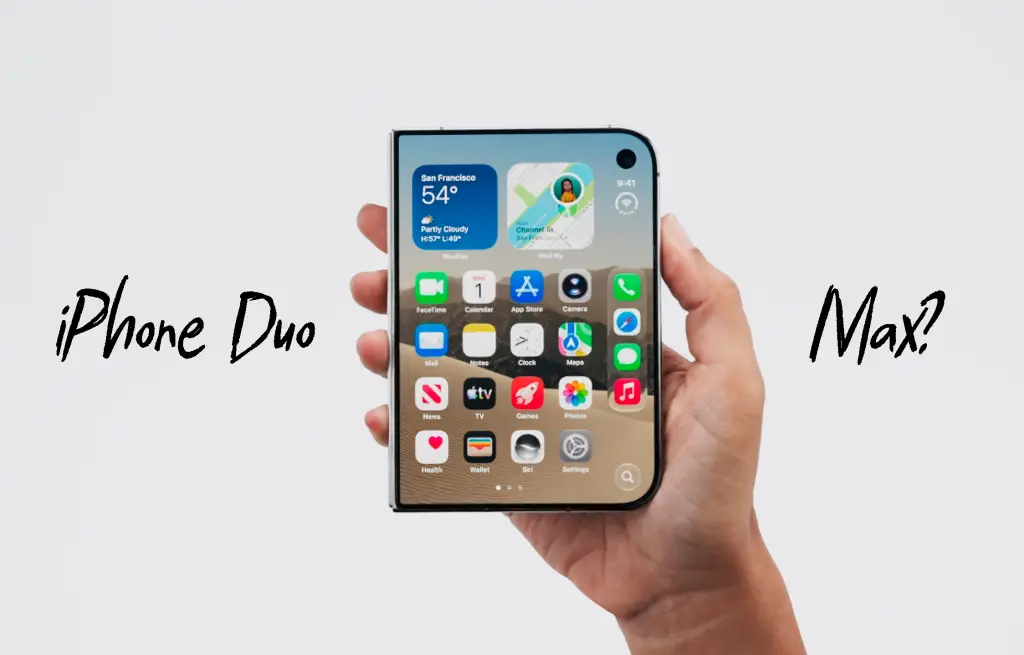
Apple’s first foldable device will use the “iPhone Duo” name rather than an “Ultra” designation, creating a product brand that can extend across different sizes, price points, and form factors. The strategy follows the company’s recent hardware unveilings and industry reports about a multi-tier foldable product family.
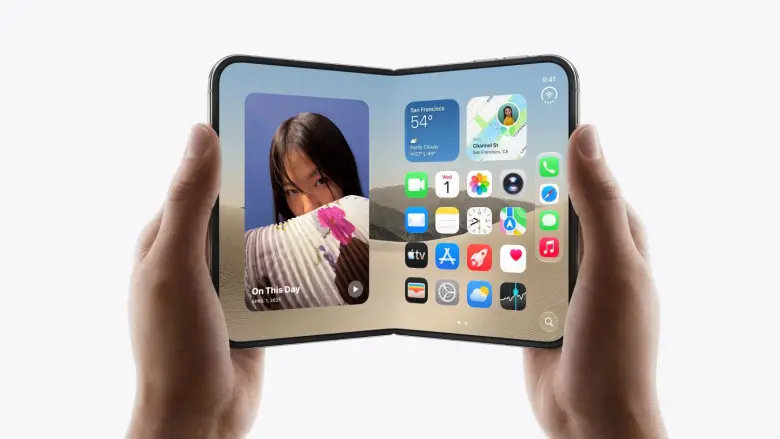
Bloomberg’s Mark Gurman reported that Apple’s internal product roadmaps point toward a broader portfolio designed to address multiple segments of the foldable display market over coming product cycles. The planned range could scale the format both upward and downward within Apple’s lineup.


One larger device under development is tentatively designated the “iPhone Duo Max.” It is expected to retain a square aspect ratio when closed, then open to an internal display approaching 11 inches. That screen area would match standard iPad models, including the 11-inch iPad Pro and iPad Air.
Apple is also evaluating lower-cost entry points. Possible names include “iPhone Duo SE” and “iPhone Duo Mini,” while smaller-footprint versions may use a vertical clamshell design similar to Samsung’s Galaxy Z Flip series and Motorola’s Razr line. The flagship iPhone Duo instead uses a book-style horizontal fold.
The choice of “Duo” avoids compound naming conflicts such as an “iPhone Ultra Max.” It also leaves room for Apple to apply its established modifier hierarchy—“Max,” “SE,” and “Mini”—to future foldable generations. Apple introduced the “SE” (Special Edition) naming convention in 2016 for lower-cost iPhone configurations, while the “Max” suffix arrived in 2018 with the iPhone XS Max to indicate larger screen dimensions.
Apple’s entry into foldable technology comes several years after competitors established the commercial category. Samsung launched the Galaxy Fold, its first commercial foldable device, in 2019 and followed it with the clamshell Galaxy Z Flip in 2020. Google has since introduced its Pixel Fold series, while Huawei, Oppo, and Vivo have released competing devices across international markets.
Foldables remain a specialized segment of global smartphone shipments, even as the market grows. Total global smartphone shipments exceed 1.1 billion units annually, while foldable adoption has been restrained by premium retail prices that often exceed $1,500.
Manufacturing challenges also include hinge durability, crease visibility, and ultra-thin glass substrate yields. Component sourcing depends heavily on specialized flexible OLED panel production from Samsung Display and LG Display, along with complex multi-gear hinge assemblies.
The timing and scope of Apple’s secondary foldable models remain dependent on the commercial performance, component supply chain scalability, and manufacturing yields of the primary iPhone Duo. Future product iterations are expected to follow Apple’s standard multi-year development and evaluation cycles as market adoption patterns for the initial iPhone Duo establish themselves.