
How Reese Witherspoon Turned Hollywood’s Female Talent Gap Into a $900 Million Business
Reese Witherspoon’s Hollywood bet on women became a $900 million media enterprise
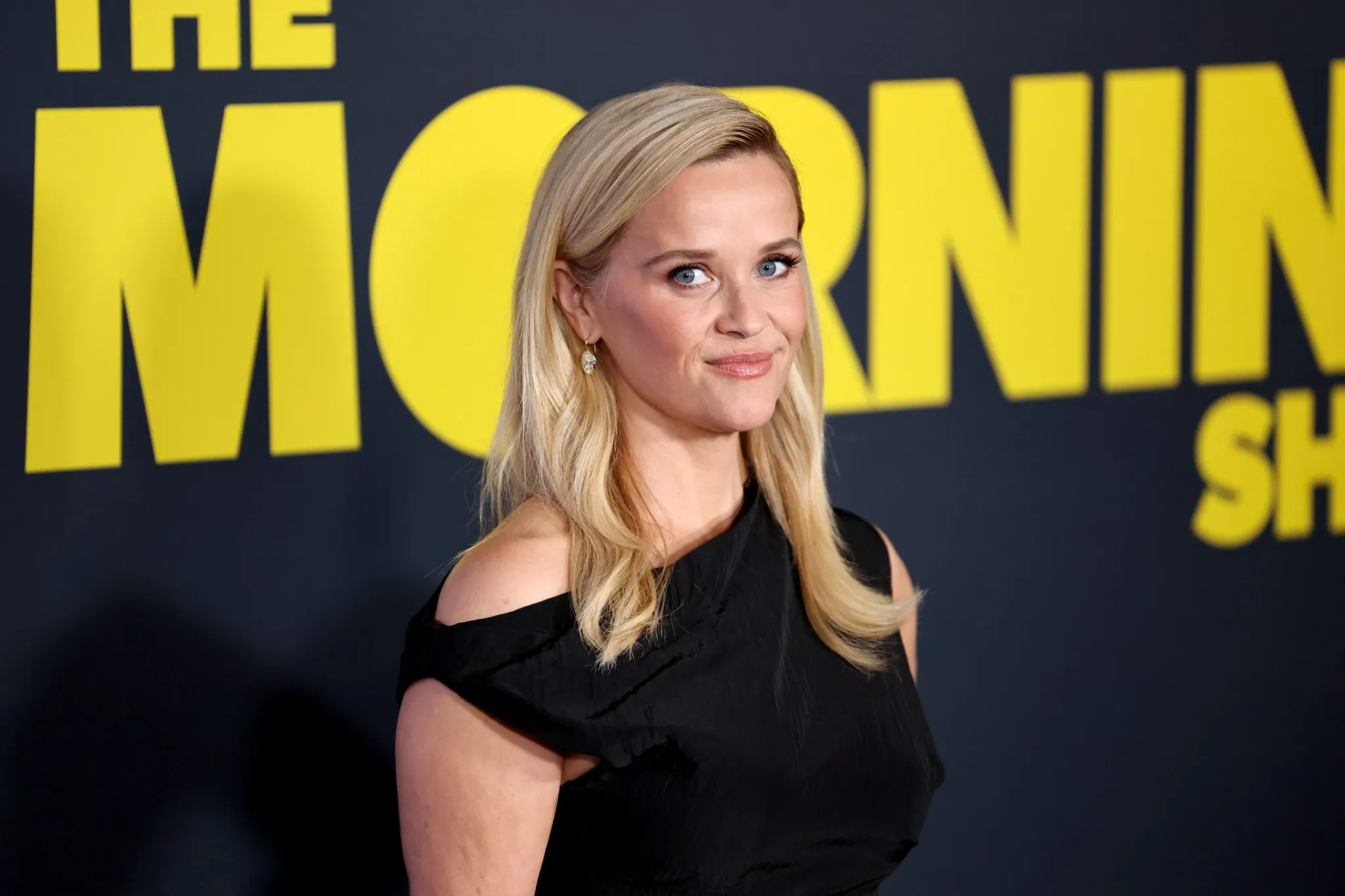
LOS ANGELES — Reese Witherspoon’s path from Oscar-winning actress to media mogul began with a financial survival instinct. Growing up in a household facing severe financial strain because of her father’s spending habits, she was forced to help with family finances at age 16. The experience cemented a personal mantra that echoed the grit of her famous *Legally Blonde* character, Elle Woods: “no one’s coming to save me.”
“I didn’t have a financial safety net,” Witherspoon said. “My parents were loving and kind, but they didn’t have the means to send me to college. I knew I was going to have to do it on my own.”
That reality cut short her undergraduate studies at Stanford University. Although some have portrayed her departure as the typical path of a tech-era dropout, Witherspoon said it was a matter of basic economics: She could not afford the annual tuition, which was approximately $33,000 at the time. Acting jobs offered a viable route to financial independence.


In 2011, at age 34, she was receiving scripts she described as “abysmal” and “really demeaning.” One screenplay featured gross-out humor and two female characters competing for a single man’s affection, prompting her to call her agent and pass on the project. Her agent’s response was telling: every top actress in Hollywood was competing for those two roles because there was nothing else available.
Witherspoon then embarked on a “listening tour,” visiting the heads of all seven major Hollywood studios. She asked each executive a straightforward business question: How many projects did they currently have in development with a female lead?
The consensus was nearly zero. One studio executive told her the company had already produced its single female-centric movie for the year and could not justify a second. “First I got mad, and then I was like, ‘Wait—this is a huge white space,'” Witherspoon recalled during an episode of the *Founder Mindset* podcast, hosted by Harvard Business School’s Reza Satchu.
She acted on that gap in 2012, co-founding the production banner Pacific Standard with Australian producer Bruna Papandrea. The company focused on acquiring literary properties with complex female protagonists. Its first two acquisitions were Cheryl Strayed’s memoir *Wild* and Gillian Flynn’s thriller *Gone Girl*, both of which became No. 1 New York Times bestsellers.
The film adaptations of *Wild* and *Gone Girl*, together with the development of the HBO limited series *Big Little Lies*, generated three Academy Award nominations and grossed more than $600 million globally. Witherspoon took full control of Pacific Standard in 2016 after she and Papandrea dissolved their partnership.
Despite the box-office returns and critical acclaim, the company’s economics remained flawed. “I was only working for producer fees,” Witherspoon said. “I had four employees, and I was only breaking even. The overhead was eating me alive. That’s not a real business.”
Years later, when her production company’s cash flow still failed to match its cultural footprint, Witherspoon applied the same survival mindset to the business. Instead of waiting for Hollywood studios to change their compensation structures, she sought to build a scalable media brand.
In 2016, she partnered with Seth Rodsky of Strand Equity and AT&T’s Otter Media to launch Hello Sunshine. The venture was designed as a multiplatform brand “made by and for the next generation of women,” extending beyond traditional film and television into podcasts, digital content, and literature. Sarah Harden joined as chief executive officer to help scale the company.
A central part of the Hello Sunshine ecosystem was Reese’s Book Club. By selecting books and promoting them directly to millions of followers online, the club created an organic marketing loop. Hello Sunshine could option promising manuscripts, drive them to bestseller lists through the book club, and then pitch the pre-sold intellectual property to streaming services seeking premium subscribers.
That strategy produced high-profile projects including *Little Fires Everywhere* on Hulu and *The Morning Show* on Apple TV+, as well as a second season of HBO’s *Big Little Lies*. For decades, independent producers in Hollywood had operated under a legacy system in which creators could launch critical and commercial hits yet still be left with thin margins.
The rapid scale of Hello Sunshine drew the attention of Blackstone, which was seeking independent content engines to supply the growing global streaming market. When private equity giant Blackstone Group backed the company’s acquisition in August 2021, its majority stake valued Hello Sunshine at approximately $900 million.
The transaction, orchestrated by former Walt Disney Co. executives Kevin Mayer and Tom Staggs through their media venture Candle Media, marked more than a lucrative exit for Witherspoon. Aggregating a dedicated female audience had turned a standard production house into a highly valued media enterprise, shifting how Hollywood valued female-led intellectual property.
Witherspoon and Harden retained significant equity stakes and kept their seats on the company’s board of directors. For Witherspoon, the exit served as a definitive proof of concept for female-driven business models in a traditionally male-dominated industry.
“I hope that people out here… will think ‘I’m going to have the next Hello Sunshine,'” Witherspoon said. “Because it is possible.”