Jensen Huang Has 14 Days to Answer Three Chairmen With 60 Days of Authority Left
For a year, American intelligence watched Alice Huang. It briefed the president. It never warned the man she was watching.
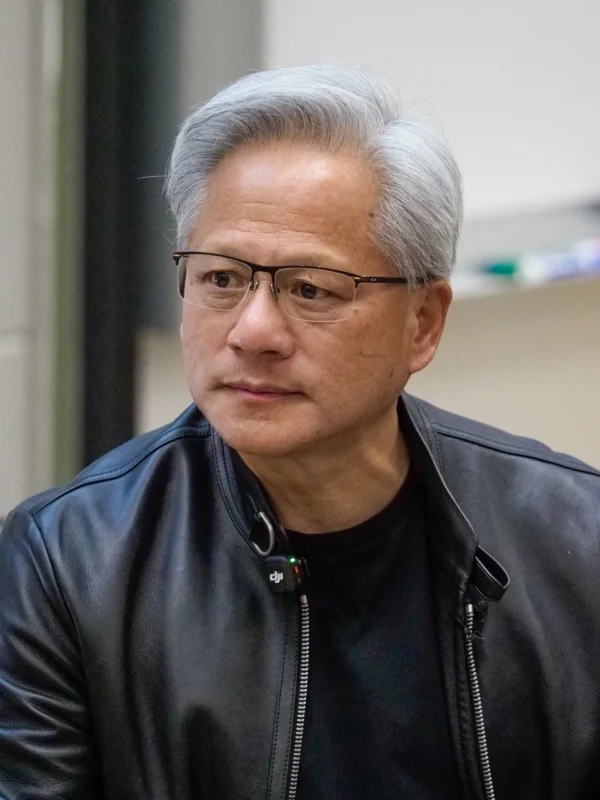
The letter is dated November 4, 2026. It asks Jensen Huang for two things: a closed-door briefing on Nvidia’s security protocols against foreign adversary espionage, and an account of his interactions with Megaspeed executive Alice Huang, whom the letter calls “a publicly reported People’s Republic of China (PRC) intelligence asset.” The briefing is set for November 18 in Rayburn room 2172, and Huang has until November 11 to accept the date or propose another one. It was written the morning after the midterm elections that took the three signers’ majorities away.
Mast, Moolenaar and Crawford wrote that “recent reports raise significant national security concerns regarding the PRC’s access to sensitive U.S. technology and information” and that “it is vital that Congress determines the extent to which U.S. national security has been placed at risk.” The letter names no newspaper, though the reports it leans on are the New York Times’. It does not mention President Donald Trump, briefed on the intelligence about a year ago. It accuses Huang of no wrongdoing. It contains no subpoena. It says nothing about export controls, chip sales, or cloud access. One condition governs any alternative date: it must fall on “a session day of the 119th Congress,” which ends on January 3, 2027, sixty days after the letter was written. Gregory W. Meeks, the committee’s ranking Democrat, is on the letterhead. He did not sign.
The intelligence behind the letter is about a year old. The Times reported on October 29 that American officials had concluded Alice Huang was passing information to Beijing, and that surveillance of her had run for more than a year. Trump was briefed on the findings about a year ago and took no action. Jensen Huang was never warned. He “has not received a defensive briefing,” the standard warning for targeted Americans. Officials told the paper they did not believe Huang knew what she was doing. Some senior officials now doubt that. The Times said it could not determine what she passed along. Nvidia’s answer has been that its chief executive meets thousands of customer executives a year and that regional cloud customers receive “ordinary business information.” Trump, asked on October 31, said he “didn’t know about the specific thing.”
On November 6, the Times reported that American intelligence agencies believe Alice Huang was recruited by China’s Ministry of State Security to gather information on Jensen Huang and on Nvidia’s most advanced artificial intelligence chips, citing a memo that circulated among senior policymakers last spring. The Financial Times said that night that American officials believe the relationship was romantic. Alice Huang is a Chinese citizen, also known as Huang Le, and she is not related to Jensen Huang despite the shared surname. She was Megaspeed’s managing director for its first eight months before her name was removed from that role in corporate filings. Megaspeed, a Singapore data-centre firm formed in 2023, buys Nvidia equipment and rents out computing capacity, including to Chinese companies.
The Commerce Department investigated Megaspeed in 2025 over suspected diversion of chips to China. Singapore’s Home Affairs Ministry denied a Wall Street Journal account that its officials had investigated Alice Huang’s alleged intelligence connections, and confirmed investigations into Megaspeed continue. Megaspeed says its current leadership hired outside counsel and offered cooperation to the American authorities.
A Megaspeed affiliate in Malaysia bought at least $4.8 billion of advanced AI equipment containing Nvidia chips between June 2024 and February 2026, according to trade records cited by the Times. The letter mentions none of these figures. In October, the Israeli security firm Lava identified 32 of Nvidia’s B300 GPUs operating on the network of China Telecom by tracing exposed monitoring endpoints. Lava stressed that IP geolocation is not definitive. Nvidia called the 32 chips “a drop in the bucket.”
Meanwhile, the government’s own screening was clearing companies to handle the chips themselves. A Times investigation published on November 7 found the Commerce Department had cleared roughly two dozen Chinese firms to buy or handle Nvidia’s H200 processors. The Trump administration authorized H200 sales to China in December 2025. One of them was New Matrix, created seventeen months ago and cleared to assemble H200 chips into servers. Reporters who visited its listed address, in an industrial park on Beijing’s northwest edge, found an empty office with wires dangling where lights should have been. The building directory did not list the company. The park’s managers had no record of it. Chinese corporate records tie New Matrix’s owners to Wise Road Capital, a fund the United States placed on a trade blacklist in 2024. Another approved firm, Maginfra, had a listed office that also appeared deserted, and shares staff and patents with Inspur, the server maker on the American Entity List for working with the Chinese military.
Nvidia’s shares fell 9.26 percent on Thursday, November 5, to close at $181.60. The fall erased about $448 billion of market value. It was the stock’s worst day since January 2025. The shares have fallen nearly 24 percent from their record close of $239.24 on October 6. On Friday the stock recovered some of the loss, closing at $186.64, up 2.77 percent. Nvidia reports third-quarter results on Tuesday, November 17, the day before the requested briefing. Its guidance is $108 billion in revenue, plus or minus 2 percent, on the assumption of no data-centre compute revenue from China at all. In the quarter ended July 26, China including Hong Kong accounted for $7.88 billion, or 8.2 percent, of Nvidia’s $96.2 billion in revenue.
On r/wallstreetbets, u/Tosh_00 wrote: “How weird, the POTUS knew for a year already but didn’t do anything about it, almost like he had too much personal interest at stake to protect his country.” On r/NvidiaStock, u/Bag-o-chips, a shareholder, answered: “As a stick holder, this is not a deal breaker for me. They would need to prove he knew about her being a spy. That’s hard to do.” On r/technology, u/Greener-dayz asked the question the letter never asks: “And is that why the US all of a sudden started allowing Nvidia chips to be sold to China last year?” And on the same forum, u/TorchbeareroftheStar was blunter: “Honey traps are the oldest trick in the spy playbook.” The shareholder’s line is Nvidia’s defence in a voter’s words. The other two are the questions no official has answered: why did the president sit on the briefing for a year, and did what Washington knew shape the decision to let the chips flow?
Senator Elizabeth Warren, the Senate Banking Committee’s ranking Democrat, asked Huang to testify in June. He declined, and she renewed the call on October 29, writing that “Huang and NVIDIA’s board owe Congress answers.” Democrats won the Senate on November 3, putting Warren, the committee’s top Democrat, in line for the gavel in January. She asked for testimony. The House letter asks for a briefing behind closed doors. Representative Robert Garcia, soon to run the House Oversight Committee, was more succinct after the midterms. “LAWYER UP,” he wrote on social media.
Neither Alice Huang nor Megaspeed has been charged with a crime. Nothing in the reporting so far establishes that Jensen Huang knew of her suspected role.