Rice Krispies Recipe Change Leaves the Cereal Without a Grain of Rice
Rice flour in Britain, real rice in America, and wheat gluten in both British boxes. The change is on the packet already.
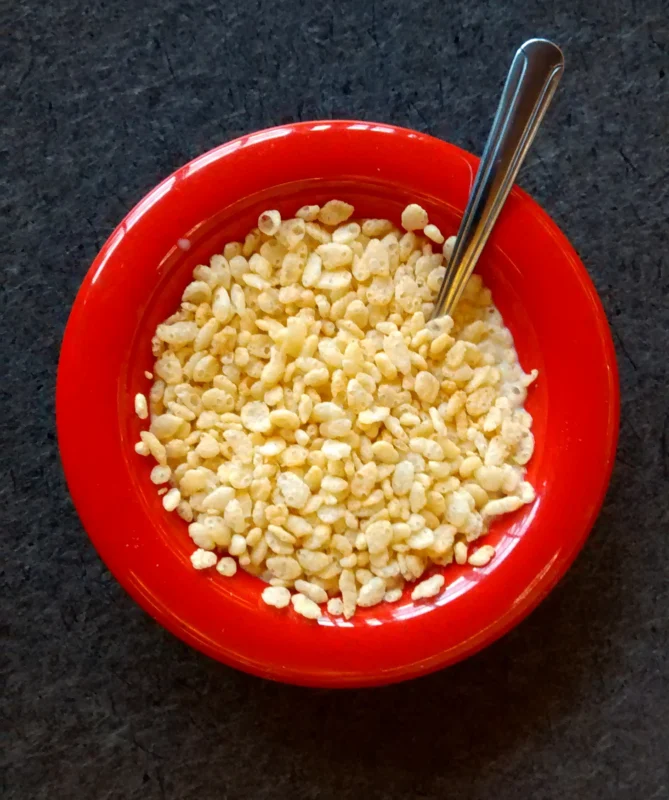
For the first time in a long time, Erika ate Rice Krispies on 3 November. Posting as erikawolfeel on Threads, she wrote that the recipe had changed, that they were not rice, and that there was no snap, crackle or pop going on. “It was disgusting,” she wrote. Kellogg’s had described the new recipes as carefully assessed for taste, appearance and texture.
The packet Asda sells online lists the ingredients in this order: rice flour, sugar, barley malt extract, wheat gluten, salt, and then the added vitamins and iron. Rice flour comes first in the list. Wheat gluten comes fourth. The previous UK list, as shown in the older pack record, started with rice, then sugar, salt and barley malt extract, and it carried no wheat gluten at all. The regulated name on the same Asda page still calls the cereal a toasted, puffed rice cereal, and Asda adds an allergen update saying the cereal now contains wheat gluten and may contain soy.
Coco Pops changed differently. Its Asda list starts with corn flour, then rice flour, sugar, glucose syrup and fat-reduced cocoa powder, with wheat gluten sixth in the list. The older Coco Pops list started with rice. A Kellogg’s spokesperson told The Grocer: “This recent change helps us maintain consistent quality at a time when changing weather conditions are affecting the quality and availability of some of the rice and grains used in our cereals.”
Nadim and Tanya Ednan-Laperouse, founders of the allergy charity Natasha’s Foundation, told The Grocer it was a shame the cereals would no longer be a safe breakfast option for people with a wheat allergy or coeliac disease. Before the change, both boxes carried a “may contain gluten” warning because they were made in a factory where other cereals containing gluten were handled. Wheat gluten is now an ingredient, so wheat must be declared as an allergen and shown in bold in the ingredients list, and the packs carry callouts about the recipe change and the updated allergen information. The difference matters most for shoppers with a wheat allergy, who now face wheat as a deliberate ingredient rather than a possible trace. For shoppers with coeliac disease the picture is less straightforward, because the older recipe already listed barley malt extract, a barley product, and the cereal was not a gluten-free product.
Rice Krispies reached the public in 1928, a year after Kellogg’s research team first made the puffed-rice cereal, and the snap, crackle and pop line was in radio and box advertising in the early 1930s. Snap, Crackle and Pop arrived as drawn characters in 1933. The sound belonged to the grain: crisped rice, hollowed out in cooking, collapsing as milk reached it and letting trapped air out. Flour starts from a different place, and the statements Kellogg’s gave this week speak of taste, appearance and texture without saying whether the new cereal still makes the sound in the bowl.
The UN Food and Agriculture Organization put numbers behind the weather explanation in September. It said its All Rice Price Index rose 1.4 per cent in September, as Indica rice quotations climbed amid weather concerns and seasonally tighter supplies, and it put world rice output for 2026 at 552.5 million tonnes, with weaker prospects in India after poorly distributed monsoon rain. International rice trade is forecast to fall 2.2 per cent in 2026 and recover by 1.7 per cent in 2027. The FAO’s Agricultural Market Information System added that rice yields in an El Niño year typically run 1.0 to 1.5 per cent below their expected trend, while wheat and maize yields generally stay near normal. The World Meteorological Organization said in October that this El Niño would almost certainly persist through February 2027 and could be one of the strongest since 1950.
The cereal in a British shop and the cereal in an American shop come from two different companies now. Kellogg split in October 2023 into Kellanova, which kept snacks and cereals outside North America, and WK Kellogg, which took the North American cereal business. Ferrero completed its purchase of WK Kellogg for $3.1 billion in September 2025, and Mars completed its purchase of Kellanova for $35.9 billion in December 2025. A spokeswoman for Kellogg’s North American business told the BBC that Rice Krispies in the United States and Canada would continue to be made with real rice, with no change to their recipes expected.
Two more Threads posts took up the change itself. Kittie Sheridan, posting as echo.the.doll, wrote: “FML I’m gutted about this!!! No longer made with just rice… Can’t handle food change.” David Henry, posting as dlhrston, asked what changing climate conditions had to do with a recipe change, and added: “And they added known allergen GLUTEN???” Kellogg’s answer to both kinds of complaint runs through the same lines: the recipes were carefully assessed, the company is listening closely to feedback, and even small changes to a much-loved product can feel noticeable. Nothing in the statements Kellogg’s gave this week answers the allergen question beyond the new label, or says whether the flour version still snaps, crackles and pops.
Sales were falling before the Rice Krispies recipe change. The Grocer reported that both the value and the volume of Rice Krispies sales were down. It published no figures for the fall. Kellogg’s said the updated cereals remain non-HFSS, with no artificial colours, flavours or sweeteners, and with the same levels of fibre, vitamin D and iron. It said it had not reformulated any of its other cereal lines.