Delta’s Move to Heathrow Terminal 4 Costs Passengers the Clubhouse and 30 Minutes
A Delta passenger connecting onto Virgin Atlantic at Heathrow currently changes gates in one building. From 2028 the same journey needs a bus between terminals, security again, and a longer minimum connection time.
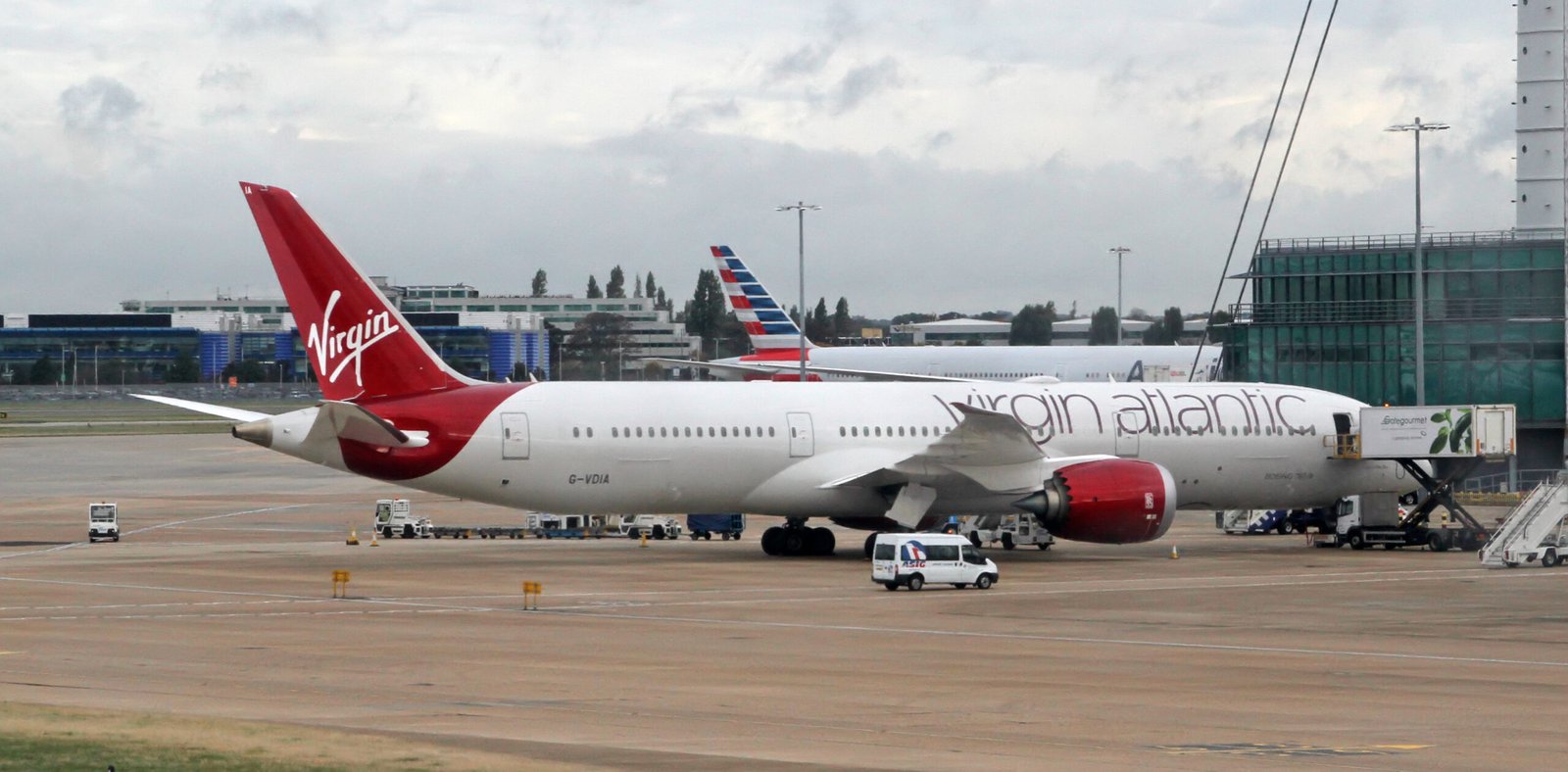
A connection between Delta and Virgin Atlantic at Heathrow takes a minimum of 60 minutes today, inside one terminal. Virgin Atlantic’s chief executive, Corneel Koster, told The Sunday Times the same connection will need a minimum of 90 minutes once Delta moves to Terminal 4 in 2028. The extra 30 minutes come from a bus ride between terminals, a second security queue and a walk through a different building.
The published transfer process runs through the purple Flight Connections signs to a free bus. The buses are free. British Airways’ connections guide puts them at every six to ten minutes between terminals. The passenger then clears security at the departure terminal before reaching a gate. Terminal 4 sits apart from the central Terminal 2 and 3 complex on the south-eastern edge of the airfield. It has no Heathrow Express stop. Getting there by rail means the Elizabeth line from the Terminal 2 and 3 station.
Delta and Virgin Atlantic share check-in and screening facilities at Terminal 3, and Virgin Atlantic’s own Clubhouse page says the airline aims to take eligible Upper Class Wing customers from the car to the Clubhouse within ten minutes, through a private security channel. Cirium counted 899,582 Delta seats a year at Heathrow. Head for Points puts Delta at up to 11 flights a day. It is the largest of the five. Koster’s complaint to Sky News was that separating the airlines would “create friction for customers, weaken competition and reduce choice”, and the friction he named first was the customer’s.


Tim_94, writing on FlyerTalk the day the decision was reported, said the current arrangement gave “a very consistent experience whether flying DL or VS”, with the Upper Class Wing and the Clubhouse as the advantages passengers valued, and added that rebooking during disruption was far easier while the two airlines were together because there was “no need to change terminals”. Orange County Commuter put the commercial consequence on the same thread: “The loss of the Clubhouse would make me much less likely to book DL out of LHR. I really like that lounge if I am going to be stuck with the other lounges why not fly BA, United etc???”
The 2028 move reverses a decision Heathrow itself made twelve years ago. On 14 September 2016 Delta moved its Atlanta, Detroit, Minneapolis, Salt Lake City and Philadelphia flights from Terminal 4 to Terminal 3, joining the New York, Boston and Seattle services already there, for 11 daily flights to eight American cities under one roof. Nat Pieper, then Delta’s senior vice president for Europe, the Middle East and Africa, said at the time that having the Heathrow service “under one roof is crucial to delivering a synched-up, more convenient service”. A week later Delta closed its own arrivals lounge in Terminal 3 and sent eligible arriving passengers to Virgin Atlantic’s Revivals lounge instead. Terminal 3 then closed for more than a year during the pandemic, and the two airlines moved back in together on 15 July 2021. The building Delta leaves in 2028 is one it has already left and returned to once.
From 2 November 2026, Virgin Atlantic passengers travelling in Upper Class can no longer bring a guest into any Clubhouse, a change Head for Points reported on 31 October after Virgin Atlantic confirmed it. Delta One passengers were already blocked from bringing a guest. Flying Club Gold members keep one guest when flying Virgin Atlantic or Delta in any class, and Diamond and Platinum Medallion members keep one guest in premium economy, while status holders in economy are directed to the No1 Lounge in Terminal 3. Delta has announced no lounge plan of its own at Terminal 4, where the alternatives named in coverage are the Air France lounge and the Plaza Premium Lounge. Not every regular agrees the loss matters. “The Clubhouse is overrated and often overcrowded,” wrote dkc192 on the same FlyerTalk thread, the only dissenting note on the lounge itself.
FoxBravo, a Delta Platinum member posting from New York, wrote that he doubted the problem was as large as Virgin Atlantic presented it, because the connecting traffic between the two airlines was small and “those connections are better served via CDG or AMS”, and because he had changed terminals at Heathrow before, between Terminal 5 and Terminal 3, without much trouble. Ldnn1 answered the joint-venture argument with the airport’s own precedent: American Airlines and British Airways are split between terminals at Heathrow and their joint venture functions, and “a JV can certainly function without that”. The SkyTeam side of the move also cuts the other way. Air France and KLM already fly from Terminal 4. Delta’s move puts three of the four transatlantic joint-venture partners in one building. The European connections improve. SkyTeam’s own statement, issued after the decision, did not take that consolation. It said the plans left its 14 member airlines “spread across three terminals” and that the fragmentation put them “at a competitive disadvantage”.
Virgin Atlantic says the review that produced the decision examined four scenarios. The review had run since 2023. One moved Virgin Atlantic to Terminal 4 with the rest of SkyTeam. Another moved SkyTeam into Terminal 2 in place of Star Alliance. A third left both airlines where they are. The airline has long lobbied to move to Terminal 2 and, Head for Points reports, would not move to Terminal 4 under any circumstances. Heathrow told airlines the chosen plan required the fewest moves, the least capital spending and the fastest delivery, and said airlines representing 81% of its passengers backed it. The five airlines moving account for 3.5% of Heathrow’s seats, and Delta’s share alone is more than double any of the other four. Sir Richard Branson told The Sunday Times the decision was “ill-judged and short-sighted”. He warned it could drive fares up by a fifth. Virgin Atlantic has not explained the figure. Koster went further on the precedent, telling the newspaper: “There are absolutely no examples anywhere in the world where an airport would even suggest and certainly not force an integrated joint venture… to be separated.”
Heathrow’s expansion proposal of 1 August 2025 sets aside £15 billion to modernise the current airport by expanding Terminal 2 and “ultimately closing Terminal 3” in phases. A planning application is expected in 2028. The work does not depend on a third runway. A fight over who occupies Terminal 3 is, on that timetable, a fight over a building Heathrow intends to retire, and the longer question is which terminal Virgin Atlantic ends up in when Terminal 2 grows. Tennessetom, recalling Delta’s earlier years in Terminal 4 on FlyerTalk, wrote that getting into the city was “one huge issue back then” and that the Elizabeth line had improved it, “but boy the move to 3 vastly improved the experience”.
Finnair and Japan Airlines leave Terminal 3 for Terminal 4 as well, giving up the run of oneworld lounges in Terminal 3 for the Qatar Airways lounges at Terminal 4, while LATAM moves to Terminal 2 and China Southern moves to Terminal 5, beside British Airways, its own joint-venture partner. One joint venture gains the shared building in this review. Another loses it. At Terminal 4, Delta will sit beside Air France and KLM, the other two airlines in its transatlantic joint venture.