The Chart That Caught Dr. Tabaie: Inside the Data Hunt Behind California’s $1.8B Fraud Sweep
The atherectomy case at the center of Thursday's $1.8 billion takedown began as a chart — one surgeon's billing, off by itself for eight years.

Eight years of billing records, one bar off the chart.
On Thursday the Justice Department charged 15 people, including six medical professionals, in healthcare fraud schemes that prosecutors say generated more than $1.8 billion in false claims. Eight were arrested. And in the middle of the department’s announcement sat something unusual: a chart. The department published a chart of Medicare atherectomy billing from 2016 through 2023 alongside the national figures, calling Tabaie an “extreme outlier.” “This case was identified through data analytics that indicated Tabaie was an extreme outlier,” the department said.

The 78-year-old cardiothoracic surgeon and his business partner, Hany Malek, a 61-year-old Tarzana chiropractor, now face charges that they billed Medicare $135 million for atherectomies prosecutors say patients did not need — procedures that allegedly caused some patients extreme pain and discomfort. According to the indictment, Malek posed as a medical doctor to diagnose patients with arterial disease, Tabaie performed the procedures anyway, then billed them under other providers’ names to hide the volume. Clinic staff allegedly steered patients into Medicare plans that paid more, and paid them kickbacks in groceries, gift cards and utility bills to keep them coming back.


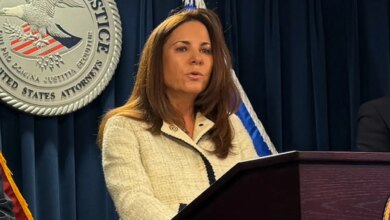
“These charges include the largest sober home fraud scheme the Department has ever prosecuted, and a scheme involving unnecessary invasive procedures detected through data analytics,” said Assistant Attorney General Colin McDonald of the department’s National Fraud Enforcement Division. It is the second half of that sentence that is the story here — not the dollar figure. “If you steal health care dollars from the American taxpayer or abuse your position to harm patients, we are coming for you — and the data will lead us to wherever you are.”
David Young, 71, and his son Nathan, 39, allegedly ran the largest of the schemes and used “body brokers” — Honey Phipps, 42, and Cody Phipps, 36, of Greenville, Texas, among them — to recruit homeless people and addicts at 12-step meetings, enroll them in high-reimbursing insurance plans, and bill more than $1.6 billion for treatment that was little or none. The indictment describes a two-tier machine: “premium” patients given hotels and dinners, everyone else in cramped “trap houses”; patients allegedly drugged “to knock the client out” when they tried to leave; and therapy that consisted of Zoom calls with more than a hundred attendees told they could “lay out on [the] beach” while the billing ran. An alleged area manager, Nicholas Moore, 33, has already pleaded guilty, admitting he helped submit $199 million in fraudulent claims.
Geoffrey Jimenez’s Transitions Hospice discharged roughly 85% of its patients alive — people leaving hospice who, the complaint says, were never dying. The national average is about a fifth of that; the department’s phrase was “more than four times.” Jimenez, 60, allegedly controlled more than a dozen entities that collectively billed over $107 million, some with non-death discharge rates above 90%. A second scheme, run by Armani Raffi, 59, through four Sherman Oaks hospices, billed about $21 million with discharge rates three to five times the national average. An 83-year-old physician, Dr. Richard Keech, allegedly signed certificates declaring patients terminally ill when they were not on hospice at all. Transitions Hospice billed Medicare about $9.8 million; Medicare paid about $8.3 million of it.
Christina Mareik’s pharmacy allegedly billed Medi-Cal about $269 million, exploiting the program’s suspension of its prior-authorization requirement — paused during a payment-system transition — to bill those claims for medically unnecessary generic drugs. Mareik, 61, of Whittier, is charged with the scheme. Medi-Cal paid about $178.7 million of it, roughly two-thirds, before the claims stopped. Her alleged personal cut: $279,000.
324 defendants. About $14.6 billion in alleged intended losses. The 2025 national takedown was the trial run: the department’s data team flagged claims before most of them paid out — all but roughly $41 million of $4.45 billion in scheduled payments, according to published figures from the operation. The playbook has a name now: the Health Care Fraud Data Fusion Center, plus a Data Analytics Team and a Financial Intelligence Review Team that, the department says, can open cases within days and seize assets before the money scatters. The June 2026 takedown went further — 455 defendants, $6.5 billion, with the Centers for Medicare & Medicaid Services suspending 1,079 providers and revoking billing privileges for 1,403 more. Thursday’s sweep is the regional version of the same machine: the strike-force program behind it has charged more than 6,200 defendants over more than $45 billion in billed claims since 2007.
First Assistant U.S. Attorney Bill Essayli, for the Central District of California, framed the stakes in familiar terms: “Every dollar drained out of our private and public health insurance systems is one less dollar available to those who truly need it.” The announcement’s novel part was not the rhetoric — the detection method was named twice: the outlier chart, and the discharge rates.
Six of the eight defendants arrested Thursday were expected to make initial appearances that afternoon at the U.S. District Court in downtown Los Angeles. Two more in Texas.
All are presumed innocent until proven guilty.