A Wedge of Brie Made From New York Milk Could Undo Trump’s Entire Tariff Regime
The milk comes from upstate New York, becomes brie in Ontario, and gets taxed coming home. One family importer's lawsuit says the 96-year-old law behind that tax was never legal to use. Ottawa, a day later, answered with a C$8.7 billion package of its own.
The milk is American. Dairy farmers in upstate New York sell it to a supplier in Ontario, who turns it into brie and ships the finished wheels back across the border to the United States. Last month, those wheels started arriving with a 50 percent tariff attached.
The cheese belongs to Gellert Global Group, a third-generation family business in New Jersey that imported about $71 million worth of Canadian cheese in 2025. On September 8 the administration added Gellert’s cheeses to the tariff list. Collection started September 15.
Seven days. The 1930 statute the tariffs rest on says thirty.

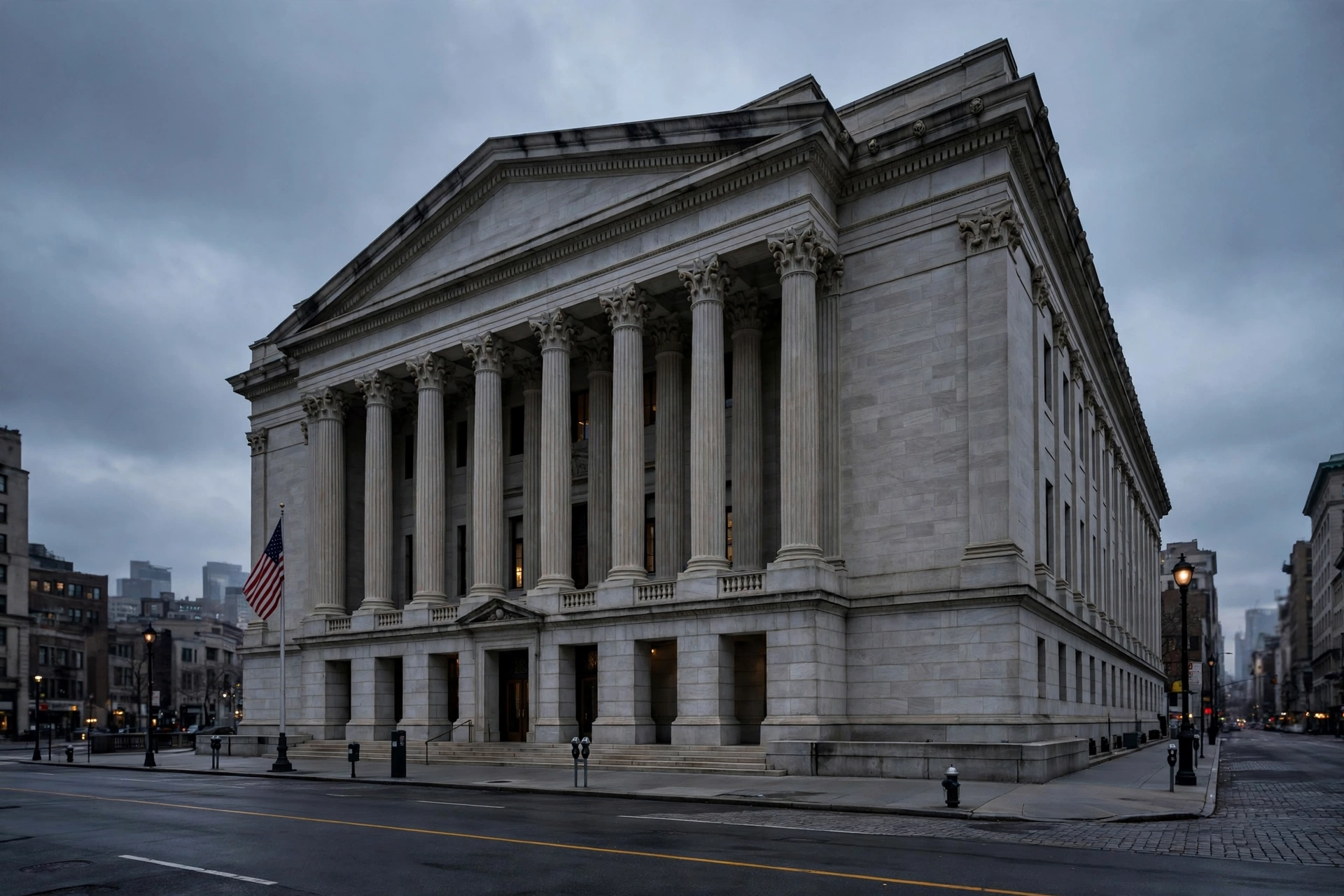
That gap, twenty-three days of premature duties, is one of the charges in Gellert Global Group v. Trump, filed October 20 in the U.S. Court of International Trade in Manhattan. Case number 26-cv-04636. It is the first court test of the legal foundation under roughly $20 billion in Canadian tariffs, and the complaint doesn’t ask for a tweak. It asks the court to certify a class of importers, declare the tariffs unlawful, block their collection, and order refunds with interest. Motions for a preliminary injunction and for summary judgment are already filed.
https://www.instagram.com/reel/DexHe1qCDVL/
The law at issue is Section 338 of the Tariff Act of 1930, part of the Smoot-Hawley package. No president has ever used it to impose a tariff. Ninety-six years, zero invocations, and no court has ever tested it. The administration reached for it in July, in three proclamations, after trade talks with Ottawa collapsed, and the duties took effect August 22.
The complaint’s first argument is that the facts don’t fit the statute. Section 338 permits tariffs only to offset foreign discrimination against U.S. commerce. Gellert’s lawyers say two of the three Canadian measures cited by the White House were themselves responses to the president’s own tariffs (retaliation being punished as discrimination) and the third involves Canadian dairy policy already governed by the U.S.-Mexico-Canada Agreement. Then there’s the filing error that reads like a clerical tell: Gellert’s cheeses were added to the tariff lists tied to Canadian liquor and automobile policies, even though the administration’s own dairy proclamation doesn’t cover cheese.
Then the calendar. Section 338 requires duties to take effect no earlier than thirty days after the proclamation. The cheeses went on the list September 8 and the duties started September 15. The lawsuit seeks refunds of the prematurely collected tariffs: more than $381,000 of the $520,538 Gellert says it paid across 22 entries between September 16 and October 11 came from entries before October 8.
The third is the one the lawyers seem proudest of. Congress already built the tool for punishing unfair foreign trade practices, the complaint says: Section 301 of the Trade Act of 1974, which requires an investigation, public comment, and other safeguards. “Congress already gave the executive branch a tool for responding to unfair foreign trade practices: Section 301, which requires an investigation, public comment and other safeguards,” said Jeffrey M. Schwab, the Liberty Justice Center‘s senior counsel and director of litigation, in the firm’s announcement of the case. “The administration cannot skip those protections by reaching for a 1930 statute that no president had ever used to impose a tariff.”
There’s a fallback argument too, the kind lawyers include for the judge who rejects everything else: if Section 338 does authorize these tariffs, then it’s an unconstitutional delegation of Congress’s tariff power.
Trade lawyer Peter Harrell, who has written about Section 338 before and holds no brief for either side, said the complaint’s core arguments are the ones to watch. “I have written about Section 338 elsewhere and I find these arguments persuasive,” he wrote in an October 20 post: that Canada’s acts are not “discrimination” within the meaning of the statute and the tariffs do not “offset” the burden. “At the very least, these arguments would mean a significant narrowing of the tariffs.”
Sara Albrecht, the Liberty Justice Center’s chairman and CEO, put the stakes in institutional terms: “We have challenged these tariffs under IEEPA, Section 122, Section 301 and now Section 338 for the same reason: the Constitution gives tariff power to Congress. The executive branch cannot keep moving the same policy from one statute to another and pretend the limits disappear.” The February Supreme Court decision that struck down the administration’s 1977 emergency-law tariffs, with billions in refunds owed, is the precedent hanging over this docket.
The White House isn’t conceding the frame. “Congress empowered the President under Section 338 to offset the burden or disadvantage from discrimination by foreign governments against U.S. commerce in favor of other foreign commerce, including Canada’s continued discrimination against American dairy, alcohol, and auto exports,” it said in a statement, adding that it would “defend vigorously.”
One day after the lawsuit landed, Ottawa answered the tariffs with money instead of motions. Prime Minister Mark Carney and Ontario Premier Doug Ford unveiled a C$8.7 billion joint package, about US$6.2 billion, for the steel, auto, and critical-mineral industries absorbing the duties.
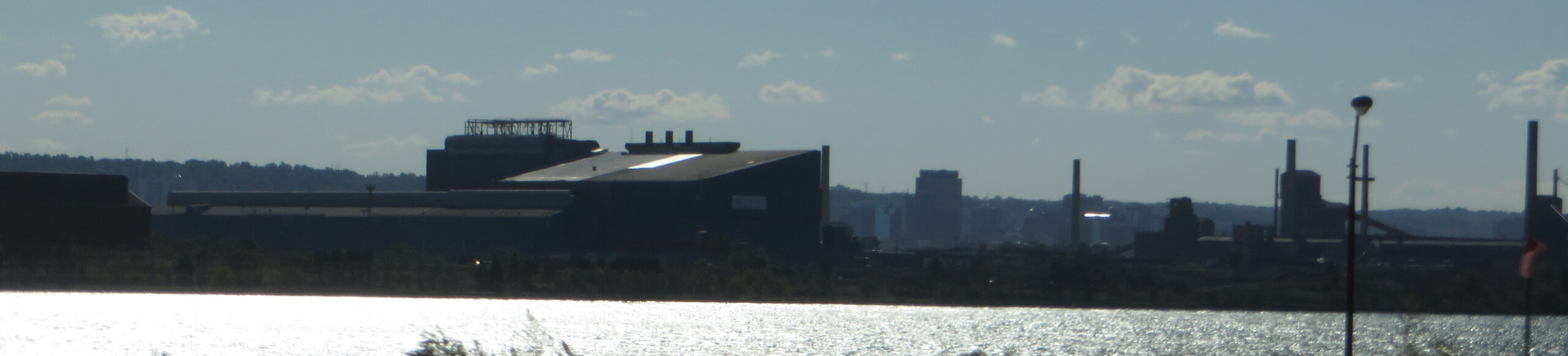
C$5.22 billion of it goes to a five-year Joint Steel Action Fund (C$3.55 billion federal, C$1.67 billion from Ontario) for mill upgrades, overseas market development, and supplying sectors like defense and energy. C$2.5 billion over two years goes to auto plants for machinery and production-line upgrades toward connected and electric vehicles: C$1.5 billion federal, C$1 billion Ontario. And up to C$1 billion in federal money over three years matches Ontario’s existing commitment for roads into the Ring of Fire mineral region in the north.
Add it up and Ontario’s C$2.67 billion share is exactly the figure Ford announced (1.67 plus 1.0), which means the Ring of Fire money on Ontario’s side was already committed, and the genuinely new federal money is C$6.05 billion. Against Carney’s jobs claim (220,000 protected in steel and auto, 70,000 created around the Ring of Fire), the package works out to about C$30,000 per job. Roughly C$1.04 billion a year for steel, C$1.25 billion a year for autos.
“U.S. tariffs have upended a trade bargain that’s existed for decades,” Carney said, making the case for the package to American voters as much as Canadian ones. “They’ve raised costs for American families while putting Ontario workers and businesses at a disadvantage and under a cloud of uncertainty.” Federal figures put the exposure at more than 120,000 direct auto jobs and C$16 billion a year in GDP, plus 23,000 steel jobs. The same day, U.S.-owned Cleveland-Cliffs confirmed layoffs at its Hamilton plant the same day the package was announced.
The diplomacy ran on a separate track and went nowhere. Carney said he spoke with Trump “quite some time” on Wednesday about trade, Iran and the Middle East. Ukraine had come up days earlier. No breakthrough, but Canada “remains ready to negotiate.” Ford was blunter about the era: “No matter what happens in the midterms, no matter who sits in the White House, we’re not going back to the way things were.”
Meanwhile the U.S. Embassy in Ottawa released a fact sheet accusing Canadian politicians of trying to influence American politics ahead of the November 3 midterms, citing Industry Minister Mélanie Joly’s remark that “that’s exactly why I’m meeting so many governors and potential presidential candidates,” Ford’s proposals for retaliatory tariffs aimed at politically significant states, and Ontario’s $75 million anti-tariff ad campaign built on Ronald Reagan’s 1987 tariff criticism. Carney and Ford both rejected it. “We’ve responded to those to protect Canadian jobs, to protect Canadian companies and develop our economy,” Carney said. Ford: “I have no interest at all in interfering in US elections.”
Motions for a preliminary injunction and for summary judgment are before the court. No ruling date has been set.