An ABC Reporter’s Flood Rescue Should Kill the 4WD Myth: 30cm of Water Floats a Car
Will Murray and a bystander pulled a driver from a sinking four-wheel drive at Morayfield. The research shows 35% of Australia's floodwater-driving deaths were in 4WDs — and the problem is getting worse, not better.
Will Murray was supposed to be covering the flood. Then he was in it.
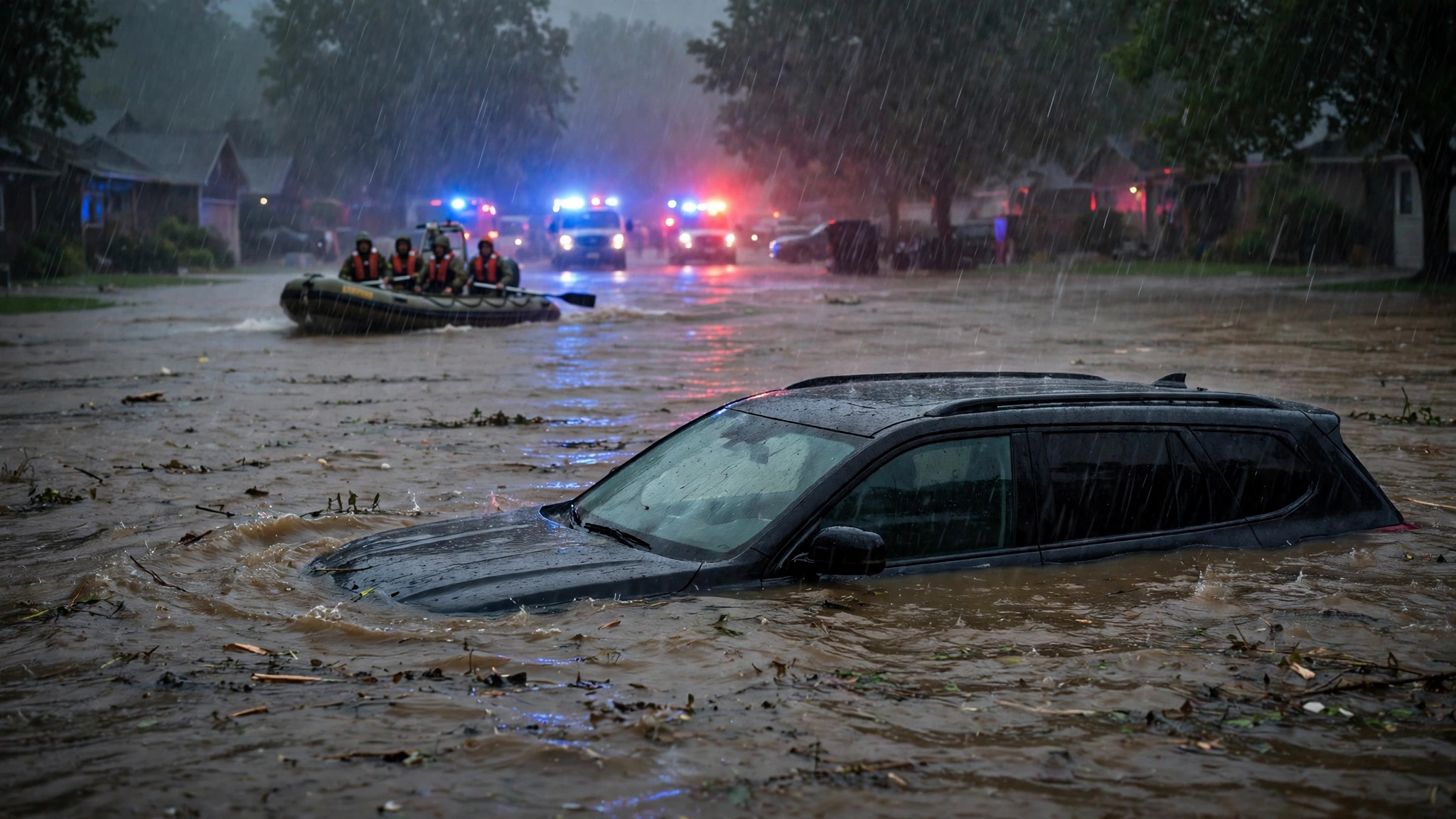
The ABC journalist was reporting on flooding north of Brisbane on Thursday when a man drove a four-wheel drive straight through the water at Morayfield. The 4WD stalled. It started to sink. Murray and another man swam out to the car and dragged the driver free, moments before it went completely under. ABC camera operator Liz Pickering, who watched it happen, didn’t hedge: “The pair of them definitely saved that man’s life. No doubt about that.”
About 170mm — nearly seven inches — of rain had fallen on Morayfield that day. The footage is dramatic, and it’s already circulating as a hero story. It should circulate as a warning instead.


Because the important part isn’t who did the rescuing. It’s what sank. A four-wheel drive. The vehicle Australians trust most in exactly this situation is the one most overrepresented in the deaths that follow from it.
The physics don’t care about ground clearance. Research cited by Australia’s emergency-management journal puts the numbers plainly: 30 centimetres of still water is enough to float a small passenger car. Fifty centimetres floats a 4WD. At 60 centimetres the car can be carried away entirely, and the side force of water moving through a flooded creek can reach 100 tonnes. Even gently moving floodwater can wash the road surface out from under the wheels, so the street that looked shallow is hiding a void. Murray’s driver found all of this out in seconds.
And he is not unusual. Driving into floodwater is the single biggest cause of flood deaths in Australia. Bushfire and Natural Hazards CRC research counted 96 vehicle-related flood fatalities in 74 separate incidents between 2001 and 2017. Risk Frontiers’ PerilAUS database has 81 people dying while attempting to drive through floodwater over the 20 years to 2014 — 43 percent of all flood fatalities in the period. As recently as 2022, the Royal Life Saving Society recorded 43 flood-related drowning deaths in Australia, and more than 60 percent were people driving through floodwater.
Now the 4WD figures. Of those 81 floodwater-driving deaths, 35 percent were in four-wheel drives. Fatalities involving 4WDs have risen steeply — nearly three-quarters of all 4WD flood deaths happened since 2000, the era when the high-riding dual-cab became the default regional family car and the advertising started selling river crossings as a feature. The drivers were overwhelmingly men: 84.4 percent. Almost half of those vehicle deaths happened during twilight or darkness, when the water is hardest to read. And the researchers found something worse than ignorance — many victims knew the risk and decided to go anyway.
The NSW State Emergency Service has been blunt about one reason why. “The 4WD advertisements often reinforce” the idea that these vehicles can cross flooded rivers, one of its spokesmen said, and the service now specifically targets 4WD drivers in its campaigns. The capability is marketing. The buoyancy is physics.
Queensland’s government introduced the slogan “If it’s flooded, forget it” after the 2011 floods. Fifteen years later, the Royal Life Saving Society’s figure still stands: 54 percent of flood deaths in 2002–2012 came from driving through floodwater. The Victoria SES logged 26 floodwater rescues during a single storm window in January. What Murray did is heroic; what made it necessary is routine.
The driver at Morayfield got out alive because two men swam toward him; the research says most people who make the same decision don’t get that.
The water was a suburban street. The car was a 4WD. Nothing about either fact made it safer.