GM Bets on Unproven Battery Chemistry to Break China’s Grip
The automaker committed to LMR cells with only 60% to 70% of the data, aiming for 2028 volume production to rival cheap Chinese alternatives.
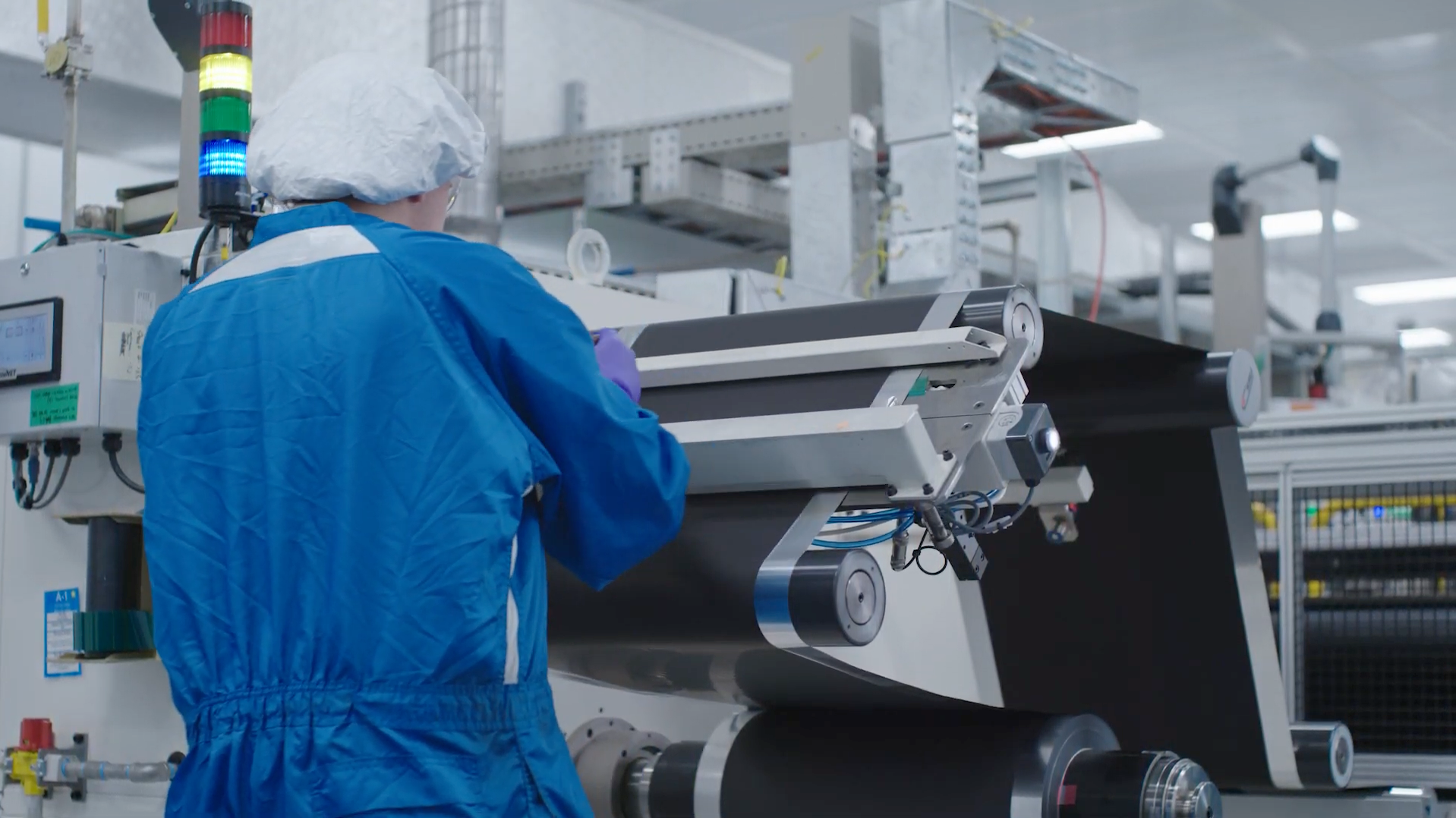
General Motors is staking its electric vehicle future on a battery chemistry that most of the auto industry considers a dead end. The Detroit automaker plans to mass-produce lithium manganese-rich, or LMR, cells by 2028, according to Kurt Kelty, GM’s vice president of battery and sustainability, who told Fortune the company made the decision with perhaps 60% to 70% of the necessary data in hand.
The gamble targets a specific vulnerability. Chinese manufacturers dominate the global supply chain for lithium iron phosphate, or LFP, batteries, which have become the standard for affordable EVs due to their low cost. GM says its LMR cells offer 33% more energy density than LFP at comparable cost. “We’re not licensing this from China,” Kelty told Fortune.
LMR technology has historically failed in commercial applications because of voltage decay and short cycle life. GM believes it has solved those problems, though volume production remains years away. The cells use roughly 30% to 40% nickel, battery engineer Andy Oury told Fortune, compared to about 85% in today’s high-nickel cells. Production will take place through the Ultium Cells joint venture with LG Energy Solution in Spring Hill, Tenn.


To compress development timelines, GM ran more than 300,000 digital designs before manufacturing a single physical cell. The simulation consumed 300 million CPU hours, equivalent to one computer running continuously for 34,000 years, by GM’s math. The team moved from first pack concept to formal program approval in one month, a process the company announced Wednesday at its GM Forward event typically takes four to five years.
Sterling Anderson, the former Tesla Autopilot chief hired as GM’s chief product officer in 2025, recently told Fortune the approach represents “effectively the third phase in the evolution of product development for humanity.”
Physical validation happens at GM’s $900 million Battery Cell complex in Warren, Mich., which is scheduled to be fully operational later this year and ramp toward producing a couple thousand cells a day. During a recent visit to the facility reported by Fortune, Jason Fischer, a 28-year GM veteran leading the AI push in engineering, demonstrated a digital car sliding off a cone course until engineers tuned it in simulation. He said the same work would take months with a real car.
“I’m convinced that we’re going to be able to do things just as fast as China,” Fischer said. GM holds weekly “tall pole” reviews targeting whatever is slowing each job. Fortune reported Tuesday that the company now rewards engineers for missed stretch targets, part of a culture change where Kelty says he wants “to see red.”
The LMR cells are one component of GM’s fourth-generation EV platform, which the company said at GM Forward should deliver about 20% more range per kilowatt-hour. The Gen 4 architecture is expected to be 25% more aerodynamic and 15% lighter, featuring a 20% more compact pack and drive units with 40% fewer parts. In factories, GM’s PlantBrAIn platform has already moved battery packs through assembly 30% faster, and Gen 4 vehicles will check their own wiring on the line.
A new central computer with 40 times today’s processing power and 30% less wiring debuts in 2028 on the Cadillac Escalade IQ before spreading to gas SUVs, trucks, three-row crossovers and Gen 4 EVs. The hardware enables autonomous highway driving on gas-powered full-size SUVs and light-duty pickups, with pre-production vehicles currently testing on closed courses.
That software trains largely through self-play, using versions of itself to simulate merging cars and surrounding traffic. Rashed Haq, GM’s vice president of autonomous vehicles, told Fortune that GM kept “a lot of the methodologies” from Cruise, the robotaxi unit the company absorbed in 2024, for the next-generation Super Cruise system. Current Super Cruise customers have logged more than 1.2 billion hands-free miles, while the self-driving software logs more than 3 billion simulated miles a day against about 1 million real-world miles a month.
An OnStar AI assistant arrives on the 2027 Cadillac Lyriq via over-the-air update in the coming months. Anderson told Fortune a four-person team had a voice prototype running in a Lyriq about 30 days after he requested one.
GM says it is investing more than $16 billion in U.S. R&D and manufacturing this year, following about $7.6 billion in EV-related charges last year.