Pentagon’s Autonomous Warfare Push Sparks Atlanta Ban on Police Killer Robots
Pentagon's AutoWarCom accelerates military robotics; Atlanta moves first to block domestic police adoption
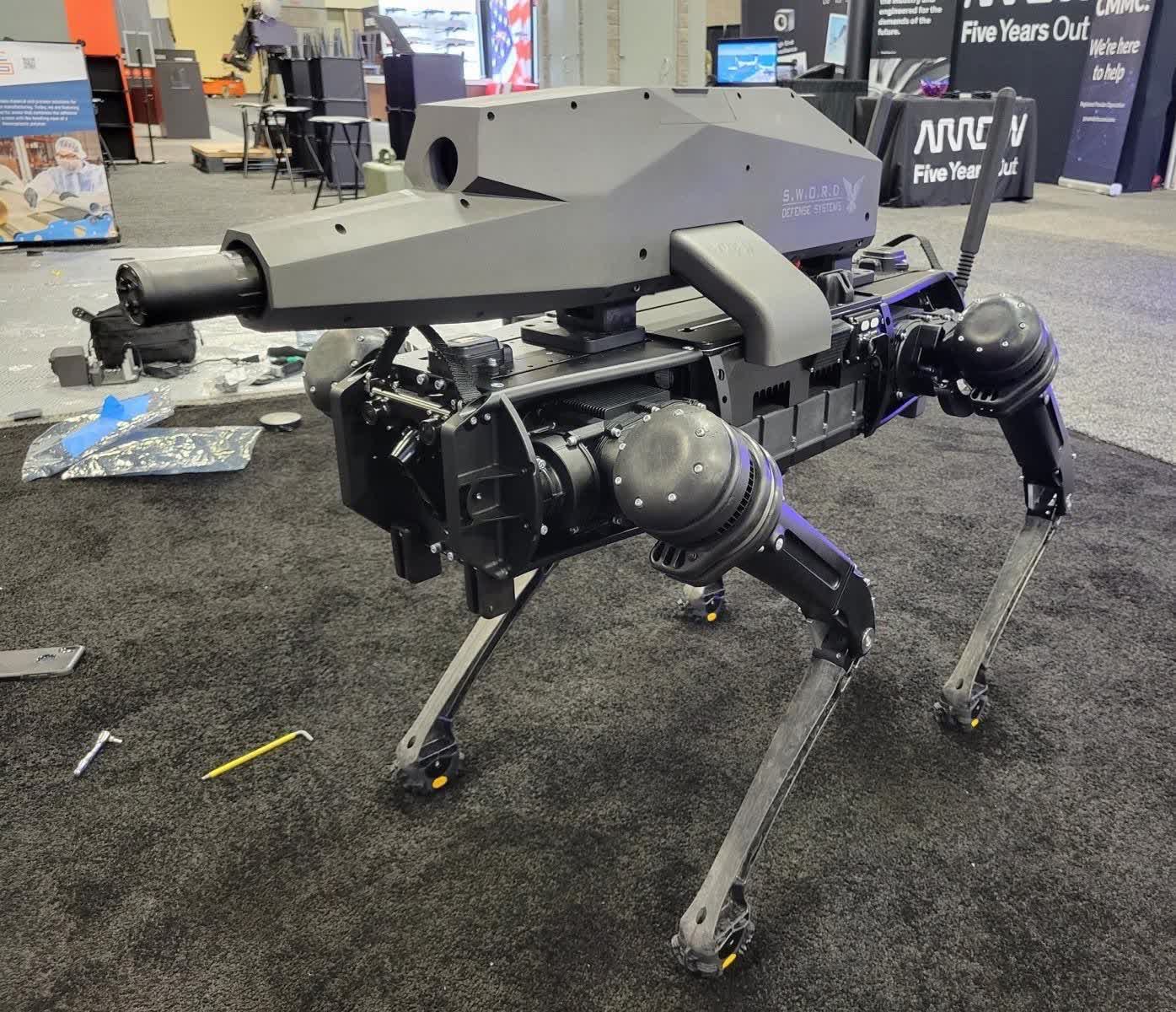
The Pentagon’s new Autonomous Warfare Command, unveiled by Defense Secretary Pete Hegseth in September, is accelerating military robotics at a pace that has Atlanta lawmakers building a legal firewall before the technology reaches their streets.
City Council voted 15-0 this week to pass the HALT Act, banning police and city contractors from acquiring weaponized autonomous systems, armed drones, or robotic platforms capable of lethal force. The measure, introduced by Council member Liliana Bakhtiari, explicitly exempts explosive-ordnance disposal robots.
“We know this is coming because of the secretary’s announcement,” Bakhtiari told the Atlanta Journal-Constitution. “It is a hop, skip and a jump away from being utilized by municipalities.”


Hegseth’s AutoWarCom directive orders the services to create dedicated career fields for autonomous warfare specialists and fast-track deployment of semi-autonomous systems. Defense contractors are already marketing ground robots and armed drones developed for overseas contingencies to domestic law enforcement through federal transfer programs.
The 1033 Program, which funnels surplus military equipment to local police, has distributed more than $7.4 billion in gear since 1997. Armored vehicles, aircraft, and rifles have flowed through the pipeline. Autonomous armed platforms would be the next step.
San Francisco tested the waters in 2023. The Board of Supervisors initially authorized police to deploy robots with lethal force options, then reversed course within a week after public outcry. The city still prohibits deadly robotic force.
Last year, the Department of Homeland Security disclosed plans to use quadrupedal robots in tactical operations. Those machines carried no weapons. Their role: breach network communications, stream audio and video, and negotiate with barricaded subjects.
Bakhtiari framed the Atlanta ban as a defense of human judgment. “No machine should be given the ability to make lethal decisions,” she said. The act also bars AI systems from replacing officer decision-making in use-of-force scenarios.
No other major U.S. city has enacted a comparable pre-emptive ban. Atlanta’s move may signal whether local governments can slow the domestication of battlefield autonomy before it becomes standard police kit.