UConn Weaponizes Exhibition Schedule as College Basketball’s Arms Race Escalates
Inside the strategic shift turning November exhibitions into revenue generators and tournament prep for elite programs
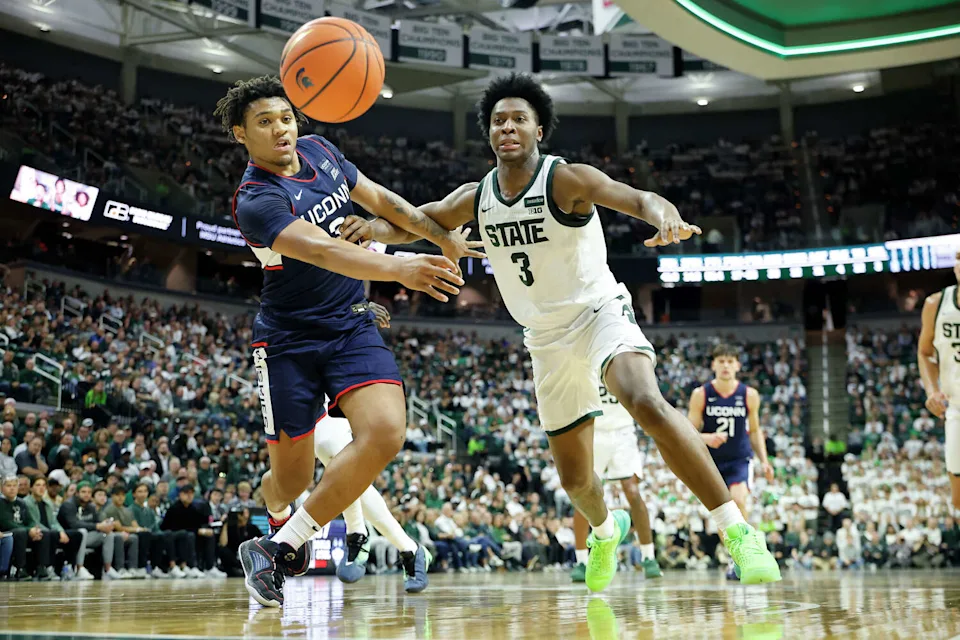
EAST LANSING, Mich. — The exhibition label on Tuesday night’s scoreboard was a technicality. When No. 4 UConn and No. 6 Michigan State took the Breslin Center floor, the intensity, the scouting reports, and the revenue implications all carried regular-season weight.
UConn’s 78-70 victory showcased a new reality in major college basketball: elite programs are treating November exhibitions as de facto tournament preparation, roster auditions, and revenue generators simultaneously.


Dan Hurley scheduled Syracuse and Michigan State back-to-back, then closes the exhibition slate against Purdue next week. Three power-conference opponents before the season officially starts. The strategy serves multiple masters — player development, portal evaluation, and athletic department balance sheets in the revenue-sharing era.
“These games are scheduled with just that in mind — money, of course, with all programs in the rev-share/NIL era needing to monetize their every move,” the CT Insider reported from courtside.
The financial pressure is real. With the NCAA’s new revenue-sharing framework and NIL collectives demanding seven-figure budgets, athletic directors need inventory. High-profile exhibitions deliver ticket revenue, broadcast value, and donor engagement without risking NET rankings or Quad 1 opportunities.
For Hurley, the basketball return is equally calculated. Freshman Colben Landrew logged 31 minutes against Michigan State after 29 against Syracuse — an hour of high-major competition before a single game counts. The five-star recruit from Marietta, Ga., responded with 13 points, five rebounds, and a defensive sequence that included a blocked dunk attempt and a transition three-pointer.
Duke transfer Nik Khamenia, the only Husky with prior Breslin Center experience, led all scorers with 19 points. His comfort level validated Hurley’s portal strategy: acquire proven performers who don’t need acclimation time.

Braylon Mullins, another highly touted freshman, remained sidelined with an undisclosed injury. He warmed up but didn’t play, extending his evaluation period without burning eligibility.
Michigan State gains parallel benefits. Tom Izzo’s program gets a measuring stick against the two-time defending champions without schedule penalty. The Spartans’ student section treated the game with March urgency, giving Izzo a genuine atmosphere for roster experimentation.
The arms race extends beyond scheduling. Programs now curate exhibition slates like non-conference schedules — balancing strength of opponent, geographic reach, and television appeal. UConn’s three-game gauntlet (Syracuse, Michigan State, Purdue) mirrors the philosophy that built their back-to-back titles: prepare for the tournament in November.
Both teams remain 0-0 officially. But the data gathered — lineup combinations, freshman readiness, transfer integration — will inform March decisions. In an era where roster turnover is annual and preparation windows shrink, the exhibition has become the new non-conference season.