Google’s Gemini in Cars Hits Privacy Wall: EU, UK, Nigeria Excluded From Android Auto Rollout
Regulatory gaps keep 200M European drivers from new in-car AI features
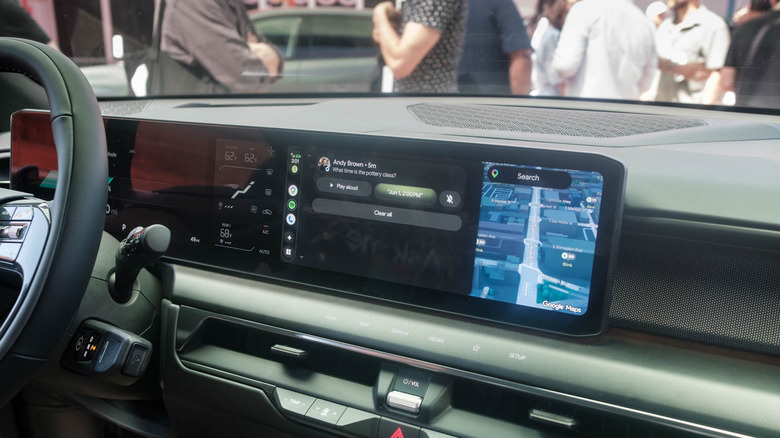
Google began rolling out its personalized Gemini assistant to Android Auto users worldwide Tuesday, but drivers in the European Economic Area, United Kingdom, Switzerland and Nigeria will not receive the update. The geographic carve-out underscores mounting regulatory friction between AI-driven personalization and data protection laws that treat vehicle infotainment systems as high-risk data environments.
The feature, branded Personal Intelligence, lets Gemini pull live data from a driver’s Gmail, Calendar and Maps to answer queries like “what’s my flight gate?” or “take me to my doctor’s appointment” without the driver touching a phone. Google says the integration is optional and granular controls let users block access to individual apps. Yet the absence of a launch across 30 European nations — home to roughly 200 million potential Android Auto users — signals the company has not yet satisfied regulators that in-car data scraping meets GDPR and the EU AI Act‘s strictures on automated decision-making.
“Cars are becoming the next frontier for ambient AI, but they’re also regulated spaces where safety and privacy rules collide,” said Johnny Kwan, senior analyst at Canalys. “Google’s selective rollout is a de facto admission that compliance isn’t solved.” The UK’s Information Commissioner’s Office and Ireland’s Data Protection Commission, lead supervisor for Google’s EU operations, have both opened preliminary inquiries into how automotive AI assistants process location and behavioral data, according to public regulatory registers.


For U.S. drivers, the update arrives as a standard Play Services push. Once enabled, Gemini can surface restaurant suggestions along a route that factor in dietary restrictions stored in Maps, or read aloud a calendar event’s address when asked “where’s my next meeting?” The assistant does not transcribe voice recordings locally; audio is streamed to Google’s cloud for processing, a design choice that privacy advocates say creates a persistent data pipe from the cabin to Alphabet’s servers.
Apple, by contrast, processes CarPlay voice commands on-device for supported models and has not announced a comparable cross-app personalization layer. That architectural difference may explain why Apple Intelligence features are rolling out simultaneously in the EU and U.S., while Google’s automotive AI remains geographically fragmented.
Google told Engadget the excluded markets will gain access “once we’ve completed necessary regulatory reviews.” No timeline was provided. The company plans to extend Personal Intelligence to vehicles with Google Built-in — the native Android Automotive OS used by Volvo, Polestar and General Motors — later this year.