GOP Targets Democratic Voter Blocs in Final Midterm Push as Trump Hits North Carolina
Trump hits North Carolina as Republicans exploit Democratic fractures with 14 days until Election Day
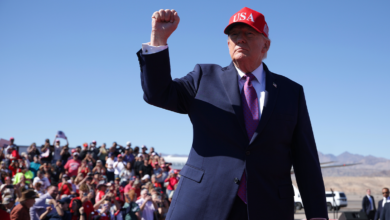
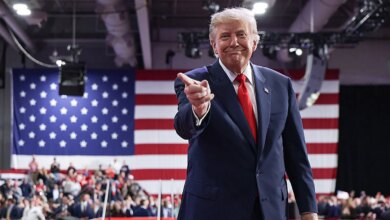
WASHINGTON — Republican campaigns are concentrating resources on peeling away traditional Democratic constituencies in the closing two weeks before the midterm elections, with former President Donald Trump scheduled to headline a North Carolina rally as part of a broader strategy to exploit fractures in the Democratic coalition.
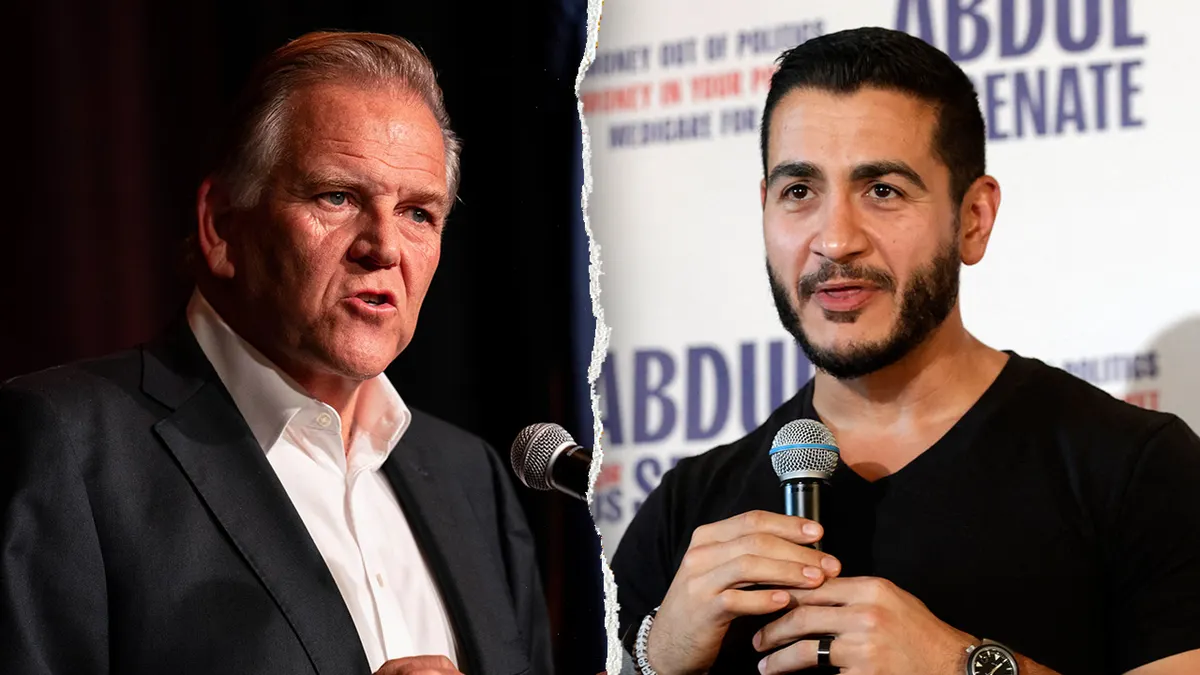
The push comes as GOP Senate candidate Mike Rogers intensifies attacks on Democrat Abdul El-Sayed in Michigan, framing the race around what Rogers describes as El-Sayed’s “extreme” policy positions. Meanwhile, Sen. Joe Manchin (I-W.Va.) made an unexpected campaign appearance for a Republican Senate candidate, delivering what allies called a pointed rebuke of Senate Majority Leader Chuck Schumer’s leadership.
“If we lose this voting bloc, the Republican Party is dead,” a top Trump ally warned in a closed-door briefing last week, according to attendees. The comment reflects growing anxiety within GOP circles about maintaining gains among working-class voters and minority communities that shifted toward Republicans in recent cycles.


Democratic strategist James Carville amplified those concerns in a recent interview, warning that a slim Democratic majority would leave the House “hostage” to the Democratic Socialists of America caucus. Carville’s assessment aligns with Republican messaging that portrays the Democratic Party as captive to its progressive wing.
The Republican offensive extends beyond traditional battlegrounds. In a sign of expanding ambitions, GOP operatives say they see openings with Jewish voters in key districts, citing rising antisemitic incidents during recent unrest in France and what they describe as inadequate Democratic responses. French Jewish community leaders reported “unsettling warnings” amid violent protests, marking what one leader called “the first time I heard this” level of explicit threats.
Trump’s North Carolina visit headlines a final sprint that includes the launch of a $25 million whistleblower program targeting government fraud — an initiative aides say resonates with voters across party lines who view Washington as corrupt. The program offers cash rewards for tips leading to recoveries, a structure modeled on successful enforcement tools at the Securities and Exchange Commission.
Democrats counter that Republican “extremism” on abortion and social issues will mobilize their base. The Democratic Senatorial Campaign Committee has poured $12 million into Michigan alone over the past three weeks, focusing on suburban women and younger voters.
Early voting data from North Carolina shows Republican turnout running 3.2 percentage points ahead of 2022 levels, while Democratic early voting lags by 1.8 points. However, Democrats typically dominate Election Day turnout in urban counties.
The FBI’s raid on the Washington, D.C. home of Rep. Ilhan Omar’s sister last week injected fresh volatility. Federal agents declined to specify the investigation’s focus, but the operation dominated conservative media for 48 hours and forced Democratic candidates in competitive districts to address questions about the progressive “squad’s” influence.
Meanwhile, a Chinese Foreign Ministry spokesman denounced what Beijing called “politicized” restrictions on DeepSeek AI technology, escalating a tech war that has become a surprise pocketbook issue in districts with semiconductor manufacturing. The Commerce Department’s expanded export controls, announced in September, have eliminated an estimated 4,700 jobs across Arizona, Ohio, and Texas, according to industry analysts.
Public health concerns also surfaced as a sleeper issue. The CDC confirmed that a synthetic opioid “10 times stronger than fentanyl” has been linked to 234 overdose deaths across 17 states since June. The substance, labeled “N-pyrrolidino etonitazene” in toxicology reports, has appeared in counterfeit pills pressed to resemble oxycodone.
With 14 days remaining, both parties acknowledge the race for Senate control will likely hinge on fewer than 150,000 voters across five states. The House battlefield has narrowed to roughly 25 districts, many of them won by Biden in 2024 but represented by Republican incumbents.