States Crack Down on AI Pricing as Retailers Face Backlash
New laws in Maryland, New Jersey and Connecticut restrict how retailers use personal data to determine checkout costs.
At least 30 state legislatures have introduced bills this year targeting algorithmic pricing tools used by major retailers, marking the most aggressive government intervention yet into how companies set prices. The Federal Trade Commission simultaneously proposed an enforcement policy warning that failing to disclose personal data use in individualized pricing could violate consumer protection law, according to the National Conference of State Legislatures.
Maryland, New Jersey and Connecticut recently enacted restrictions on using shopper data to determine checkout costs. The Maryland and New Jersey laws focus specifically on groceries, with exceptions for certain loyalty discounts. Connecticut’s legislation covers a broader range of retail purchases.
The legislative push follows years of corporate experimentation with pricing software that goes far beyond traditional supply-and-demand calculations. Companies now deploy artificial intelligence to identify patterns in sales, competitors’ prices and other information to predict demand and estimate how different prices would affect profits. Simon-Kucher, a global consulting company, surveyed more than 2,200 business leaders in 28 countries last year and found 41% used AI software to gather market intelligence, including competitors’ prices. Another 28% said they used it for real-time price optimization.


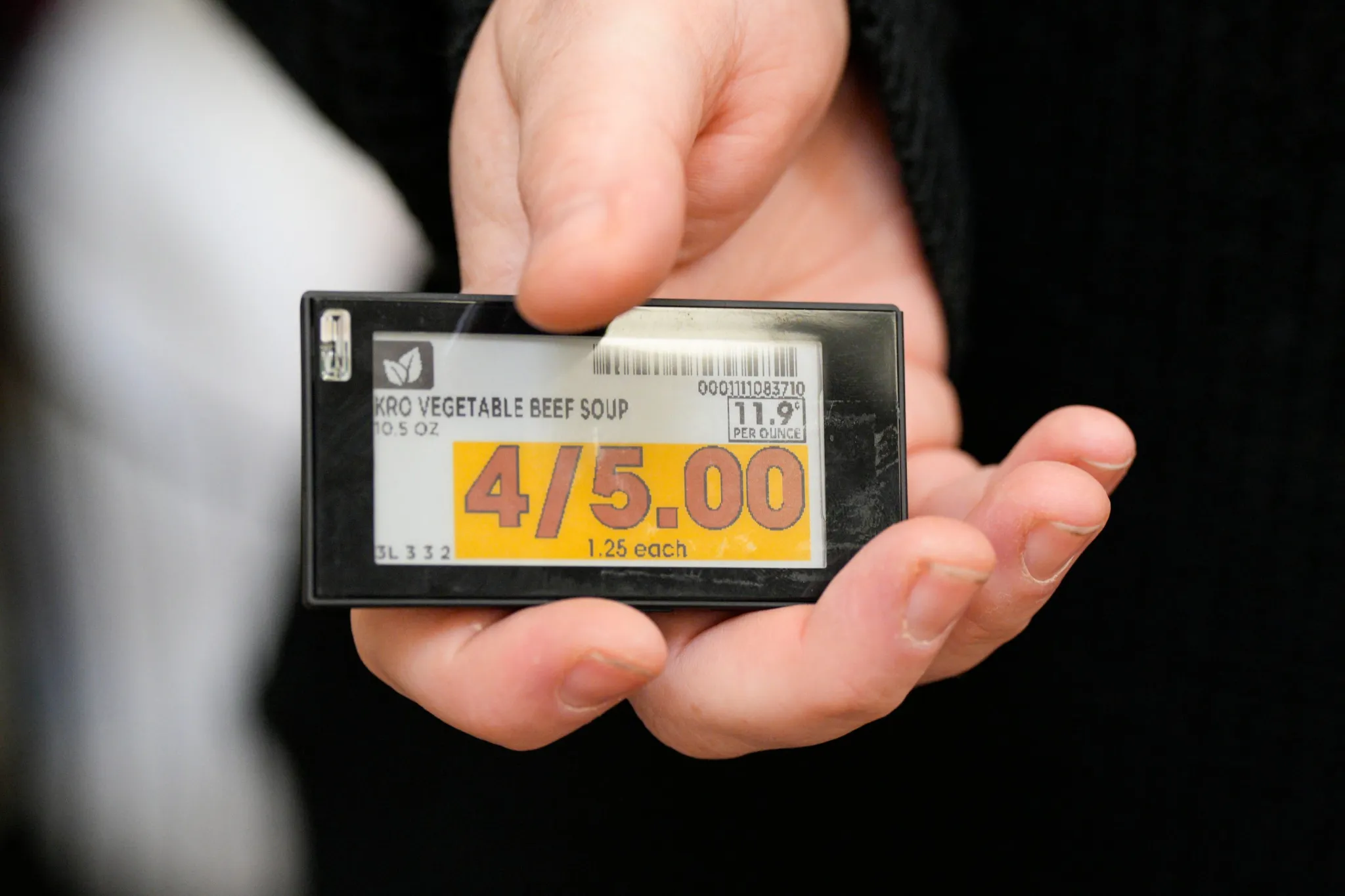
Walmart CEO John Furner addressed the mounting scrutiny in a blog post last month, stating digital price tags save workers’ time and keep prices up to date. He said the labels aren’t used to raise prices based on weather, time of day or individual shoppers. “We price the product, not the person,” Furner wrote. Walmart plans to install electronic shelf labels in all its U.S. stores.
Consumer advocates argue these digital displays, long standard in Europe and Asia, create infrastructure that could eventually enable surge pricing in grocery aisles. Researchers who tracked prices at an unnamed grocery chain found virtually no surge pricing after electronic labels were introduced, according to Asa Farquhar of retail technology company Relex Solutions. Retailers typically update electronic shelf prices on a regular weekly schedule because shoppers value consistency, Farquhar said.
Decodo, a web data company, tracked price changes in 2025 across products ranging from electronics to clothing and home improvement supplies. About half the U.S. changes it recorded were decreases, contrary to assumptions that dynamic pricing only raises costs, said Gabriele Vitke, a senior product marketing manager at the firm.
The gap between corporate explanations and public perception has widened. Social media posts falsely imply that electronic shelf labels scan shoppers’ faces or cellphones to set individualized prices, said Katie Thomas, who leads a consumer behavior think tank at management consulting firm Kearney. Companies aren’t always transparent about the customer data they collect, which has fueled speculation.
An FTC staff report released in January 2025 found that intermediaries offering tools capable of tailoring prices and promotions worked with at least 250 clients, including grocery and clothing retailers. It remains unclear how widely businesses actually use personal information to customize what individuals pay.
Legal challenges have already produced results. California prosecutors sued Target in 2022, alleging the retailer’s app displayed lower prices before shoppers entered stores and raised them once inside. Target agreed to a $5 million settlement and a ban on using geofencing technology to increase prices. The retailer said the app functionality was used to provide guests with accurate pricing that varies across stores and channels, and that it didn’t personalize prices based on guest data.
Different prices do not necessarily indicate personal data use. An investigation last year by Consumer Reports, Groundwork Collaborative and More Perfect Union found Instacart shoppers were shown different prices for identical products at the same stores. Instacart subsequently ended what it described as tests that randomly assigned shoppers to groups rather than setting prices based on personal information.
Federal antitrust regulators are pursuing larger targets. A 2023 anti-monopoly lawsuit the FTC brought against Amazon challenged an algorithmic tool codenamed Project Nessie. The agency alleged Amazon used the tool to identify products whose prices it could raise with competitors likely to follow, generating more than $1 billion in excess profits. A trial is scheduled for next year. Amazon said the FTC allegations grossly mischaracterize the pricing tool, which was intended to stop retail price-matching practices from creating unsustainably low prices and was scrapped before the lawsuit.
A recent consumer lawsuit against McDonald’s alleged its pricing system used nonpublic sales data from competing locations to coordinate prices. The Chicago-based burger giant called the lawsuit filled with inaccuracies, stating it makes the tool available to U.S. franchisees to help them set prices at individual restaurants.
The National Retail Federation maintains that algorithmic pricing is simply a new method of doing what retailers have always done: monitor and adjust prices depending on supply, demand, seasonality and competitor moves.