

Pope Leo XIV’s Lung Cancer Exposes a Screening Blind Spot
Never-smokers remain excluded from USPSTF screening guidelines even as incidence rises sharply among women.
The Oct. 13, 2026, disclosure that Pope Leo XIV has been diagnosed with lung cancer despite never having smoked immediately reframed a disease long defined by its association with tobacco use. The Vatican confirmed the pontiff’s tumor was caught at an early stage, making surgical removal and potential cure viable options.
His diagnosis arrives as oncologists document a sustained demographic shift in who develops the disease. Lung cancer now kills more women annually than breast, ovarian, and colorectal cancers combined. Over the past 44 years, incidence rates among American women climbed 79%, according to the American Lung Association, while falling 43% for men. For the first time, young women are being diagnosed at higher rates than young men.
This trajectory exposes a structural gap in preventive medicine. Current screening protocols systematically exclude never-smokers, leaving millions of people without a mechanism for early detection. Tumors in this population are routinely discovered incidentally during imaging ordered for unrelated complaints, or after symptoms have progressed.


The United States Preventive Services Task Force last broadened its lung cancer screening criteria in 2021, lowering the recommended starting age to 50 from 55 and reducing the required smoking history to 20 pack-years. A pack-year equals smoking one pack daily for a year. The guidelines apply exclusively to current smokers or those who quit within the preceding 15 years. Never-smokers remain ineligible for covered low-dose computed tomography (CT) scans under these federal recommendations, regardless of other risk factors they may carry.
Even within the eligible population, screening uptake remains critically low. Fewer than 6% of qualified individuals undergo the recommended low-dose CT scan, compared to mammography participation rates exceeding 70% among eligible women. Researchers project the 2021 guideline expansion will eventually increase female eligibility by roughly 40%, but adoption depends heavily on primary care physicians initiating conversations about pulmonary imaging.
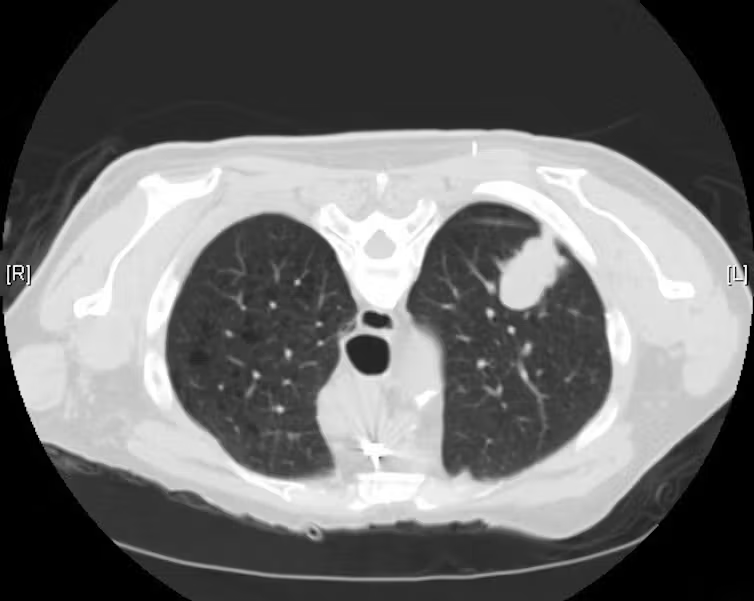
A low-dose CT scan can help with early detection of lung cancer. In this image, the tumor is the white nodule in the upper right corner of the black space. Atlas of Pulmonary Pathology/Flickr, CC BY-SA
Understanding why never-smokers develop lung cancer requires looking beyond tobacco. Radon gas exposure ranks as the second leading cause of the disease overall and the primary cause among those who have never smoked. The Environmental Protection Agency estimates radon causes approximately 21,000 U.S. lung cancer deaths annually, seeping into homes through foundation cracks from natural uranium decay in soil. Unlike cigarette smoke, radon is odorless and invisible, requiring specific home testing kits to detect.
Occupational inhalation of arsenic, beryllium, cadmium, silica, nickel, and asbestos continues to drive diagnoses globally. Ambient air pollution, specifically fine particulate matter known as PM2.5, has been classified as a Group 1 carcinogen by the World Health Organization’s International Agency for Research on Cancer. Long-term exposure to wildfire smoke, diesel exhaust, and industrial emissions contributes to cellular mutations in the respiratory tract independent of any personal smoking history.
Historical shifts in tobacco manufacturing also shaped the modern epidemiology of the disease. When filtered cigarettes became dominant in the mid-20th century, they altered how smoke traveled through the respiratory system. Filters forced deeper inhalation, driving carcinogens further into the peripheral airways. This engineering change correlated directly with a rise in adenocarcinoma, a cancer type originating in the outer lung tissue that now represents the most common form of lung cancer diagnosed in both never-smokers and women.
Genetic predisposition represents another frontier. Researchers are investigating hereditary susceptibility genes analogous to BRCA1 and BRCA2 mutations in breast cancer. While no single inherited mutation has been definitively isolated as a universal predictor for lung cancer, familial clustering studies indicate that alterations in genes governing tumor suppression and cellular repair significantly elevate baseline risk. Identifying these biomarkers could eventually justify screening expansions for high-risk families lacking smoking histories.
The biological profile of lung cancer in never-smokers differs fundamentally from tobacco-driven cases, altering treatment pathways. Tumors in non-smoking patients frequently harbor specific targetable driver mutations, such as alterations in the EGFR gene or ALK rearrangements. These molecular signatures respond to precision oral therapies rather than traditional cytotoxic chemotherapy. Women generally exhibit higher frequencies of these actionable mutations, contributing to better overall survival outcomes compared to men when treated with matched targeted agents or immunotherapies.
Clinical recognition remains a persistent barrier. Early-stage lung cancer symptoms—persistent cough, unexplained shoulder or back pain, chronic fatigue, and mild shortness of breath—frequently mimic benign musculoskeletal issues, viral infections, or stress. Because younger women do not fit the historical patient archetype, both patients and clinicians often attribute these warning signs to less severe conditions, delaying diagnostic imaging until the disease advances.
The pope’s medical team has not publicly specified the histological subtype or genetic profile of his tumor. Vatican officials stated he will continue his duties while undergoing evaluation for surgical intervention.









