El Salvador Plans to Free Up to 45,000 Detained Under Gang Crackdown
Conditional releases target individuals accused of gang collaboration as the country reassesses its four-year mass detention strategy.
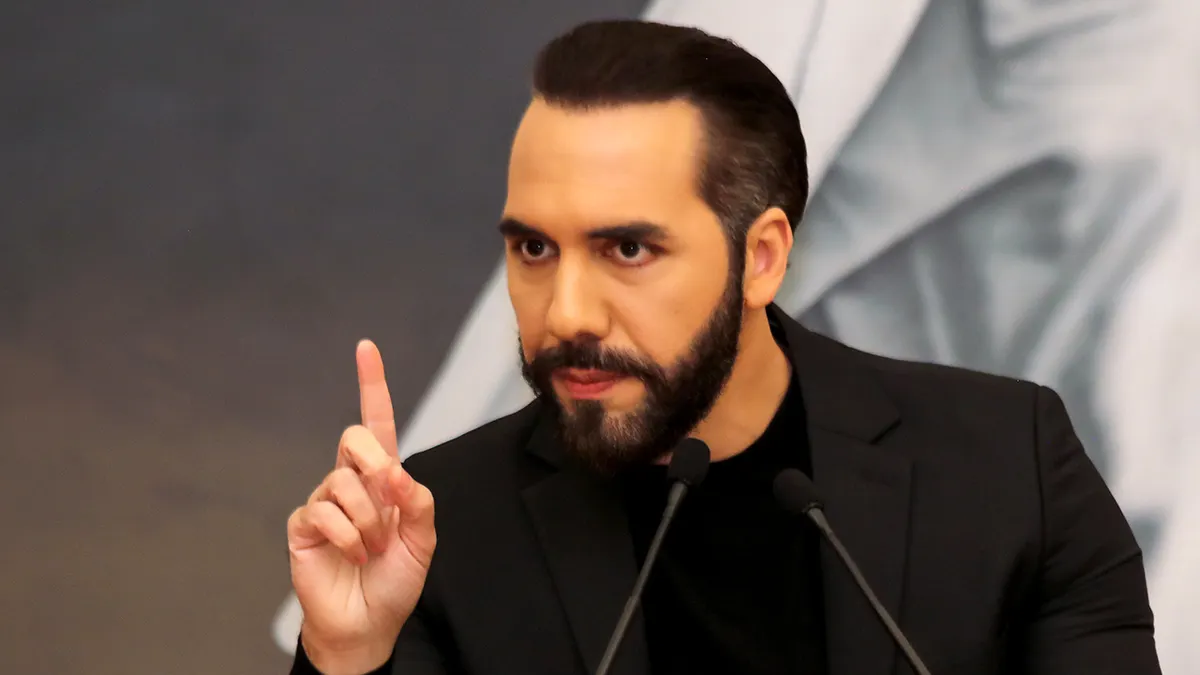
El Salvador is preparing to release as many as 45,000 people detained under a sweeping anti-gang state of emergency, signaling the first major contraction of a mass incarceration campaign that has defined President Nayib Bukele’s rule since 2022.
The conditional early-release plan, announced Tuesday night, targets individuals convicted or accused of gang collaboration. In El Salvador, that designation extends far beyond active members of MS-13 and Barrio 18 to include lookouts, drivers, shopkeepers who paid extortion fees, and residents who interacted with gangs out of necessity rather than allegiance.
Bukele acknowledged the breadth of the category during his address, arguing that punishing every instance of collaboration would require detaining roughly one-fifth of the country’s population. Authorities will now begin case-by-case reviews to determine which prisoners qualify for supervised release, though the government has not outlined the specific monitoring mechanisms or legal standards that will govern those decisions.


The proposed reduction addresses an unprecedented strain on El Salvador’s penal system. More than 90,000 people have been arrested since the state of emergency began in March 2022, following a weekend of violence that left over 60 people dead. To house the influx, the government constructed the Terrorism Confinement Center, known as CECOT, a 40,000-capacity megaprison built in Tecoluca. Even with new facilities, holding nearly 2% of the nation’s adult population indefinitely presented mounting logistical and financial pressures.
The emergency decree, initially authorized for 30 days, has been renewed continuously by the Legislative Assembly. Its enforcement required suspending constitutional guarantees, including the right to legal counsel, the requirement to inform detainees of arrest reasons, and standard visitation privileges.
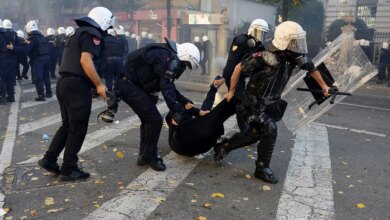
While the policy coincided with a steep decline in street-level violence, human rights organizations argue the security gains came at the cost of systemic due process violations. Groups operating inside and outside the country have logged more than 6,000 formal complaints related to arbitrary detention and documented at least 575 deaths of individuals held in government custody since the crackdown began.
Bukele has consistently rejected international criticism, framing opposition to the emergency measures as sympathy for gang structures that terrorized the country for decades.
Official statistics support the narrative of a safer country. The national homicide rate plummeted from a peak exceeding 100 per 100,000 residents in 2015 to 1.3 per 100,000 in 2025. However, independent analysts note the government altered its methodology for calculating homicides during this period. Current reporting excludes killings committed by security forces, deaths occurring inside prisons, and bodies discovered in clandestine graves—categories that previously accounted for a significant portion of violent deaths in the country.
The shift toward releases does not indicate an end to the emergency framework. Bukele stated the extraordinary powers remain necessary but expressed a long-term goal of eventually lifting them.
For those who may be freed, advocates warn that physical release does not resolve the consequences of prolonged detention without trial. Bertha Deleón, a Salvadoran lawyer living in exile, argued that individuals subjected to arbitrary imprisonment are owed state compensation for physical trauma, psychological damage, lost employment, interrupted education, and reputational destruction.
The U.S. government has closely monitored El Salvador’s security model. Earlier this year, the Trump administration reported that federal authorities arrested more than 10,000 suspected gang members domestically, reflecting broader regional efforts targeting transnational networks like MS-13, which originated among Salvadoran immigrants in Los Angeles before expanding into Central America.
No timeline has been established for when the first wave of case reviews will conclude or when initial releases might begin.