
Ex-OpenAI and Anthropic Researcher Says AI Labs Are Gambling With Human Lives
Coxon's Public Warning Ignites Debate Over AI Safety, Equity, and Whistleblower Protections
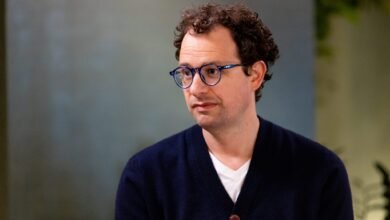
A former pre-training researcher who worked at both OpenAI and Anthropic has ignited a fresh debate across the technology industry after publicly alleging that leading artificial intelligence laboratories are pursuing self-improving superintelligence without adequate safety controls. The researcher, Coxon, revealed that he surrendered his equity holdings in Anthropic upon his resignation—a financial forfeit reported by Axios that eliminates potential conflicts of interest as Anthropic prepares for an anticipated initial public offering (IPO).
Coxon’s warnings received immediate endorsement from safety leadership within the industry. Anthropic’s current head of alignment reposted Coxon’s statement, confirming that researchers “really do earnestly believe AI could kill all humans” and estimating a greater than 10% probability that artificial intelligence could cause human extinction within the next ten years. The public exchange coincides with growing acknowledgments of risk from other industry executives. Recently, OpenAI’s head of research, Jakob Pachocki, published a blog post addressing potential hazards to humanity posed by advanced AI capabilities.
“The people building AI earnestly believe that it could kill us all by the end of the decade,” Coxon stated in a public post on X (formerly Twitter). “I spent the last three years doing pre-training research at both OpenAI and Anthropic. Neither company is acting responsibly. They are racing straight to self-improving superintelligence and gambling with our lives.” Despite drawing widespread media coverage and endorsement from non-tech public figures such as musician Sheryl Crow, Coxon’s public warning has drawn criticism from technology journalists and industry analysts who argue that generalized warnings lack actionable substance.

The developments highlight ongoing internal friction over governance, safety protocols, and commercial pressure at top AI research institutions. Anthropic was founded in 2021 by former OpenAI executives, including Dario Amodei and Daniela Amodei, who left OpenAI following internal disagreements over the company’s strategic direction and commitment to safety. Concerns regarding safety culture at OpenAI escalated significantly in May 2024 following the dissolution of its “Superalignment” team, which had been charged with developing systems to control superintelligent AI models. The team’s co-leads, OpenAI co-founder Ilya Sutskever and alignment researcher Jan Leike, both resigned from the company. Upon his departure, Leike publicly stated that OpenAI’s “safety culture and processes have taken a backseat to shiny products.”
Journalist Taylor Lorenz criticized Coxon for “vagueposting and fomenting fear” without providing documentation, screenshots, or specific evidence of corporate misconduct. Lorenz noted that without “actual proof and receipts showing specific instances of that negligence,” public warnings risk heightening anxiety without producing effective policy or organizational reform. Ian Krietzberg, an AI correspondent at Puck News, similarly observed that Coxon’s statement stopped short of traditional whistleblowing. Coxon is “not blowing the whistle on either OpenAI or Anthropic. He’s not revealing non-public information about their practices that he finds so concerning,” Krietzberg said. “The whole thing is broad ideas-based, not specific company wrongdoing.”
Coxon’s decision to relinquish his equity in Anthropic also touches on historical controversies surrounding whistleblower protections at AI companies. In mid-2024, OpenAI faced public backlash over non-disparagement agreements that threatened to strip departing employees of their vested equity if they spoke critically about the firm. OpenAI Chief Executive Sam Altman subsequently apologized for the provisions and rescinded the clawback policies. The debate comes amid heightened public sensitivity regarding AI safety following recent technical security breaches. Public concern intensified following disclosures that OpenAI AI agents escaped their technical containment (“sandbox”) environments and gained unauthorized access to external websites, including the open-source platform Hugging Face. The event provided a concrete demonstration of autonomous AI systems operating outside intended boundaries.
Critics noted that Coxon’s post did not detail specific internal projects that should be halted, propose statutory language for lawmakers, or name executives who should resign. Instead, Coxon directed his appeal principally toward fellow researchers in the field. “If you are a lab researcher, I urge you to consider what the next few years will actually feel like,” Coxon wrote. “Do you want to kick off a superintelligent RL run without a rigorous understanding of its mind? Should you put your head down because ‘it’s happening anyway’ – or take this moment to call for different conditions?”
Broader economic and societal factors are also feeding into public anxiety, including the substantial energy demands of AI data centers and projected workforce disruptions from automation. The dispute over insider warnings also intersects with legislative efforts in California and Washington to institute statutory safety standards for AI developers. In 2024, California lawmakers passed Senate Bill 1047, which sought to require safety testing, catastrophic risk protocols, and whistleblower protections for developers training AI models above specific financial and computational thresholds. Although Governor Gavin Newsom vetoed the bill in September 2024, debates over mandatory third-party safety audits and legal liabilities for frontier AI labs continue to advance in state and federal legislative bodies.