Benjamin Netanyahu deliberately concealed Israel’s plan to assassinate Hezbollah leader Hassan Nasrallah from the Biden administration in September 2024, convinced that advance notice would guarantee Washington’s intervention to block the strike.
The prime minister told senior defense officials there was “140%” certainty the United States would refuse to approve the mission, according to accounts detailed in “In the War Room: The Inside Story of Israel’s Fight Against Hamas and the Iranian Axis.” Then-Defense Minister Yoav Gallant and IDF Chief of Staff Herzi Halevi pushed back, arguing that Washington might support eliminating a commander whose organization had killed American service members. Netanyahu overruled them, warning that then-National Security Adviser Jake Sullivan would “jump out of his skin” if briefed beforehand.
When Israeli aircraft destroyed Hezbollah’s Beirut headquarters on Sept. 27, 2024, the Pentagon received no advance warning. Gallant contacted then-Defense Secretary Lloyd Austin only after the operation was already underway.


Nasrallah had directed the Iranian-backed militia for more than three decades. His death accelerated the collapse of Hezbollah’s command structure at a moment when the group had been firing rockets and anti-tank missiles into northern Israel for 11 months following the Oct. 7, 2023, Hamas assault. Diplomatic efforts led by the United States and France to push Hezbollah forces north of the Litani River — as required under United Nations Security Council Resolution 1701, which ended the 2006 Lebanon war — had failed to halt the bombardment that displaced tens of thousands of Israelis.

The secrecy surrounding the Beirut strike exposed a structural fault line between Jerusalem and Washington. The Biden administration prioritized preventing a regional war with Iran. Israeli leadership viewed that approach as incompatible with dismantling the militant infrastructure arrayed against it. “America’s goal is to de-escalate the war. Our goal is to win the war,” one official in the prime minister’s office told the book’s authors, Wall Street Journal editorial writer Elliot Kaufman and Jerusalem Post military analyst Yonah Jeremy Bob.
That divergence shaped decisions far beyond Lebanon. In the immediate aftermath of the Oct. 7 massacre, Netanyahu initially resisted authorizing a full-scale ground invasion of Gaza. Senior U.S. generals dispatched by President Biden warned Israeli leaders that urban warfare in Gaza City could end in military defeat. The hesitation stemmed directly from the catastrophic failure of Israeli intelligence and border defenses on Oct. 7. Netanyahu ultimately approved the ground offensive on Oct. 27, 2023, gradually consolidating control over wartime decision-making as the campaign progressed.
Accountability for the intelligence and security failures of Oct. 7 remains an explosive political liability in Israel. Netanyahu has declined to accept personal responsibility, consistently pointing to the failure of military commanders to alert him before the Hamas incursion began. He has publicly stated he was not woken until 6:29 a.m. that morning.
That timeline is now under formal dispute. Retired Maj. Gen. Avi Gil, who served as Netanyahu’s military secretary during the attack, alleged in a broadcast interview on Israel’s Channel 12 that the prime minister’s chief of staff, Tzachi Braverman, instructed a stenographer to alter the official record of their first secure telephone call, changing the logged time from 6:40 a.m. to 6:29 a.m. Gil said he raised concerns about the irregular recordkeeping with the attorney general’s office in real time. Braverman acknowledged seeking to change the recorded time but denied wrongdoing. Likud officials stated police investigated the matter two years ago and recommended closing the case, though prosecutors have not announced a final decision.
Gil also asserted that political considerations driven by far-right coalition ministers derailed earlier opportunities to secure hostage agreements, stating flatly that some captives who died in Gaza could have been brought home alive.
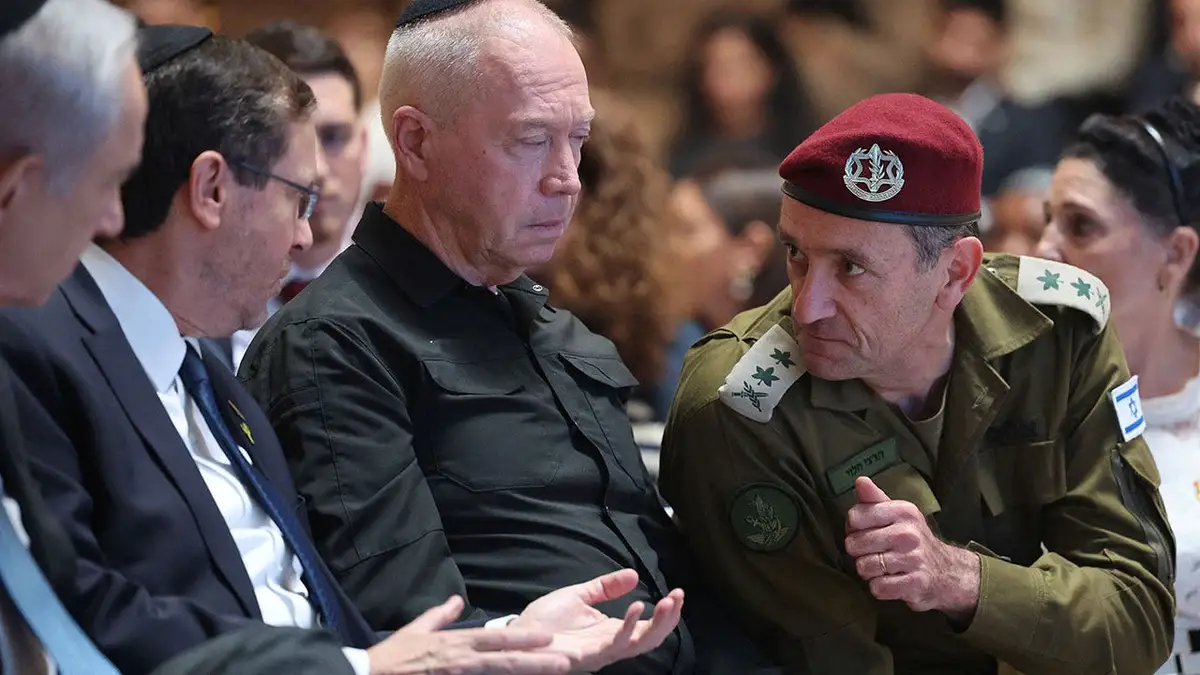
While Israeli military leaders accused the prime minister of prolonging the conflict for political survival, the strategic landscape shifted dramatically following the initial Gaza operations. The subsequent degradation of Hezbollah, the collapse of the Assad regime in Syria, and direct military action against Iran altered the regional balance of power.
Those shifts culminated in the June 2025 joint U.S.-Israeli military campaign against Iran’s nuclear program, known as Operation Midnight Hammer. Israeli airstrikes systematically degraded Iran’s air defenses, creating a viable flight corridor toward Fordow, the heavily fortified underground uranium enrichment facility built deep into a mountain near Qom. Because Fordow is buried beneath hundreds of feet of rock, conventional munitions are ineffective; destroying it requires massive ordnance penetrators like the U.S. Air Force’s 30,000-pound GBU-57, a weapon Israel does not possess.
IDF Chief of Staff Eyal Zamir personally briefed Vice President JD Vance on the tactical opening. “You have a straight shot to Iran’s nuclear sites. You will never have a better opportunity than this,” Zamir told Vance, noting that Israeli aircraft were already operating over the area but required American heavy bunker-busting bombs to finish the mission at Fordow. Vance subsequently played a critical role in securing President Donald Trump’s authorization for the 12-day war, challenging narratives that the president was reluctantly drawn into the conflict.
<img src="https://nile1.com/wp-content/uploads/2026/10/donald-trump-benjamin-netanyahu.jpg" alt="President Donald Trump shakes hands with Israeli Prime Minister Benjamin Netanyahu” width=”1200″ height=”675″ />
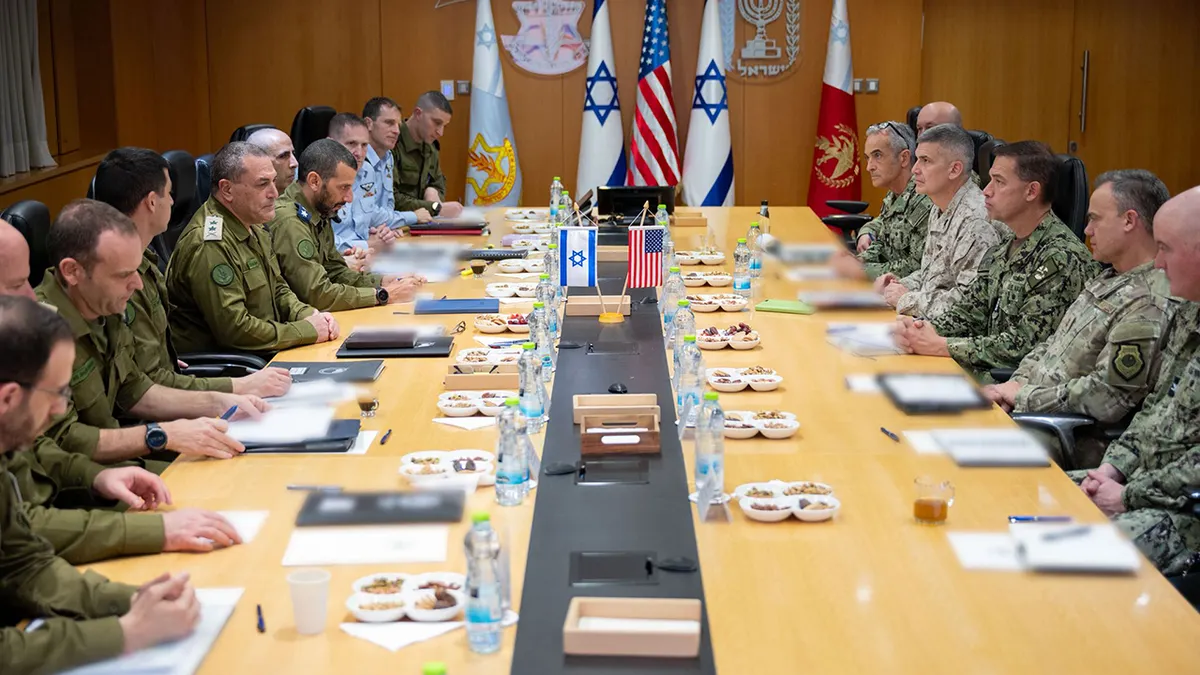
The operational integration between the two militaries has continued to deepen under the current U.S. administration. CENTCOM Commander Adm. Brad Cooper recently traveled to Israel for extended one-on-one meetings with Zamir, followed by broader sessions with additional commanders, signaling an ongoing alignment of strategic planning between Washington and Jerusalem.