

Why Maine Coon Litters Can Produce a Rainbow of Colors
Sex-linked inheritance and recessive pigment alleles explain dramatic sibling coat variations
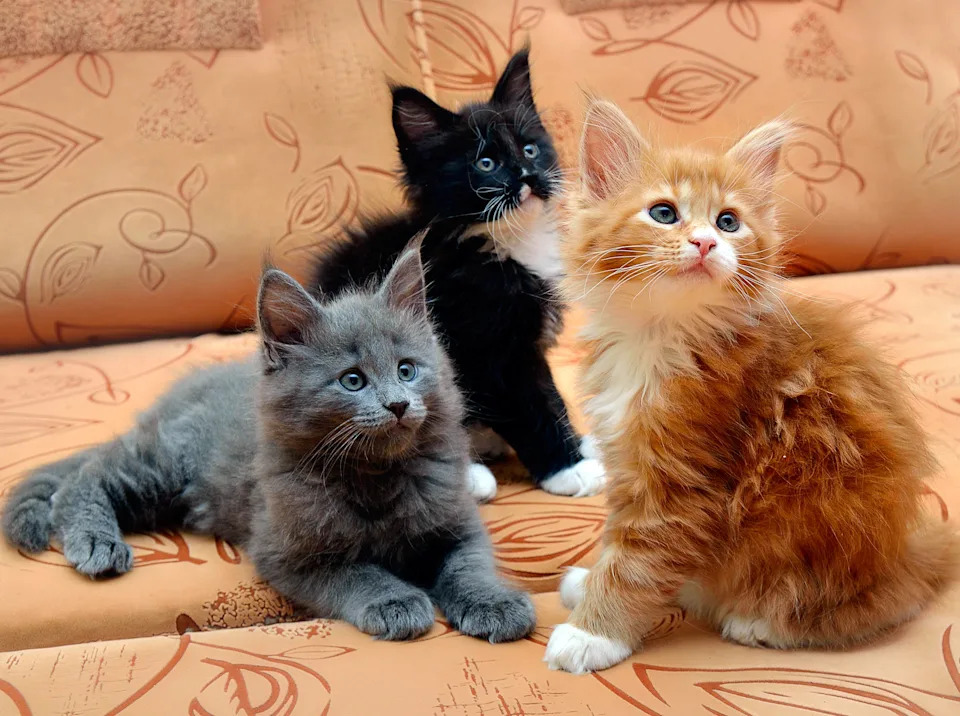
Feline genetics often baffle pet owners when a single queen gives birth to kittens displaying completely different coat colors and patterns. While full siblings in many mammal species share predictable physical traits, domestic cat litters frequently look like an assembly of unrelated animals, featuring shades spanning from solid white and silver smoke to vibrant red and muted blue-gray.
This striking phenotypic diversity is governed by complex genetic mechanisms centered on the feline X chromosome and pigment-regulating alleles. In purebred Maine Coons—a native North American breed recognized by registry groups like the Cat Fanciers' Association for more than 75 distinct color combinations—the interplay between sex-linked traits and autosomal modifier genes produces dramatic contrasts among littermates.
The biological foundation of feline pigmentation relies on two forms of melanin: eumelanin, which produces black and its variations, and phaeomelanin, which generates red and orange. The orange gene, designated by geneticists as O, resides specifically on the X chromosome. Because male kittens inherit a single X chromosome from their mother and a Y chromosome from their father, a male kitten's primary base coat color reflects the genetic contribution of the queen. A mother carrying red pigmentation will inevitably pass that red trait to her male offspring, while non-orange males stem from non-orange dams.

Female kittens inherit an X chromosome from each parent. When a female inherits an orange allele from one parent and a non-orange allele from the other, random X-chromosome inactivation during embryonic development creates mosaic patterning, resulting in tortoiseshell or calico coats. A female can only display a pure orange coat if both the sire and dam carry the red trait.
Dilution genetics further diversify the litter's physical appearance. The dilute gene, an autosomal recessive trait associated with the melanophilin protein, alters how pigment granules cluster within the hair shaft. When a kitten inherits two copies of this recessive mutation, black pigment softens into slate blue-gray, while red transforms into cream, and chocolate shifts to lilac. Heterozygous parents carrying hidden dilute alleles can produce litters with both dense and diluted shades side by side.
External reproductive biology can also introduce radical variation through superfecundation. Female cats are induced ovulators, releasing multiple eggs during estrus. If a queen mates with more than one male during her fertile window, eggs can be fertilized by different fathers within the same cycle, resulting in half-siblings sharing the same womb.
As kittens reach roughly eight to nine weeks of age, developmental growth spurts and weaning rituals bring out their distinct personalities and early vocal behaviors, while their definitive adult fur densities and undercoat patterns continue settling over the next several months.









