Chiricahua National Monument Poised to Become 64th U.S. National Park Awaiting Biden Signature
Awaiting presidential signature after unanimous Senate passage; visitation expected to jump 20%+ in remote Arizona community
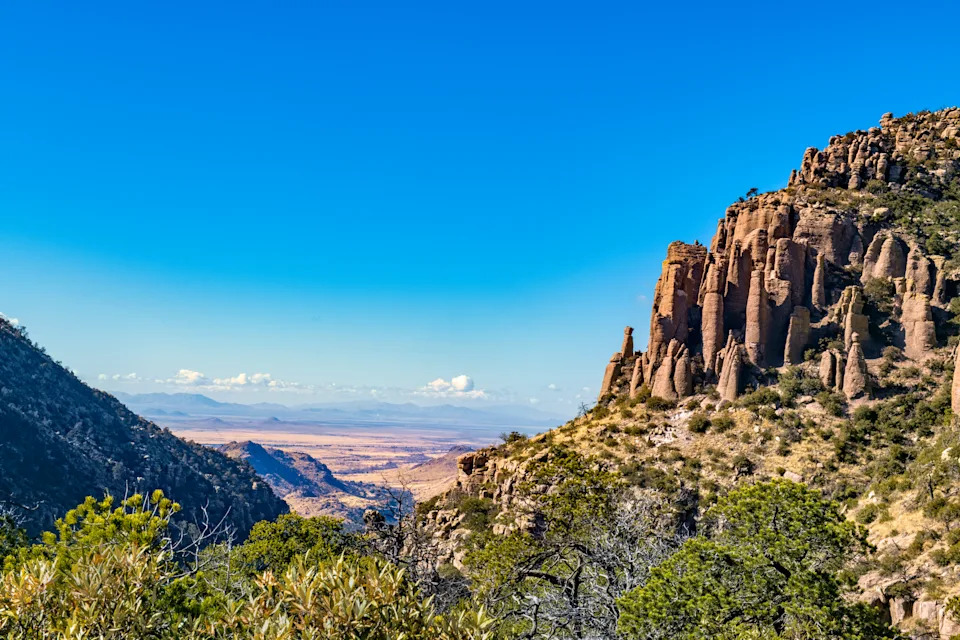
WASHINGTON — Arizona’s Chiricahua National Monument stands on the verge of becoming the nation’s 64th national park after Congress sent identical legislation to President Joe Biden’s desk last month, clearing the way for the first new national park designation since West Virginia’s New River Gorge in 2020.
The Chiricahua National Park Act passed the House on March 16 and cleared the Senate unanimously on September 30. With both chambers approving the same text, the measure now sits with the White House, where Biden has 10 days — excluding Sundays — to sign or veto once the bill is formally presented. If he takes no action while Congress remains in session, it becomes law automatically. Representative Juan Ciscomani, the Arizona Republican who sponsored the House version, has said he expects the president to sign it promptly.
The redesignation is largely a change in title. The 12,025-acre site in southeastern Arizona’s Cochise County would retain its current boundaries, staffing, and budget. No new federal funding accompanies the bill, though it does codify requirements for the National Park Service to protect traditional cultural and religious sites and to consult with Apache tribes — a formalization of existing practice that tribal advocates have long sought.


“This has been years in the making,” said Kevin Dahl, Arizona senior program manager for the National Parks Conservation Association. “Versions of this bill have been introduced since 2016. The Senate passed a version in 2022 that died in the House. Getting identical text through both chambers in the same Congress is the breakthrough.”
The practical effects may be felt most acutely in Willcox, the town of roughly 3,500 people located 36 miles north of the monument. Research by the NPCA found that eight national monuments redesignated as national parks since 2000 saw visitation increase an average of 21% in the five years following the change. Indiana Dunes National Park, redesignated in 2019, experienced a 27% jump in its first two years.
“We’re already seeing more inquiries,” said Linda Sanders, executive director of the Willcox Chamber of Commerce and Agriculture. “Lodging is limited — the monument has just 23 campsites at Bonita Canyon Campground, and we have maybe 200 hotel rooms total in town. A 20% increase would strain everything from restaurants to emergency services.”
Chiricahua drew about 70,000 visitors in 2023, a fraction of the 4.7 million who visited Grand Canyon National Park the same year. At roughly 19 square miles, it would become one of the smallest national parks in the system — larger only than Gateway Arch, Hot Springs, and American Samoa.
Geologically, the monument preserves the eroded remains of the Turkey Creek Caldera, which erupted 27 million years ago and blanketed the region in up to 2,000 feet of ash. That ash fused into rhyolite tuff, which wind and rain have sculpted into the hoodoos, balanced rocks, and stone columns that prompted the Chiricahua Apache to name the area “Land of Standing-Up Rocks.” The range served as both homeland and fortress for leaders including Geronimo and Cochise during the Apache Wars of the 1860s through 1880s.
Ecologically, the Chiricahua Mountains are a premier “sky island” — an isolated mountain range rising from desert grassland, creating cooler, wetter habitats that support species from both the Rocky Mountains and Mexico’s Sierra Madre Occidental. The monument hosts more than 300 bird species, including the elegant trogon and Mexican chickadee, making it a globally recognized birding destination. Mammals range from coatimundis and javelinas to black bears and mountain lions.
The bill’s tribal consultation provisions reflect the area’s continuing significance to the Chiricahua Apache, the Fort Sill Apache Tribe of Oklahoma, and the Mescalero Apache Tribe of New Mexico. “These mountains are our church,” said Michael Darrow, tribal historian for the Fort Sill Apache Tribe. “Formal consultation isn’t just procedural — it acknowledges that this landscape holds living cultural value, not just scenic or geological interest.”
Visitors currently pay no entrance fee. The eight-mile Bonita Canyon Drive climbs from grassland through oak, cypress, and pine forests to Massai Point at 6,870 feet, offering access to trailheads for the Echo Canyon Grottoes (0.8 miles round trip), the Echo Canyon Loop (3.3 miles), and the Big Loop (9.3 miles), which connects Big Balanced Rock, Inspiration Point, and the Heart of Rocks formation. A free hiker shuttle operates September through May, though seating is limited and advance sign-up at the visitor center is required.
Fall and spring offer the most reliable weather. Summer brings monsoon thunderstorms; winter can drop snow at higher elevations. The nearby Fort Bowie National Historic Site preserves the Butterfield Overland Mail station and the military post that anchored the Apache Wars’ final campaigns. Willcox has emerged as the center of Arizona’s wine industry, with more than a dozen tasting rooms.
“The park service has managed this landscape well as a monument,” said Dahl. “But the ‘national park’ brand carries weight. It signals to the world that this place belongs on the bucket list. The challenge now is managing that attention without loving the resource to death.”
The White House has not announced a signing timeline.