Honda Develops Wireless EV Charging for Trucks on Highways
Magnetic coupling infrastructure aims to eliminate heavy battery requirements for commercial freight fleets.
Japan is preparing to test a roadway capable of charging electric vehicles at highway speeds, led by an engineering partnership that could reshape how heavy freight moves without diesel. Honda Motor announced Monday it has developed dynamic wireless power transfer technology designed to beam electricity directly into moving vehicles from infrastructure embedded beneath the asphalt.
The system targets logistics trucks first, addressing the most stubborn barrier in commercial fleet electrification: battery weight. Heavy-duty electric trucks currently require massive, expensive battery packs to achieve viable range, which cuts directly into payload capacity and profit margins. By drawing continuous power from the road itself, freight operators could deploy significantly smaller onboard batteries, lowering vehicle costs and increasing cargo limits.
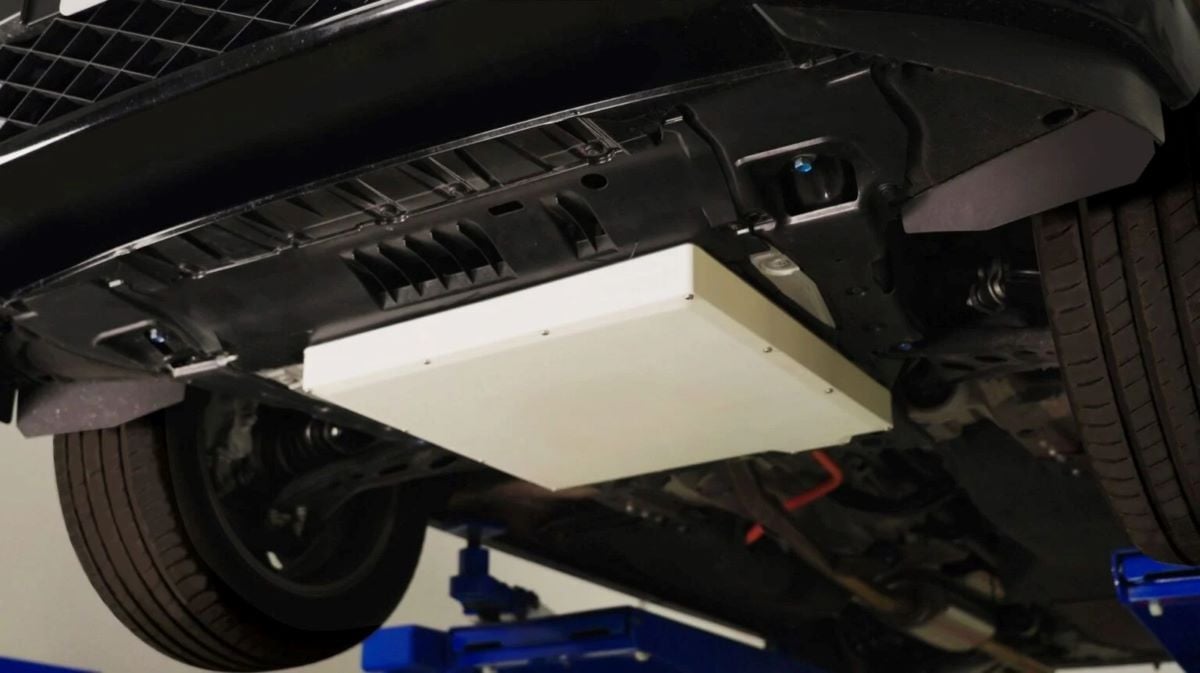
Honda Research and Development engineered the core architecture alongside Taisei, a major Japanese construction firm, and Taisei Rotec, a specialized road builder. The setup relies on magnetic coupling, utilizing three integrated components. A direct current power supply feeds transmitters installed flush within the pavement. Vehicles equipped with corresponding underbody receivers capture the electromagnetic field as they pass over the energized sections, converting it back into usable electricity without physical contact or requiring drivers to reduce speed.


Initial closed-course trials are targeted for late 2026. If those tests validate the hardware’s durability and transfer efficiency, the consortium plans public demonstrations on a Japanese highway during the fiscal year beginning April 2027.
Dynamic wireless charging represents a distinct technological branch from the static wireless pads currently deployed in limited commercial parking garages, where vehicles must park precisely over a coil to charge. Maintaining high-efficiency magnetic coupling while a multi-ton truck travels at 80 kilometers per hour requires solving complex alignment tolerances and energy loss challenges that stationary systems avoid entirely. Sweden activated a short stretch of permanent electrified road for heavy vehicles in 2023 using conductive rails rather than induction, while Germany previously tested overhead catenary lines for trucks before scaling back those programs due to visual impact and maintenance concerns. Japan’s approach favors the less visually intrusive inductive method embedded entirely below grade.
Scaling magnetic coupling across national highway networks introduces severe infrastructure hurdles. Retrofitting existing roads demands tearing up asphalt, installing high-capacity electrical substations at regular intervals, and integrating the new load into regional power grids. Honda engineers declined to provide cost comparisons against conventional high-speed plug-in charging networks, stating that economic viability remains unassessed at this stage of development.
The announcement arrives as global automakers face tightening emissions mandates for commercial transport. The European Union requires all new city buses to be zero-emission by 2035, and California’s Advanced Clean Fleets rule forces drayage truck operators to transition entirely to zero-emission vehicles over the coming decade. Technologies capable of eliminating range anxiety for heavy transport without requiring hours of downtime at charging depots carry significant strategic value for manufacturers attempting to meet these regulatory deadlines.
Honda, Taisei, and Taisei Rotec have not yet disclosed the specific highway corridor selected for the 2027 demonstration or the length of the electrified test segment.