Why Fake Toughness Fails: The Leadership Shift Top CEOs Use
Executive coaches reveal how top companies replaced performative aggression with structured accountability and psychological resilience.
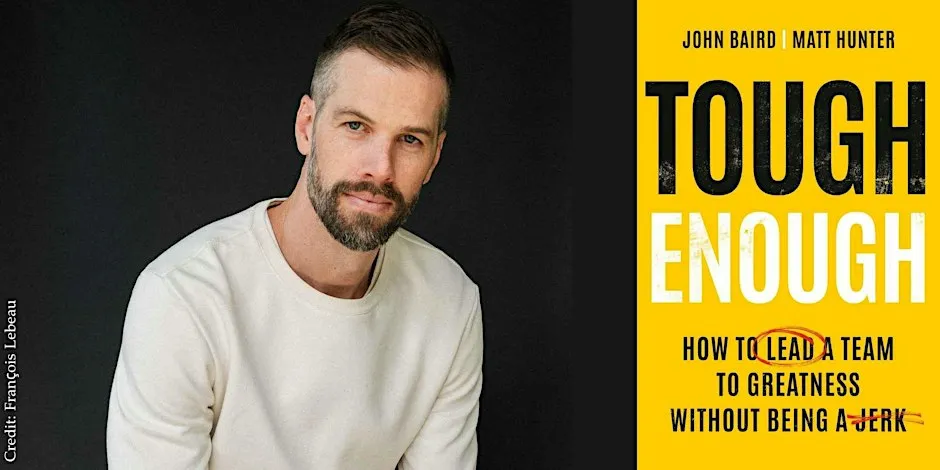
Corporate boards and executive suites across the United States are quietly dismantling a decades-old management myth: that leaders must choose between being ruthless operators or passive diplomats. As economic volatility, rapid technological shifts, and intense competition for top talent redefine the modern workplace, organizations anchored by performative aggression or conflict-avoidant management are losing ground to those built on what executive coaches call genuine psychological toughness.
The distinction is reshaping how companies like Apple, Nike, and General Motors approach leadership development. Unlike traditional command-and-control hierarchies popularized in the 1980s and 1990s—which often conflated intimidation with authority—modern organizational psychology treats leadership resilience as a learned operating system rather than an innate personality trait. This shift aligns with broader research into psychological safety, pioneered by Harvard Business School professor Amy Edmondson, which demonstrates that teams perform best when members can take risks and admit errors without fear of humiliation.
Performative toughness, driven by ego or fear, typically manifests as micromanagement, emotional outbursts, or the suppression of dissenting opinions. These behaviors create environments where employees hide mistakes until they become systemic failures. Conversely, passive leadership allows underperformance to linger, often masked by vague praise and delayed personnel decisions. Both extremes stem from a leader’s inability to tolerate discomfort.


True operational rigor requires leaning directly into friction. Coaches working with fast-growing technology unicorns and legacy enterprises report that high-performing executives share specific behavioral patterns that separate them from both bullies and pushovers. They deliver precise, immediate feedback the moment standards slip, rather than waiting for annual performance reviews. They acknowledge their own errors openly, which neutralizes the posturing that paralyzes decision-making in insecure teams.
This standard of execution relies heavily on narrative alignment. During periods of market instability, financial targets alone rarely sustain employee engagement. Leaders who anchor their teams establish a clear manifesto defining excellence, transforming fragmented effort into collective focus. This approach mirrors the mission-driven frameworks used by successful turnaround CEOs, who use shared purpose to stabilize organizations before implementing structural changes.
Talent acquisition serves as the first line of defense for this culture. Executives who maintain high standards do not compromise on cultural alignment during hiring. They actively recruit individuals who welcome rigorous expectations and mutual accountability, recognizing that placing conflict-averse personnel into demanding roles inevitably degrades team velocity.
Emotional regulation remains one of the most misunderstood components of resilient leadership. Suppressing emotion breeds organizational stagnation, while unchecked volatility generates anxiety. Effective leaders channel passion, urgency, and intensity strategically to alter behavior and fuel momentum. This deliberate use of emotion prevents the toxic burnout cycles that plague industries ranging from finance to healthcare.
Accountability transforms these principles from abstract philosophy into daily practice. Without explicit systems—clear ownership of goals, continuous progress tracking, and predetermined consequences for missed targets—high standards deteriorate into periodic nagging. Organizations that embed accountability into their operational rhythm remove the reliance on individual heroics, making consistent progress inevitable.
The movement away from binary leadership models reflects a maturing corporate landscape where human capital is the primary competitive advantage. Companies investing in coaching frameworks that teach leaders to navigate uncomfortable truths without sacrificing empathy are seeing measurable improvements in retention and innovation speed. Recent data from the Society for Human Resource Management indicates that employees consistently rank transparent communication and fair accountability above compensation when evaluating long-term job satisfaction, accelerating the demand for executives capable of delivering both.