AI Erases the Line Between Skilled Trades and Engineers
Corporate leaders predict AGI and humanoid robots will further dismantle traditional job categories within the next five years.
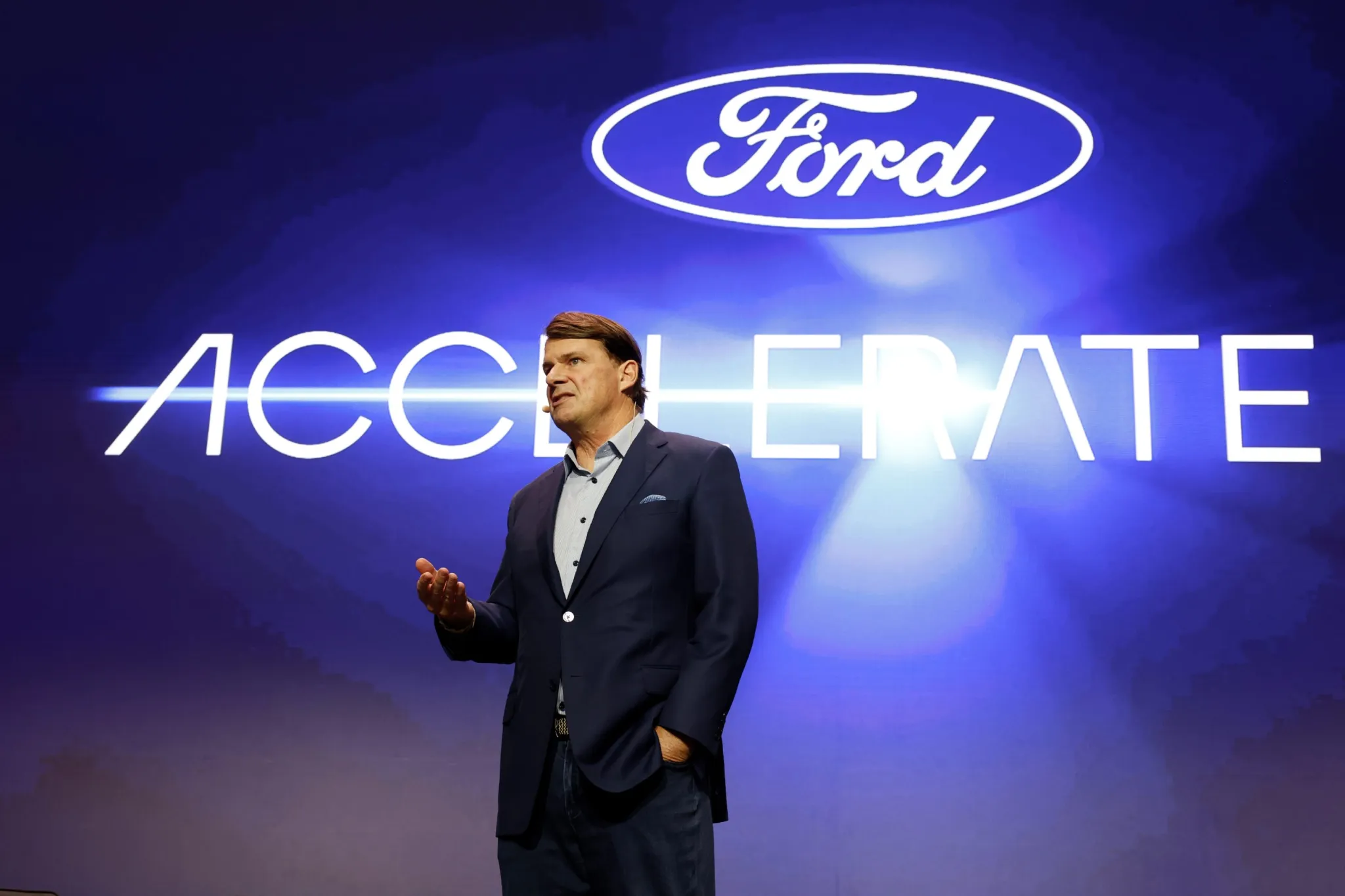
The traditional boundary separating white-collar engineers from blue-collar tradespeople is collapsing across American industry, driven by the rapid integration of artificial intelligence, robotics, and machine learning into physical workspaces. Corporate leaders are now treating the skilled trades not as static vocational endpoints but as fluid roles that demand continuous technological adaptation.
Ford Motor Co. CEO Jim Farley said the distinction between salaried engineering staff and hourly assembly-line workers has “completely blurred out” as software reshapes vehicle manufacturing. The convergence reflects a broader structural shift in U.S. heavy industry, where legacy automakers are retrofitting century-old plants to produce electric vehicles alongside internal combustion models. That transition requires line workers to operate advanced diagnostic software and collaborate directly with robotics teams, effectively merging the factory floor with the engineering lab.
This flattening of corporate structure extends well beyond manufacturing. Chief human resources officers at major U.S. corporations report that AI deployment is dismantling conventional organizational hierarchies. Drew Holler, an executive at homebuilder Lennar, framed the new expectation bluntly: companies will supply the technological tools, but individual workers bear the responsibility for mastering them. This philosophy transfers significant training costs and career risks onto employees, diverging sharply from the mid-20th-century model where employers funded long-term vocational development.


The U.S. faces a severe deficit in construction, electrical, and mechanical workers, with industry groups estimating hundreds of thousands of unfilled positions nationwide. To attract younger demographics who often default to four-year university degrees, executives are rebranding trade careers through the lens of extreme sports and elite athletics. Dave Regnery, CEO of climate-control manufacturer Trane Technologies, is building learning labs modeled on professional athletic training facilities. Pacific Gas & Electric CEO Patti Poppe highlights lineworkers who rappel from helicopters to maintain infrastructure, positioning utility maintenance as high-adrenaline work rather than routine labor. Dan Peyovich of telecommunications contractor Dycom Industries, who began his own career as a carpenter, has expanded employee benefits to include personal finance education, attempting to transform transient jobs into holistic career paths.
Younger workers are already navigating this fragmented landscape through self-directed diversification. A recent Goldman Sachs survey found that 80% of Gen Z professionals and 77% of millennials hold secondary jobs or side hustles, primarily to cover daily living expenses and housing costs that outpace wage growth. At Ford’s recent skills summit in Detroit, a 17-year-old auto mechanic student outlined plans to simultaneously pursue veterinary medicine and part-time firefighting credentials. The modern entry-level worker treats vocational licenses as modular income streams rather than lifelong identities.
Some technology veterans view these workforce transitions as precursors to far more disruptive shifts. Verizon CEO Dan Schulman predicted that artificial general intelligence could arrive within six to 18 months, followed by commercial quantum computing applications two years later. Schulman, who previously led PayPal and spent decades operating within Silicon Valley’s accelerationist culture, suggested humanoid robots might outperform human labor by 2030. He is currently restructuring Verizon’s workforce of more than 250,000 employees and contractors to remain competitive against those timelines.
Schulman’s projections align with a wave of aggressive capital expenditure across the technology sector, which is straining physical supply chains and creating unusual security vulnerabilities. Thieves recently hijacked an Nvidia-branded truck expecting to find high-value semiconductors, only to discover 20,000 pounds of sand used for testing logistics routes. The incident underscores a $150 million hardware theft problem plaguing Big Tech as companies race to secure AI infrastructure.
Meanwhile, the energy demands generated by these AI data centers are reshaping adjacent industries. Midstream pipeline operators are experiencing a surge in mergers and acquisitions fueled by liquefied natural gas exports and power-hungry server farms. Williams Companies recently acquired Momentum Midstream for $5.5 billion, while ONEOK closed a $4.42 billion deal for Permian Basin assets. A bipartisan permitting bill introduced in the Senate aims to accelerate the regulatory approvals required to build out this expanding energy network.
Global markets reflected cautious momentum amid these industrial realignments. S&P 500 futures rose 0.51% in early trading following a 0.19% gain in the previous session. European indices climbed, with the STOXX Europe 600 up 0.93% and London’s FTSE 100 advancing 0.54%. Asian markets were mixed; Japan’s Nikkei 225 fell 0.94%, South Korea’s KOSPI gained 0.46%, and Hong Kong’s Hang Seng dropped 2.60%, while mainland Chinese and Indian exchanges remained closed. Bitcoin traded near $86,000.