

Becerra Maintains Commanding Lead Over Hilton in California Governor Debate as Vision Gap Persists
The Republican challenger struggled to distance himself from national party figures while the Democratic nominee relied on a defensive strategy ahead of the Nov. 3 election.
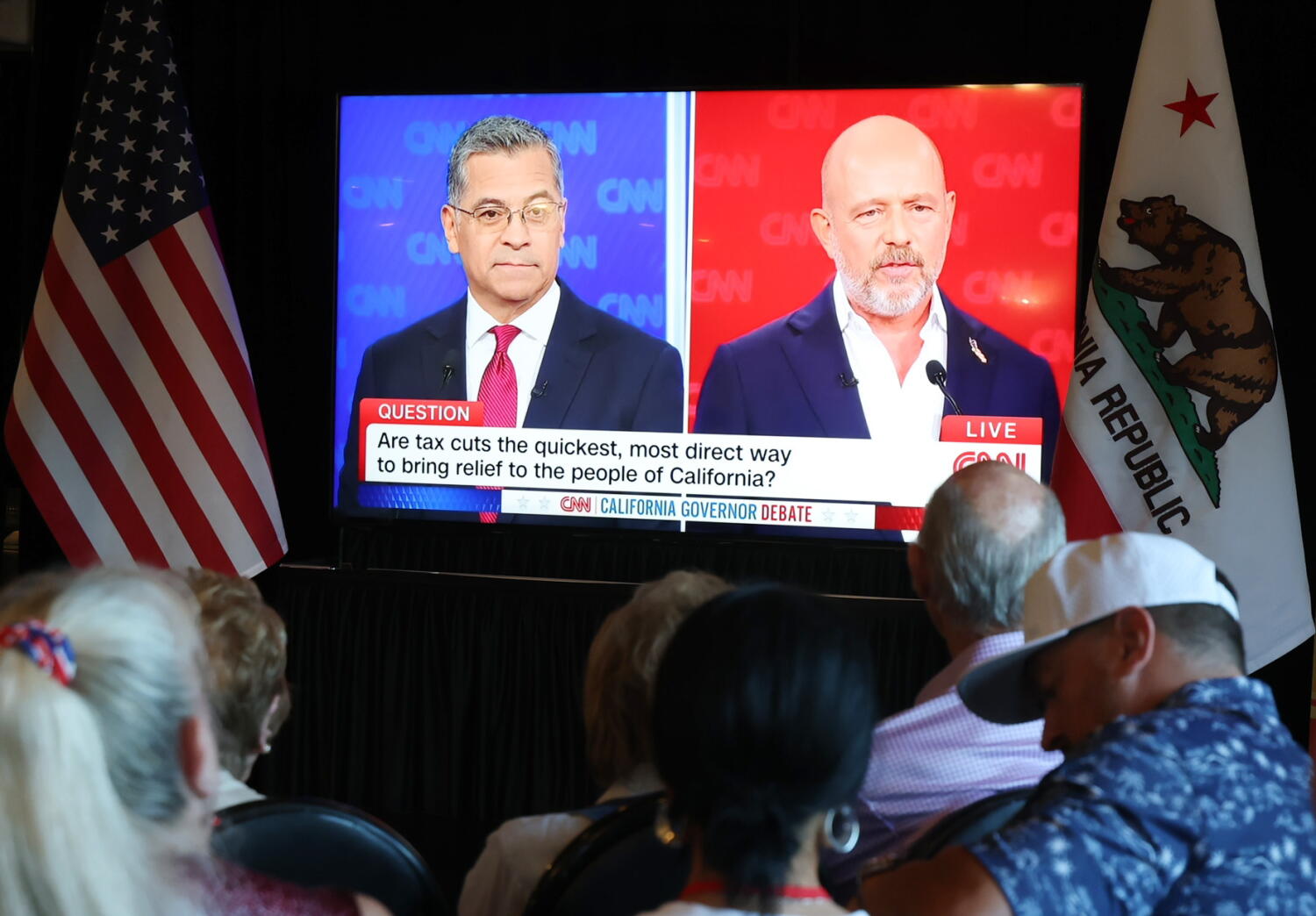
Xavier Becerra’s path to the California governorship remained unobstructed Wednesday night after a 60-minute debate against Republican Steve Hilton at a CNN soundstage in Burbank, an encounter that underscored both the structural dominance of Democrats in the state and the ideological constraints facing its GOP challengers.
The general election matchup offered voters their first extended side-by-side comparison of the two candidates. For Becerra, a former U.S. Secretary of Health and Human Services and longtime Los Angeles congressman, the objective was straightforward: avoid a catastrophic misstep while maintaining his polling advantage. He accomplished that by adopting a more combative posture than he displayed during the crowded Democratic primary, repeatedly directing attacks toward President Donald Trump rather than engaging deeply with Hilton’s specific policy critiques.
Hilton, a British-born former Fox News commentator who previously served as an advisor to UK Prime Minister David Cameron, entered the race attempting to rebrand California conservatism through slogans focused on affordability and economic revitalization. During the debate, however, he frequently reverted to grievances about Democratic governance and revisited pandemic-era disputes over masking and vaccines, advocating for greater parental discretion. That approach aligned him closely with national conservative messaging but failed to present a distinct alternative capable of appealing to moderate or independent voters in a state where Trump remains deeply unpopular.


California has not elected a Republican governor since Arnold Schwarzenegger won his final term in 2006. Since then, registered Democrats have expanded their voter advantage to nearly double that of Republicans, a gap compounded by the state’s top-two primary system, which often sidelines GOP candidates before the general election even begins. Becerra’s campaign strategy reflects this math. By tying Hilton to the national Republican ticket, Becerra leverages the same dynamics that helped sink John Cox, the Republican who lost to Gavin Newsom by more than 23 percentage points in 2018.
Despite his effective defensive maneuvers, Becerra used the Burbank stage primarily to parry rather than to outline a comprehensive agenda. While he touched on housing shortages and health insurance protections, he did not articulate a broader framework for addressing the state’s persistent cost-of-living crisis or its outmigration trends. The median home price in California continues to hover near record highs, and major metropolitan areas have struggled to recover pre-pandemic population levels, leaving voters without a clear picture of how a Becerra administration would alter those trajectories.
Hilton attempted to exploit this vulnerability, arguing that decades of single-party rule had produced the state’s current challenges and asking why voters should expect different results from another Democrat. His proposed solution—building ten new cities to alleviate the housing shortage—was presented without logistical detail regarding land use, water rights, or infrastructure funding, weakening its viability as a serious policy platform.
The debate also highlighted the stylistic contrasts between the two men. Hilton, accustomed to television commentary, leaned into provocative rhetoric, including repeating a vulgar insult directed at Becerra. Becerra maintained a disciplined, if occasionally repetitive, focus on national Republican leadership, relying on his administrative experience in Washington to project competence.
With no additional debates currently scheduled between the two campaigns, the political landscape now shifts entirely toward the Nov. 3 general election. Early voting in California is already underway, with millions of mail-in ballots distributed to registered voters across all 58 counties.










6 Comments