

Amazon Fire TV Stick 4K (2026) Launches With Vega OS, Wi-Fi 6 and Direct Power at $60
The updated streaming dongle transitions to the Vega operating system and introduces Direct Power to eliminate wall adapters.
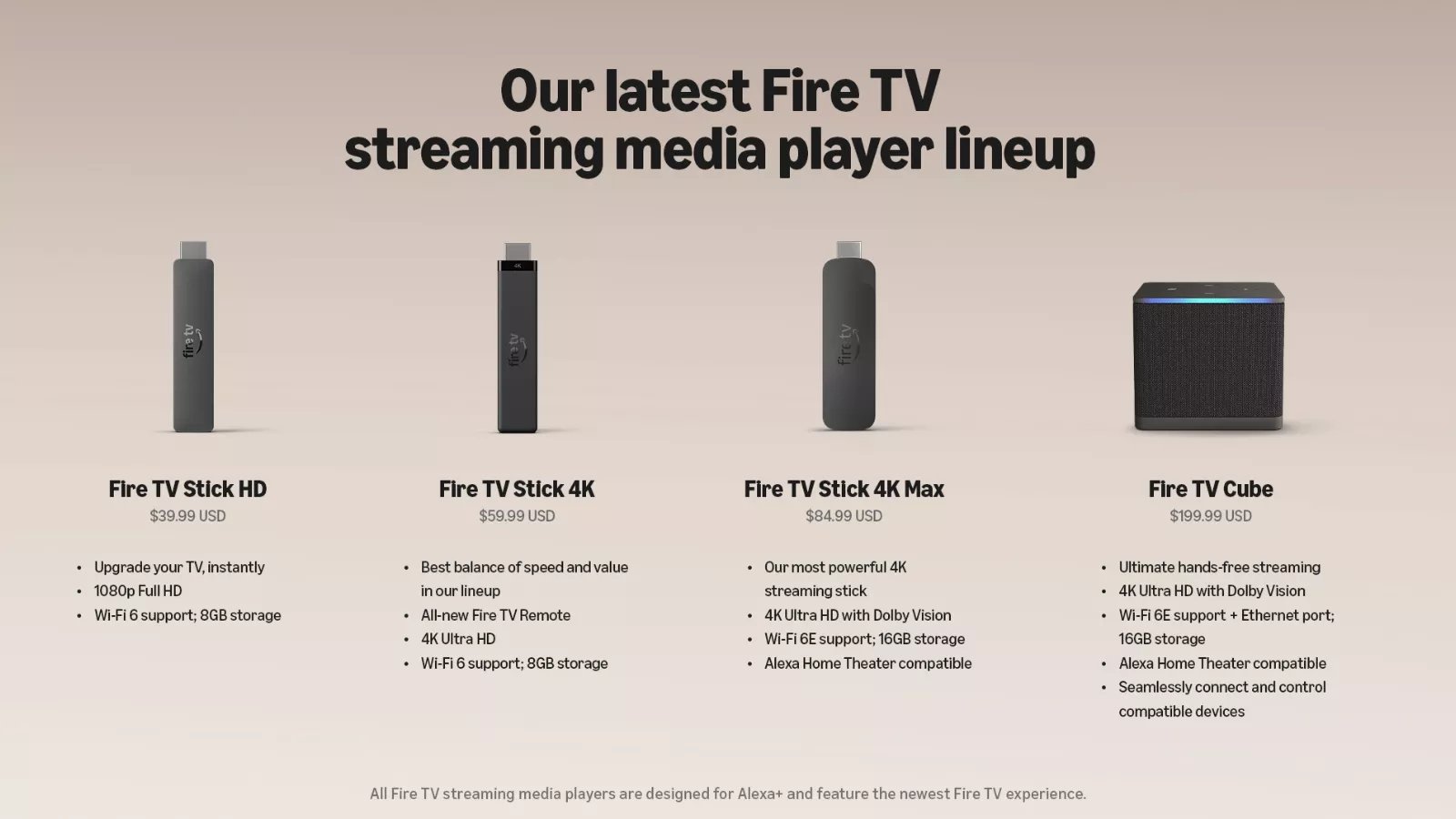
Amazon has overhauled its mid-tier streaming hardware with a new Fire TV Stick 4K that shifts the platform to the company’s proprietary Vega operating system while introducing a thinner physical design and power delivery directly from television USB ports.
Priced at $60 in the U.S., the updated dongle targets users who want 4K HDR streaming without paying for the higher-end Fire TV Cube or navigating the increasingly fragmented smart TV interfaces built by manufacturers like Samsung and LG. An introductory coupon currently drops the U.S. price to $30 ahead of Amazon’s Prime Big Deal Days event scheduled for early October.
The move to Vega marks a significant architectural departure for Amazon’s streaming sticks. Previous generations relied on Fire OS, an Android Open Source Project fork that allowed sideloading of Android applications. Vega represents Amazon’s effort to decouple its living room ecosystem from Android dependencies entirely, aligning the streaming stick lineup with the software foundation the company has been developing for its broader device portfolio. The new operating system ships integrated with Alexa+, Amazon’s upgraded conversational AI assistant, replacing the legacy voice search functionality that previously required specific wake-word phrasing to navigate menus.


Under the hood, the hardware relies on a quad-core processor clocked at 1.7GHz paired with 8GB of internal storage. While 8GB remains standard for streaming sticks in this price bracket—Roku’s Streaming Stick 4K and Walmart’s Onn 4K Pro offer similar capacities—the inclusion of Wi-Fi 6 addresses bandwidth congestion issues common in households with multiple connected devices competing for router attention. Older Wi-Fi 5 (802.11ac) streaming sticks frequently struggle with buffer underruns when local networks are saturated, making the Wi-Fi 6 upgrade a practical necessity for reliable 4K bitrate delivery rather than a mere spec-sheet enhancement.
Video decoding support covers the formats required by major streaming services: HDR10+, HLG, H.265, H.264, VP9, and AV1. AV1 compatibility is particularly relevant as YouTube, Netflix, and Amazon Prime Video increasingly encode their 4K libraries in the royalty-free codec to reduce bandwidth consumption without sacrificing visual fidelity. Hardware-level AV1 decoding prevents the processor from bottlenecking during playback, a limitation that plagued older streaming devices attempting to play next-generation video formats via software decoding.
Installation benefits from a feature Amazon calls Direct Power. Instead of requiring users to route a cable to a wall adapter or find an open outlet behind an entertainment center, the stick draws its necessary electrical current directly from the television’s USB port. Because modern TVs typically supply sufficient amperage through their USB connections to run low-power streaming dongles, this eliminates the external power brick that has historically complicated wall-mounted television setups and contributed to cable clutter.
Amazon claims the new processor and software combination loads content 20% to 40% faster than similarly priced competitors, a metric widely understood to reference Roku’s current streaming stick lineup. Internal testing also reportedly outpaced the native smart TV platforms of three unnamed 4K televisions. This speed advantage reflects a broader industry reality: dedicated streaming sticks frequently outperform the built-in operating systems of smart TVs, which often suffer from slower processors, limited RAM, and infrequent firmware updates that degrade interface responsiveness over time.
Wireless connectivity extends beyond Wi-Fi 6 to include Bluetooth 5.3 and Bluetooth Low Energy. These protocols support lower-latency audio transmission to wireless headphones and more stable connections for game controllers, addressing complaints from users who rely on streaming sticks for cloud gaming services like Amazon Luna or Xbox Cloud Gaming.
The accompanying remote control has been physically redesigned with an asymmetric profile. A flat top edge contrasts with a curved, weighted bottom, allowing users to determine the remote’s orientation by touch alone in darkened rooms. Button surfaces vary in texture and shape to facilitate muscle-memory navigation. A newly added customizable button can be mapped to launch a specific application or toggle accessibility tools such as closed captioning and screen magnification, reflecting growing regulatory and consumer emphasis on digital accessibility features.
The device is available immediately in the United States, Canada, Mexico, Australia, and the United Kingdom, with additional markets scheduled to follow.







One Comment