RAF Halts Hawk Fleet After Twin Ejections Near Anglesey: What the Training Jet’s Role Reveals About Pilot Safety
Pilots Safe After Ejecting From Trainer Jet Used to Prepare Future Typhoon Aces

Two Royal Air Force pilots are recovering safely after ejecting from a Hawk T2 trainer that crashed in rural Wales on Wednesday, September 23, 2026. The incident occurred shortly after the aircraft departed RAF Valley on Anglesey, triggering an immediate suspension of all Hawk T1 and T2 flying operations across the fleet while investigators determine why the jet failed.
The ejection sequence was captured on video by local resident Danni Jones, showing the crew members descending under parachutes moments after a fireball erupted over the countryside. Both pilots were reported to be in high spirits following medical evaluation, underscoring the reliability of modern zero-zero ejection seats even during catastrophic structural failures. However, the grounding of the entire Hawk fleet signals that the RAF treats this as a systemic concern rather than an isolated mechanical anomaly.
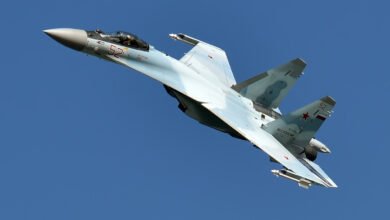
The BAE Systems Hawk T2 is not merely a propeller-driven beginner plane; it is a sophisticated bridge between basic flight training and frontline combat readiness. Equipped with advanced avionics and synthetic radar systems, the two-seat jet simulates the operational environment of the Eurofighter Typhoon and other fourth- and fifth-generation fighters. Pilots use the platform to master complex tactical maneuvers, low-level navigation, and weapons delivery before ever touching a live combat aircraft. This specific role makes any safety lapse particularly significant for the broader UK defense pipeline.

RAF Valley serves as the primary hub for No. 4 Flying Training School, which is responsible for producing the United Kingdom’s next generation of fast-jet pilots. The base’s location offers direct access to the Machynlleth Loop, a network of valleys in North Wales renowned for its challenging terrain. Here, trainees practice ultra-low-altitude flying at speeds exceeding 500 knots, threading through narrow corridors where margin for error is measured in feet and seconds. It remains unclear whether the crash involved this specific type of high-stress maneuver or if the failure occurred during transit or takeoff.
This event echoes recent concerns regarding military aviation safety globally. Just weeks prior, a U.S. Marine Corps pilot ejected calmly after an F-35 crash near Washington, and another incident saw an F-35 destroy itself at MCAS Miramar. While these cases involve different platforms and nations, they collectively highlight the inherent risks of pushing human-machine interfaces to their limits. For the RAF, the temporary halt allows engineers to inspect remaining airframes for potential defects without rushing crews back into the sky.
Investigations typically focus on three pillars: mechanical integrity, human factors, and environmental conditions. Given the Hawk T2’s long service history since entering RAF use in the mid-2000s, analysts will scrutinize maintenance logs and component life cycles. The absence of immediate casualty reports suggests the ejection system functioned correctly, shifting the investigative burden toward identifying the root cause of the initial loss of control or propulsion.
The formal inquiry is now underway, led by the RAF’s accident investigation branch. Until findings are published, the pause on operations ensures that no further flights occur until confidence in the fleet’s airworthiness is restored. The pilots’ full recovery stands as the most positive outcome, but the disruption to training schedules may impact the timeline for new fighter pilot graduations later this year.