Pasqal, USA Rare Earth and Riven Systems Target Rare Earth Separation With Quantum Computing
The partners will combine molecular models, automated chemical tests and mineral processing data.
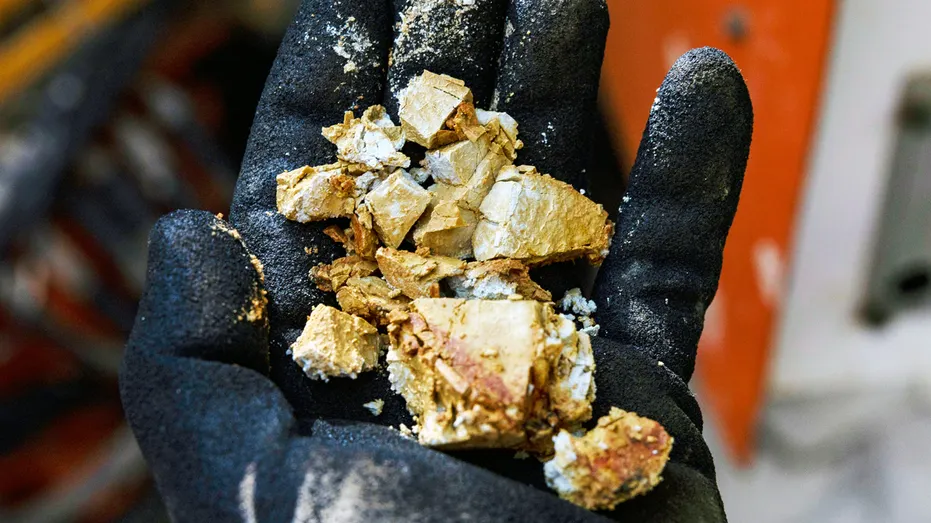
Pasqal, USA Rare Earth and Riven Systems have launched a commercial initiative to improve rare earth separation, a chemical processing step that remains a major bottleneck in Western supply chains. The partners aim to use quantum-driven molecular modeling and automated testing to find more efficient extraction methods outside China, replacing much of the empirical trial and error used to assess chemical processes.
China accounts for approximately 60% to 70% of global rare earth mining output, but an estimated 85% to 90% of global chemical separation and permanent magnet production capacity. In December 2023, China’s Ministry of Commerce placed rare earth extraction and separation technologies on its state export control list, prohibiting the transfer of processing IP to foreign entities. Beijing has separately imposed export licensing restrictions on gallium, germanium and antimony.
The 17 rare earth elements, including neodymium, praseodymium, dysprosium and terbium, are relatively abundant in the Earth’s crust. They occur tightly intermixed in ore deposits, however, and are difficult to isolate at the purity needed for permanent magnets, defense guidance systems and advanced electronics. Adjacent lanthanides have nearly identical atomic radii and valence electron structures, a property known as the lanthanide contraction. Separating them requires multi-stage liquid-liquid solvent extraction; commercial plants often use hundreds of sequential mixer-settler circuits and specialized organic chemical extractants.


USA Rare Earth will contribute raw material characterization, metallurgical data and industrial scaling parameters. It holds the development rights to the Round Top heavy rare earth deposit in Hudspeth County, Texas, which contains significant reserves of dysprosium and terbium. The company also operates a permanent magnet manufacturing facility in Stillwater, Oklahoma.

Pasqal will supply the quantum processing capability, while Riven Systems will use high-throughput automated chemical experimentation platforms to physically test and validate the resulting molecular separation models. Pasqal’s neutral-atom processors differ from superconducting systems built on printed circuits: optical tweezers, or highly focused laser beams, trap individual rubidium atoms in multi-dimensional arrays, allowing researchers to reconfigure physical qubits dynamically to simulate complex chemical bonds.
Pasqal Chief Executive Officer Wasiq Bokhari said quantum computing offers an advantage over classical binary systems in modeling the molecular structures involved. Traditional supercomputers struggle to simulate the quantum mechanics of heavy rare earth electron shells. By modeling bonding and molecular interactions at the subatomic level, the partners aim to predict how rare earth compounds will behave with different solvents and identify high-efficiency extraction pathways without building physical trial facilities for every chemical variation.

Bokhari said even incremental percentage gains at individual extraction stages can compound across a multi-stage operation and change whether a Western mineral deposit is economically viable. Improving yield per ton of raw rock by two, three or ten times, he said, would directly offset the lower ore grades typically found in non-Chinese deposits.
The supply-chain stakes extend to defense manufacturing. A single U.S. F-35 fighter jet requires approximately 920 pounds of rare earth materials in its electric actuators, targeting systems, radar arrays and engine components. Heavy rare earths such as dysprosium are essential additives in neodymium-iron-boron (NdFeB) magnets used in Virginia-class submarine propulsion motors, precision-guided munitions, wind turbine generators and electric vehicle traction motors. Bokhari said concentrated supply chains expose defense and commercial industries to sudden restrictions, comparing the vulnerability of high-value downstream manufacturing to the global logistics failures of the COVID-19 pandemic.

Bokhari also rejected the view that practical quantum computing applications remain decades away. He likened its current adoption to artificial intelligence before large language models such as ChatGPT became publicly available, when enterprises already used machine learning for specialized tasks. Rather than waiting for fully fault-tolerant, general-purpose quantum computers, he said, specialized architectures such as neutral-atom simulators tailored to molecular chemistry are entering operational industry pipelines. He estimated that domain-specific quantum applications trail generative AI commercialization by only a few years.