Danny DeVito to host ‘Hoffa’ 70mm screening for first time in more than 30 years
The Beyond Fest event includes a post-screening panel with cinematographer Stephen Burum and other original crew members.
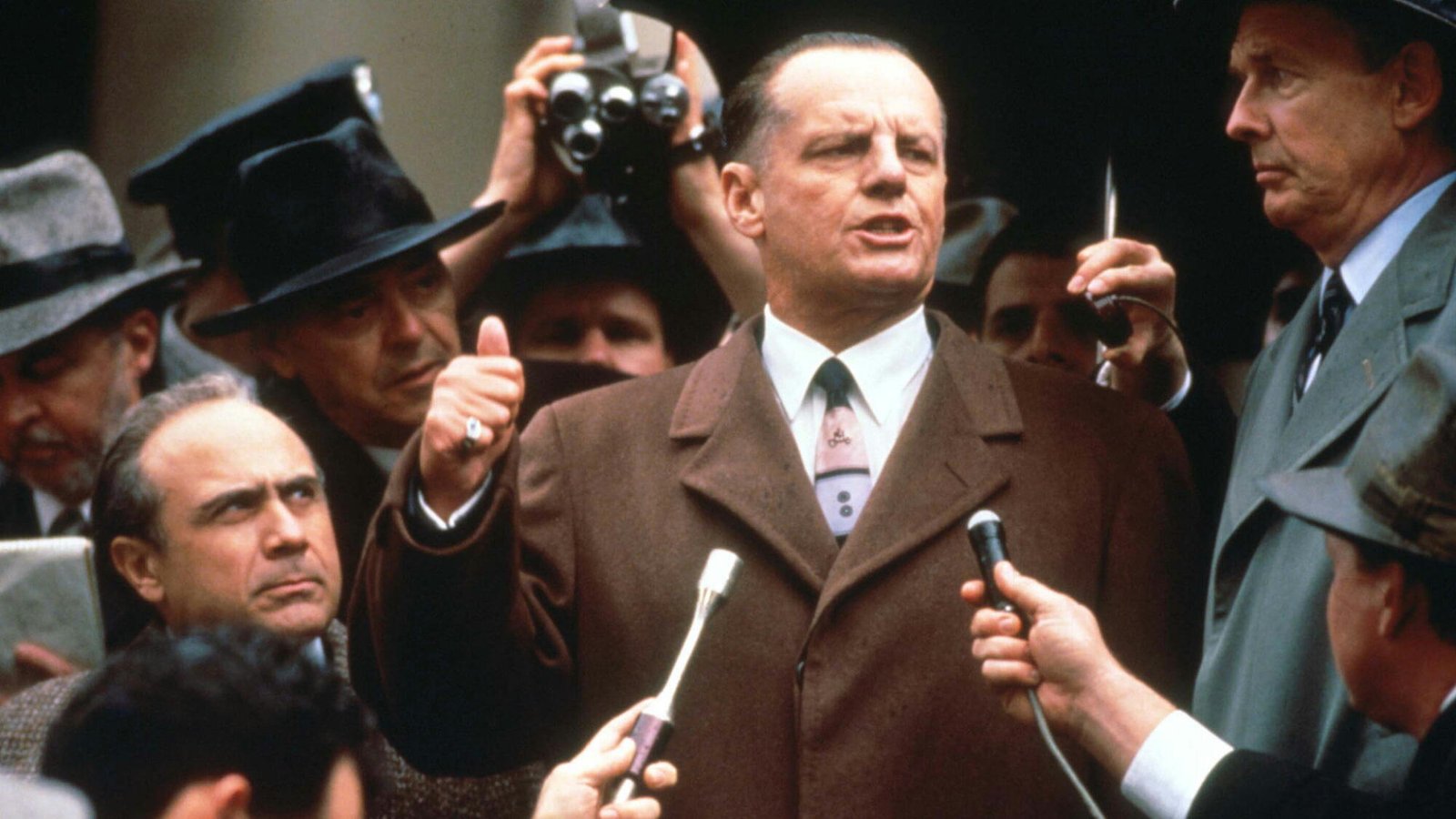
LOS ANGELES — Danny DeVito will host a rare 70mm screening of *Hoffa* at Hollywood’s Egyptian Theatre this Saturday, the first time the 1992 biographical drama has been shown in the large-format print in more than three decades. DeVito directed and co-starred in the film, but has never watched its completed 70mm version.
The Beyond Fest event will be followed by an in-person panel with DeVito and members of the original crew: Academy Award-nominated cinematographer Stephen Burum, composer David Newman, prop master Emily Ferry and Academy Award-winning costume designer Deborah Lynn Scott.
The film follows James Riddle Hoffa, who led the International Brotherhood of Teamsters from 1957 to 1971. Under his leadership, the union grew to more than 1.5 million members and secured the 1964 National Master Freight Agreement, establishing a standardized union contract for truck drivers nationwide.


Hoffa’s career was also shadowed by federal investigations into organized crime and corruption. He was imprisoned in 1967 for jury tampering, mail fraud and bribery. President Richard Nixon commuted his sentence in 1971 on the condition that Hoffa refrain from union activities, but Hoffa later tried to regain control of the Teamsters.
DeVito cast his longtime friend Jack Nicholson as Hoffa. The two had met during production of *One Flew Over the Cuckoo’s Nest* (1975). Nicholson underwent a significant physical transformation for the role, using a custom prosthetic nose designed by legendary makeup artist Ve Neill to recreate Hoffa’s distinct, deep-set eyes and stern features.
Hoffa vanished on July 30, 1975, from the parking lot of the Machus Red Fox restaurant in Bloomfield Township, Michigan, where he had arranged to meet local mob figures. Extensive federal investigations, forensic searches and countless theories did not locate his body; he was declared dead in absentia in 1982.
Written by Pulitzer Prize-winning playwright David Mamet, the film attempts to tell the broad story of Hoffa’s life, balancing his commitment to working-class labor with illicit loan schemes and violent clashes. It ends with a dramatic, speculative depiction of Hoffa’s assassination and the disposal of his body.
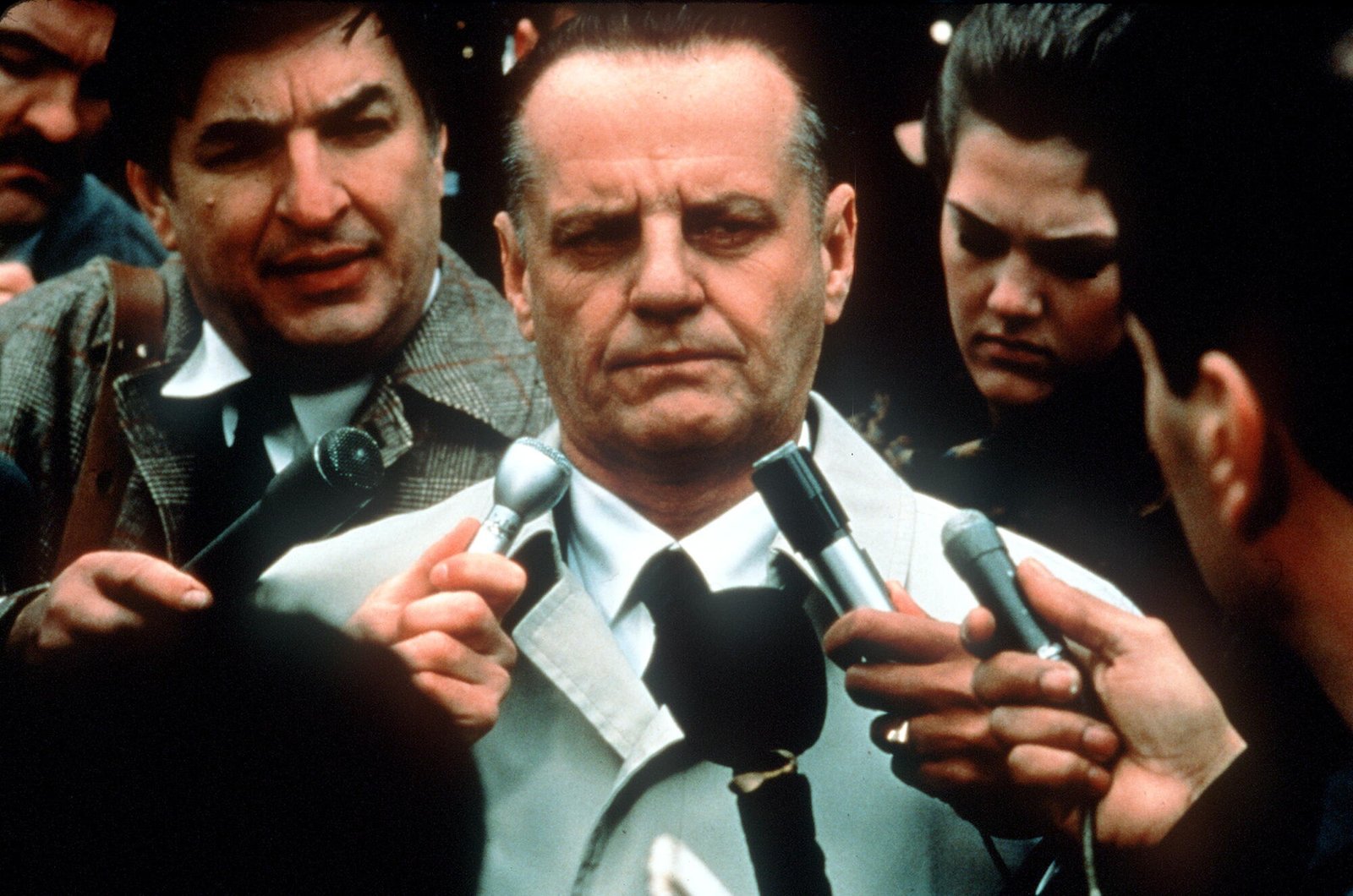
DeVito also played Bobby Ciaro, a fictionalized, loyal associate representing several real-life figures who stood by Hoffa through his rise and fall. The restrained performance differed from DeVito’s work in dark comedies he directed and starred in, including *Throw Momma from the Train* (1987) and *The War of the Roses* (1989).
The production was a major undertaking for 20th Century Fox, with an estimated budget of $35 million to $40 million. DeVito and Burum developed intricate, expansive sequence shots and large crowd scenes to bring Mamet’s script to the screen. Veteran storyboard artist Harold Michelson, whose credits included Alfred Hitchcock’s *The Birds* (1963), helped shape the visual design.
Michelson devised transitions he called “Gozintas”: editorial match-cuts in which one scene fluidly “goes into” another. They let DeVito connect different periods of Hoffa’s life without relying on traditional montages. Burum’s cinematography earned an Academy Award nomination.
Released in December 1992, *Hoffa* divided critics and earned approximately $29 million domestically. Nicholson received Golden Globe and Academy Award nominations for his performance, while the film also drew Razzie nominations over its sympathetic portrayal of a corrupt union boss.
Beyond Fest’s tribute to DeVito also features *Drag*, a new comedic thriller produced by DeVito and his children, Jake and Lucy DeVito, and a rare theatrical screening of *Hot Dogs for Gauguin*. The 1972 student short was directed by Martin Brest, whose later films include *Beverly Hills Cop* and *Scent of a Woman*, and features one of DeVito’s earliest screen performances.
The screening’s venue, the Egyptian Theatre on Hollywood Boulevard, opened in 1922 during the silent-film era and recently underwent a multimillion-dollar restoration by Netflix. Reopened in late 2023, it is among the few remaining theaters equipped to project rare, high-resolution 70mm prints, which offer twice the visual detail of standard 35mm film.