

Warsh Defies Trump as Markets Rebound After Fed Rate Hike
Fed rate hike sets off political clash as stocks recover and bond yields retreat
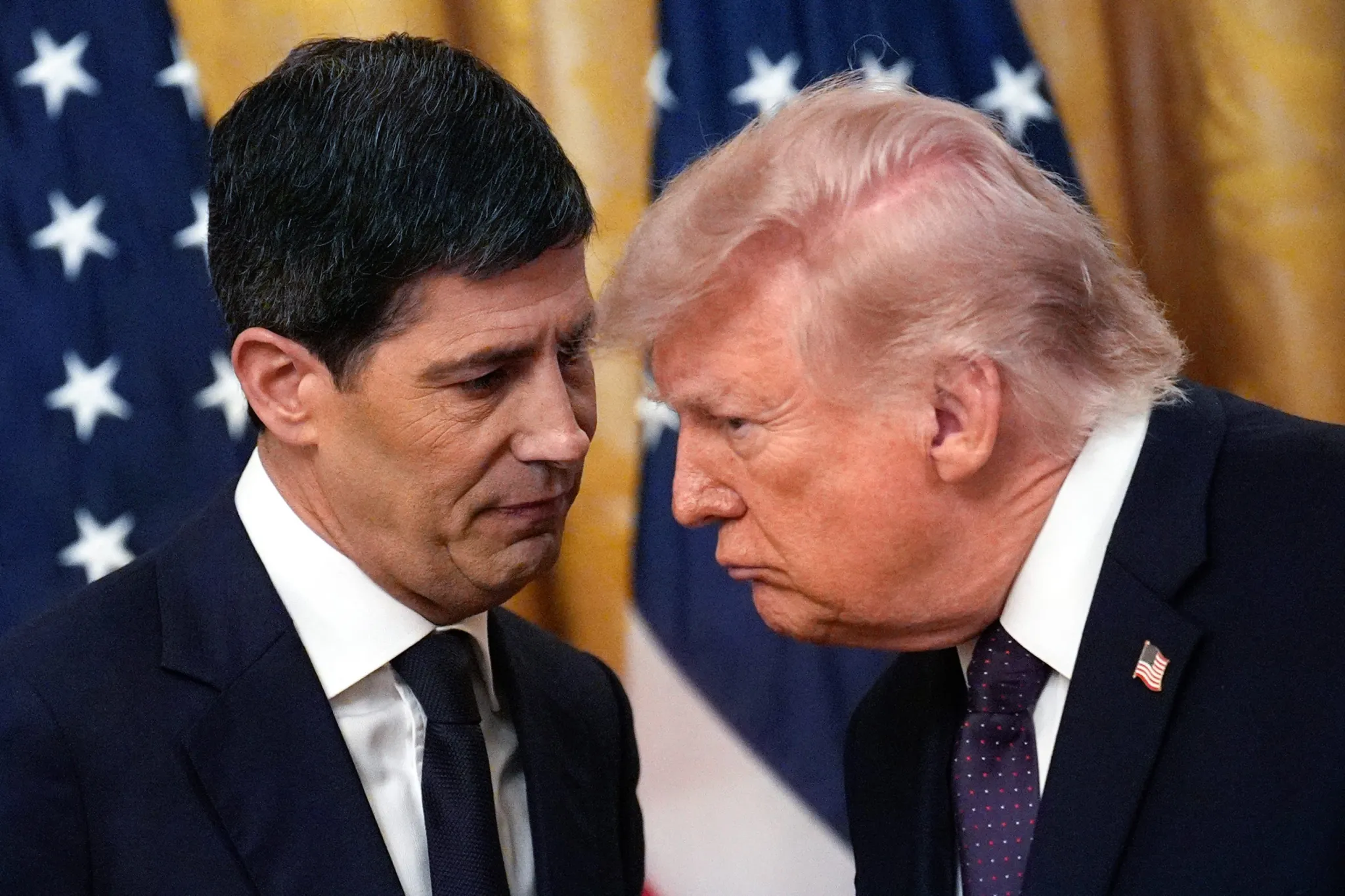
Financial markets recovered sharply Thursday after an initial sell-off triggered by the Federal Reserve’s decision to raise interest rates. The tech-heavy Nasdaq Composite gained more than 400 points, or 1.6%, while the S&P 500 climbed over 1%. The Dow Jones Industrial Average added 224 points, or 0.4%, reclaiming part of Wednesday’s decline of more than 630 points that had pushed the S&P 500 to its lowest closing level since July.
The rate increase was led by Federal Reserve Chair Kevin Warsh and was intended to curb persistent inflation. It placed the central bank in direct opposition to President Donald Trump’s public demands for sharp reductions in borrowing costs and reopened debate over the political independence of the nation’s monetary authority.
Economic figures released Thursday supported the central bank’s view that the labor market remains strong enough to withstand tighter monetary policy. The U.S. Department of Labor said initial jobless claims for the week containing Labor Day fell to 196,000, below consensus expectations of 207,000.

Warsh’s earlier career included service as a member of the Federal Reserve Board of Governors from 2006 to 2011. Appointed by President George W. Bush at age 35, he became the youngest governor in the central bank’s history. During the 2008 financial crisis, he served as a key liaison to Wall Street, later becoming a prominent critic of the Federal Reserve’s quantitative easing programs and its response to post-pandemic inflation.
The president disclosed late Wednesday that he had spoken directly with Warsh before the Federal Open Market Committee (FOMC) vote. Trump described the policy-making panel as “very hostile” and “very political.”
“I talked to Kevin, and I said, you might as well vote with the Board because it’s not gonna matter,” Trump said.
Afterward, Trump wrote on Truth Social that borrowing costs should be cut to “1%, or less, because we are the Best Credit in the World—BY FAR,” followed by the directive: “LOWER THE INTEREST RATES FOR THE UNITED STATES OF AMERICA, AND FAST!”
Warsh did not provide details about his private communications with Trump during his post-meeting news conference. When questioned about oversight by the executive branch, he said that “independence is a two-way street” and defended the decision by stating that “very plainly, inflation is too high.”
Bond markets also shifted after the decision. The yield on the benchmark 10-year U.S. Treasury note fell more than 5 basis points Thursday to 4.949%. During Warsh’s Wednesday news conference, the 10-year yield had moved above 5%, approaching levels last seen around the 2007–2008 financial crisis. The retreat in long-term yields indicated that debt markets were pricing in a lower term premium as investors expected central bank tightening to contain long-term price pressures.
Oil prices offered another lift to financial markets. West Texas Intermediate crude declined about 1% to trade near $100 per barrel after reports that Saudi Arabia had begun diverting additional crude shipments to Asian refineries through Oman. The move reduced supply concerns tied to damage along the country’s East-West pipeline network.
Bob Edwards, chief investment officer at Edwards Asset Management, said lower energy costs and solid economic figures helped equities absorb the rate increase. He called Wednesday’s market drop “an overreaction, and a buyable dip,” adding, “now we are past this rate hike, stocks can move on.”
Mark Haefele, chief investment officer at UBS Global Wealth Management, said his firm was “positioned for further equity gains while preparing for near-term volatility.” Michael Pearce, lead U.S. economist at Oxford Economics, said that “markets have too much tightening priced in,” citing Thursday’s advance as an adjustment to those expectations.
The confrontation adds to a long record of presidential tension with Federal Reserve leaders. During Trump’s first term, he repeatedly attacked then-Fed Chair Jerome Powell for maintaining elevated borrowing costs and floated proposals to remove or sue him. Trump appointed Powell in late 2017 to replace Janet Yellen, whom former President Barack Obama had appointed in 2014, after describing Powell as looking “out of central casting.” Trump later repeated that phrase when choosing Warsh to succeed Powell.
Before Warsh’s appointment four months ago, Trump accused the Federal Reserve of approaching its “sixth or seventh big mistake” by refusing to pursue aggressive rate cuts. Powell had maintained a prolonged hold on interest rates following a series of increases from March 2022 through July 2023. Warsh instead moved to raise borrowing costs within his first four months in office.
The Fed’s decision also places U.S. monetary policy alongside a synchronized tightening cycle among global central banks. The European Central Bank, led by President Christine Lagarde, raised interest rates last week for the second time this year. The Bank of Japan, under Governor Kazuo Ueda, is scheduled to announce its policy decision Friday, with market participants expecting an increase. The Bank of England, led by Governor Andrew Bailey, kept its benchmark rate unchanged Thursday but warned explicitly that a future hike was “increasingly likely.”










2 Comments