MotoGP Riders Revolt Over €5,000 Fan Event Fines
Championship point deductions and €5,000 penalties for missing the Hero Walk prompt calls for a unified riders' association.
A mandatory attendance policy threatening MotoGP competitors with financial penalties and championship point deductions has ignited a fierce backlash across the paddock, exposing a widening rift between series organizers and the athletes who race under increasingly grueling conditions.
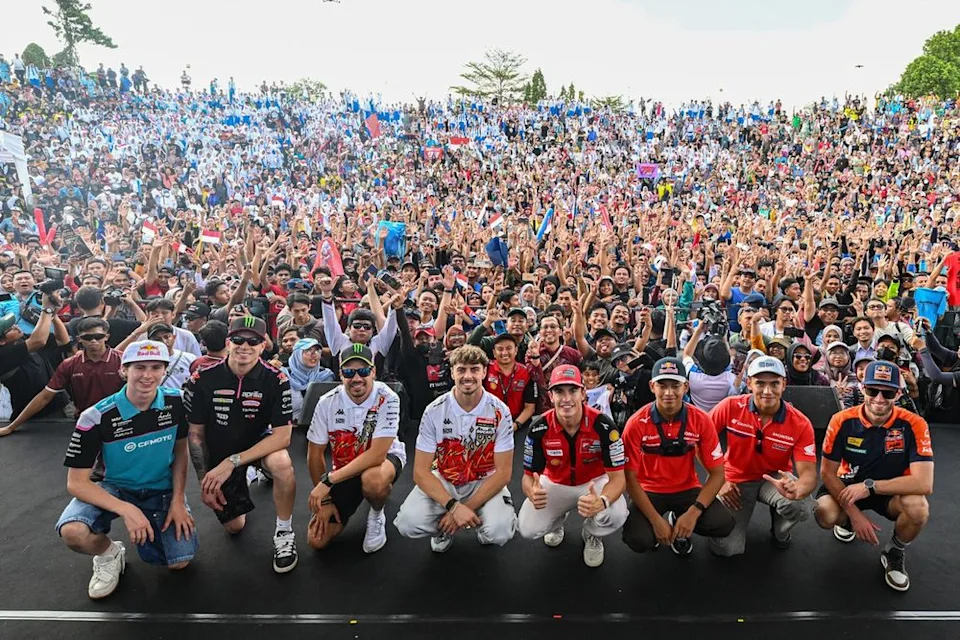
Teams were formally notified of the new regulations Saturday at the Indonesian Grand Prix in Mandalika. Under the directive, any rider failing to spend a minimum of 10 minutes at designated promotional appearances — specifically the Sunday morning Hero Walk autograph session — faces an immediate €5,000 fine. Escalating consequences for repeat violations include grid penalties and the loss of championship points, effectively tying commercial obligations directly to sporting outcomes.
The timing of the announcement guaranteed friction. Sunday’s Hero Walk took place under direct tropical sunlight with ambient temperatures exceeding 30 degrees Celsius (86 Fahrenheit), immediately following high-intensity warm-up sessions that push riders’ heart rates near maximum capacity for extended periods. Several prominent competitors skipped the appearance entirely and are now expected to become the first test cases for the penalty structure.


Unlike Formula 1, where the Grand Prix Drivers’ Association provides a formalized collective bargaining mechanism to negotiate schedule demands and safety protocols with the FIA and commercial rights holders, MotoGP lacks an equivalent unified body. The absence of structured representation leaves individual riders vulnerable to unilateral scheduling mandates from Dorna Sports, the series promoter. Gresini Ducati’s Enea Bastianini acknowledged this structural gap after Sunday’s race, noting he had not even been briefed on the rule change by his team and suggesting the paddock needs to organize collectively.
Pedro Acosta, racing for KTM, drew a sharp line between promotional duties and physical survival. He argued that penalizing a competitor who chooses medical recovery over fan interaction after a crash fundamentally misunderstands athlete welfare. Acosta pointed to Marc Marquez skipping a karting promotional event in Japan the previous weekend — sending a stand-in instead while focusing on his title campaign — as a rational prioritization of competitive goals over marketing schedules. Series officials indicated they had been monitoring overall promotional participation for weeks before introducing the fines, meaning Marquez’s specific absence was a symptom rather than the catalyst.
The physiological toll of the modern MotoGP calendar complicates the commercial mandate. The 2026 season features a record number of rounds, heavily concentrated in Southeast Asia during late summer and autumn when heat indices regularly exceed dangerous thresholds. Alex Marquez highlighted that riders were sustaining heart rates of 190 beats per minute for 45 minutes during track activity immediately preceding the required autograph sessions. Yamaha veteran Alex Rins, nearing the end of his career, proposed logistical compromises such as moving appearances indoors or into shaded structures, arguing that the current outdoor format ignores basic sports science.
Marc Marquez, now piloting the factory Ducati, emphasized that competitors recognize their role in expanding the sport’s global footprint but warned against treating athletes as interchangeable promotional assets without regard for their physical limits. Fabio Quartararo, whose 2.5 million Instagram followers make him one of the series’ most valuable marketing assets, declined to state his position publicly, reflecting the tension riders face between criticizing their employer and protecting their own commercial value.
Dorna has historically expanded MotoGP’s reach through aggressive calendar growth and enhanced fan-access initiatives, transforming the series from a niche European championship into a global entertainment product. However, linking sporting results — grid positions and championship points — to off-track attendance represents a significant escalation from standard contractual appearance clauses.
No official timeline has been provided for when the first €5,000 fines will be processed or whether the initial absentees from Mandalika will receive warnings before financial penalties are applied.