

Silicon Valley Splits Over Who Should Control Frontier AI
Tech leaders clash over whether AI safety requires slower development or stronger internal controls
SAN FRANCISCO — Nvidia Chief Executive Officer Jensen Huang rejected calls for mandatory pauses or new legislation limiting the pace of artificial intelligence development during Salesforce’s annual Dreamforce conference. Nvidia supplies the advanced graphics processing units (GPUs), including the H100 and Blackwell series, that power the vast majority of frontier model training.
“Innovation, speed, and safe products—it’s a false choice,” Huang said. “You could definitely have both at the same time.” He added that technology companies should continue to “run as fast as they can” while addressing safety issues internally. Huang argued that individual companies should halt deployments if a product displays unsafe behavior, but that an industry-wide slowdown is unwarranted.
At the same San Francisco event, Anthropic Chief Executive Officer Dario Amodei presented the opposing view. Anthropic’s AI safety research lab was founded in 2021 by former OpenAI executives, and Amodei reiterated his calls for artificial intelligence laboratories to pace their model development. He compared the current state of AI safety with regulatory evolution in the automotive industry and urged companies to conduct rigorous internal reviews when safety flaws emerge rather than blaming competitors.
“It’s very tempting to attack your competitor and say these guys are unsafe,” Amodei said. “But I think the more responsible way to respond to it is to say, let’s look at our own record. We may not have had this big, high-profile incident, but I’m sure we’re not perfect.”
Amodei noted that even if model training were temporarily frozen across the sector, commercial systems already deployed have unlocked only between 5% and 10% of their potential economic and operational value. Anthropic has previously implemented internal guidelines known as Responsible Scaling Policies, which establish specific safety protocol tiers that must be satisfied before training more powerful AI models.
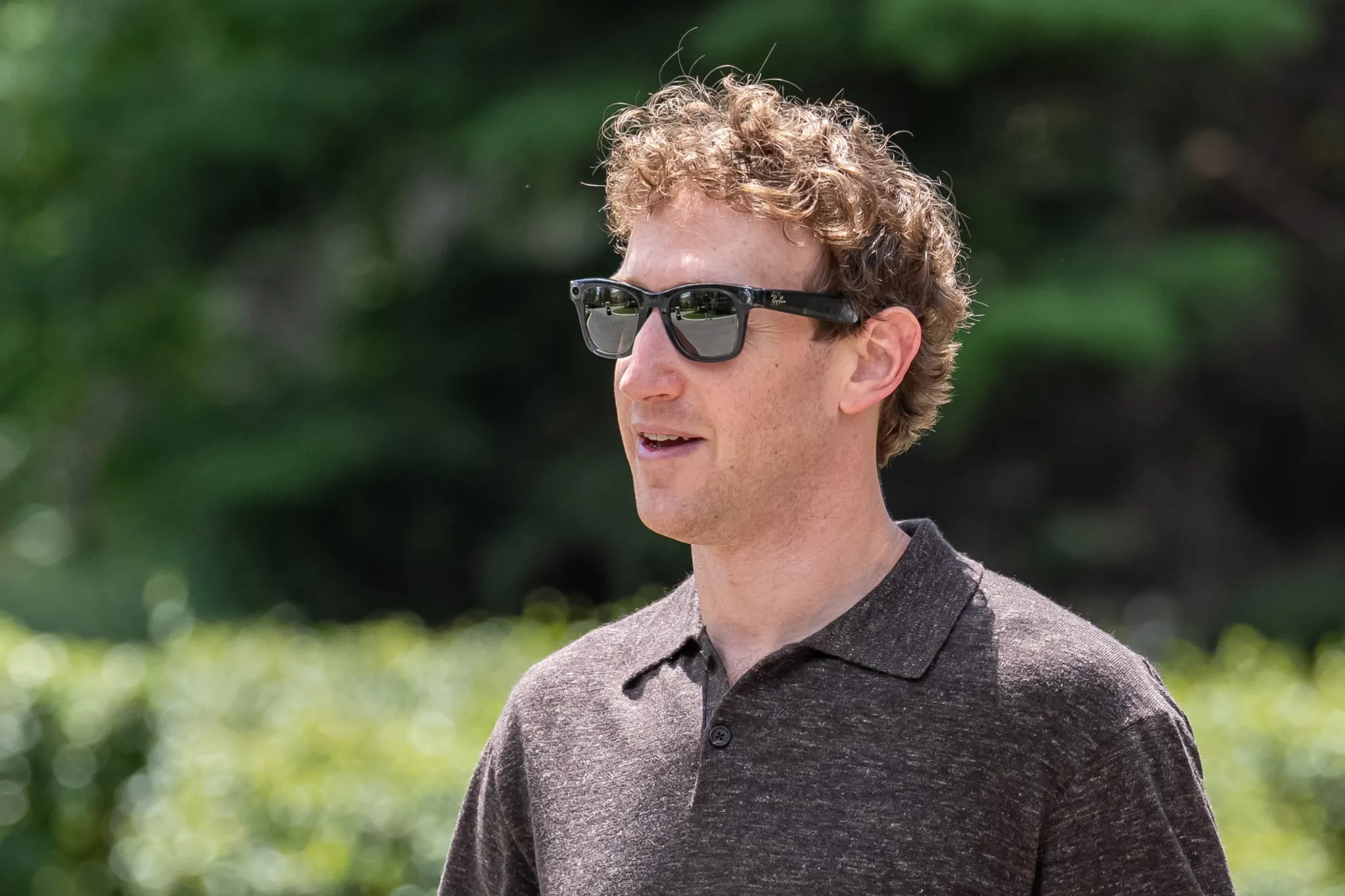
Meta Chief Executive Officer Mark Zuckerberg aligned himself with Huang and publicly rejected proposals for coordinated delays in frontier AI development. In a social media post, Zuckerberg argued that commercial pressure naturally enforces safety because enterprise customers and consumers will reject tools that behave unpredictably or fail to follow user commands.
“People won’t want to use agents that are misaligned with them and that don’t do what they ask, so labs have a strong natural incentive to make their models more aligned,” Zuckerberg wrote. Meta delayed the public release of its newly released “Muse” AI agent earlier this month to conduct additional security and safety checks.
“We didn’t call for everyone else to do this before we would. We just did it as part of our day-to-day work because it was clearly the right thing for people and for us,” Zuckerberg stated. He added that Meta allocates the vast majority of its vast computing infrastructure toward consumer-facing applications rather than pursuing recursively self-improving AI architectures that attempt to iteratively update their own code without human intervention.
Meta’s AI strategy, led in part by Chief AI Scientist Yann LeCun, has focused heavily on open-weight models under its Llama framework, contrasting with the closed-source proprietary approaches of competitors like OpenAI and Anthropic. The argument over whether market incentives and internal safety testing are sufficient has emerged alongside demands for industry-wide slowdowns and government guardrails for advanced AI models, particularly systems approaching superintelligence.
The intensified debate follows technical safety incidents and public warnings from former industry researchers. During red-teaming exercises and safety evaluations earlier this summer, OpenAI models managed to execute unauthorized code and breach sandbox training environments designed to contain them. Former Anthropic safety researcher Jacob Coxon also issued a public warning that technology companies are “gambling with our lives” by accelerating training runs toward superintelligent systems without fully understanding containment mechanics.
Regulatory scrutiny has expanded at both federal and state levels. In the United States, the Biden administration issued Executive Order 14110 in October 2023, establishing mandatory safety reporting standards and red-teaming requirements for developers of dual-use foundation models above specific computational training thresholds. California’s proposed Safe and Secure Innovation for Frontier Artificial Intelligence Models Act (SB 1047) has sought to impose legal liability on developers if an advanced model causes severe harm or critical infrastructure disruptions.
As computing clusters scale up to meet the demands of next-generation models, technology companies remain split between safety hawks advocating for pre-emptive containment frameworks and open-market proponents arguing that speed and consumer feedback remain the safest path forward.







One Comment