Leapmotor B10 Lease Deal Analysis: Monthly Costs, Range Specs, and Competitor Comparison
Breakdown of monthly costs, mileage limits, and how it stacks up against the Renault 4 and Kia EV2.

For drivers seeking entry into the compact electric SUV segment without a substantial upfront capital outlay, Leapmotor’s B10 has emerged as a significant value proposition in the UK market. Recent leasing structures indicate monthly payments starting at £176, contingent on specific financial terms that prioritize low initial deposits over long-term flexibility. This pricing strategy positions the vehicle directly against established European competitors like the Renault 4 E-Tech and Kia EV2, challenging them on both feature density and total cost of ownership.
The core financial mechanism for this £176 monthly rate involves a two-year lease agreement with Leasing Options, facilitated through Auto Express Buy A Car services. The deal requires a 12-month initial payment totaling £2,511.75. Prospective lessees must note that this base price assumes an annual mileage cap of just 5,000 miles, a restriction significantly lower than the average UK driver’s usage, which typically hovers between 8,000 and 10,000 miles annually. Adjusting these parameters alters the monthly burden: increasing the allowance to 8,000 miles adds approximately £18 per month to the 12-month deposit structure. Alternatively, reducing the initial payment window to nine months lowers the upfront cash requirement to £2,126.10 but raises the recurring monthly fee to £191.79 under the same low-mileage constraint.
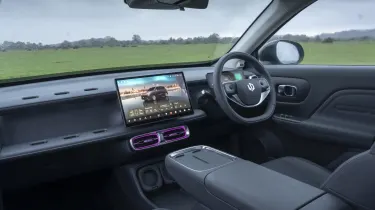


Beyond the balance sheet, the B10 distinguishes itself through a simplified trim hierarchy. Unlike many manufacturers that offer complex configurations with paid extras, Leapmotor provides a single, high-specification variant. Standard equipment includes heated and ventilated front seats, heated rear seating, and a 14.6-inch central touchscreen integrated with wireless charging capabilities. This approach eliminates consumer decision fatigue regarding options packages while ensuring a consistent baseline of comfort technology across all units sold in the region.
Technically, the vehicle relies on a 67.1kWh battery pack, delivering a claimed WLTP range of 270 miles. Charging infrastructure compatibility remains a critical factor for daily usability; the B10 supports rapid DC charging, capable of replenishing energy from 30% to 80% in roughly 20 minutes. Additionally, the inclusion of Vehicle-to-Load (V2L) functionality allows the car to serve as a mobile power source for external devices, a feature increasingly common among modern Chinese-built electrics but less prevalent in older European platforms. While dynamic assessments suggest the ride quality prioritizes comfort over sporty engagement—lagging slightly behind the more agile Renault 4—the overall driving experience is characterized by stability and ease of use rather than performance-oriented tuning.
Market positioning reveals that Leapmotor leverages its partnership with Stellantis to navigate regulatory hurdles and distribution networks efficiently. The B10 serves as a litmus test for whether consumers will accept a new brand offering premium features at aggressive price points. Current availability is subject to strict terms and conditions, with offers fluctuating based on inventory levels and financing partner adjustments. As the competitive landscape intensifies, the sustainability of such low monthly rates depends heavily on residual value predictions and manufacturer subsidies, making early adoption potentially advantageous before broader market saturation forces price corrections.